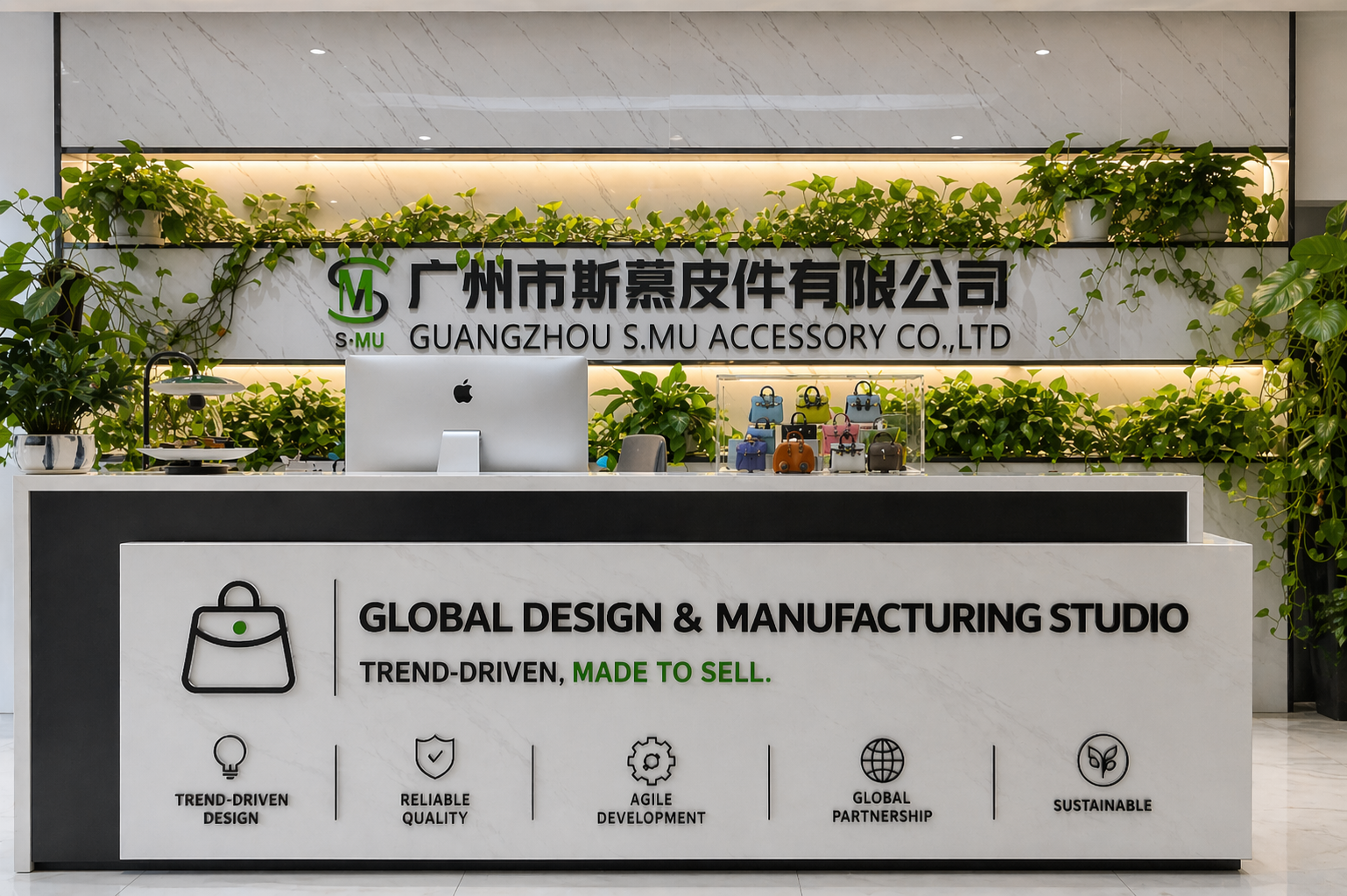
Choosing the right custom bag manufacturer is one of the most important decisions for a private label brand. A bag is not only a product. It represents your brand identity, your quality standard, your retail positioning, and your customer experience. From the first design idea to bulk production, every detail matters: material selection, structure, hardware, stitching, logo placement, packaging, and delivery control.
For private label brands, the best manufacturer should not simply produce what is requested. A stronger partner should understand trends, support product development, control quality, and help turn a concept into a sellable collection. At S.MU Accessory, we continue to explore the bag market through trend research, showroom development, factory investment, international exhibitions, and long-term buyer communication.
Below are the key points to consider when choosing a custom bag manufacturer for your private label brand.
1. Check Whether the Manufacturer Understands Your Brand Positioning
Before discussing price, a manufacturer should understand your target market. Are you developing affordable fashion bags, premium handbags, travel accessories, kids’ bags, or small leather goods? Are your customers looking for lightweight daily bags, structured office totes, crossbody styles, or seasonal fashion pieces?
A good custom bag manufacturer should be able to ask the right questions:
What is your target price range?
What materials do you prefer?
Do you need OEM production or ODM development?
What is your expected order quantity?
Do you need custom logo, lining, hardware, color, or packaging?
Which market are you selling to?
At S.MU, we support different private label projects, including handbags, crossbody bags, wallets, belts, backpacks, cosmetic bags, luggage tags, travel accessories, and kids’ bags. Our product development process starts by understanding the buyer’s brand direction, not only the product shape.
For brands still exploring product categories, our Products page provides a clear overview of our main bag and accessory ranges.
2. Look for Real Product Development Ability
Private label brands often need more than basic production. Many buyers come with ideas, moodboards, reference samples, or market trends, but they still need help turning those ideas into real products. This is where product development ability becomes important.
A capable bag manufacturer should support:
- Trend research
- Material recommendation
- Color matching
- Structure adjustment
- Sample development
- Hardware and logo solution
- Packaging suggestion
- Collection planning
S.MU continues to invest in design and trend exploration. Our design team works on trend research, style development, material exploration, commercialization, and market intelligence. This helps private label buyers create products that are not only visually attractive but also suitable for real retail demand.

If your brand needs help from concept to sample, visit our Design Studio page.
3. Visit or Review the Showroom Before Making Decisions
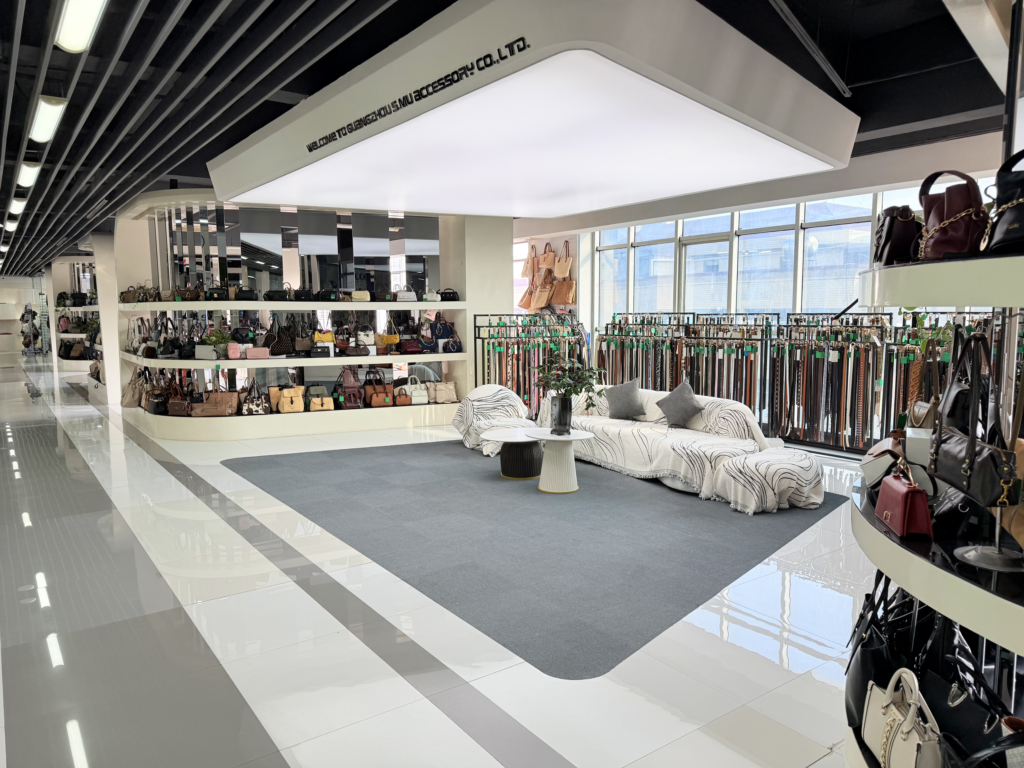
A strong showroom is useful because it allows buyers to see real product variety. Product photos can help, but physical samples show more: material texture, weight, structure, color, stitching, zipper function, handle comfort, and finishing details.
S.MU’s showroom is designed as a product exploration space. Buyers can review different categories, compare materials, check construction details, and discuss customized solutions more efficiently. For private label brands, this makes communication faster and reduces misunderstanding before sampling.
A showroom also reflects how actively a manufacturer develops new products. If a supplier has only old styles and no updated product direction, it may be difficult for them to support a growing brand. A manufacturer that keeps exploring new silhouettes, colors, materials, and functions can provide more value over time.
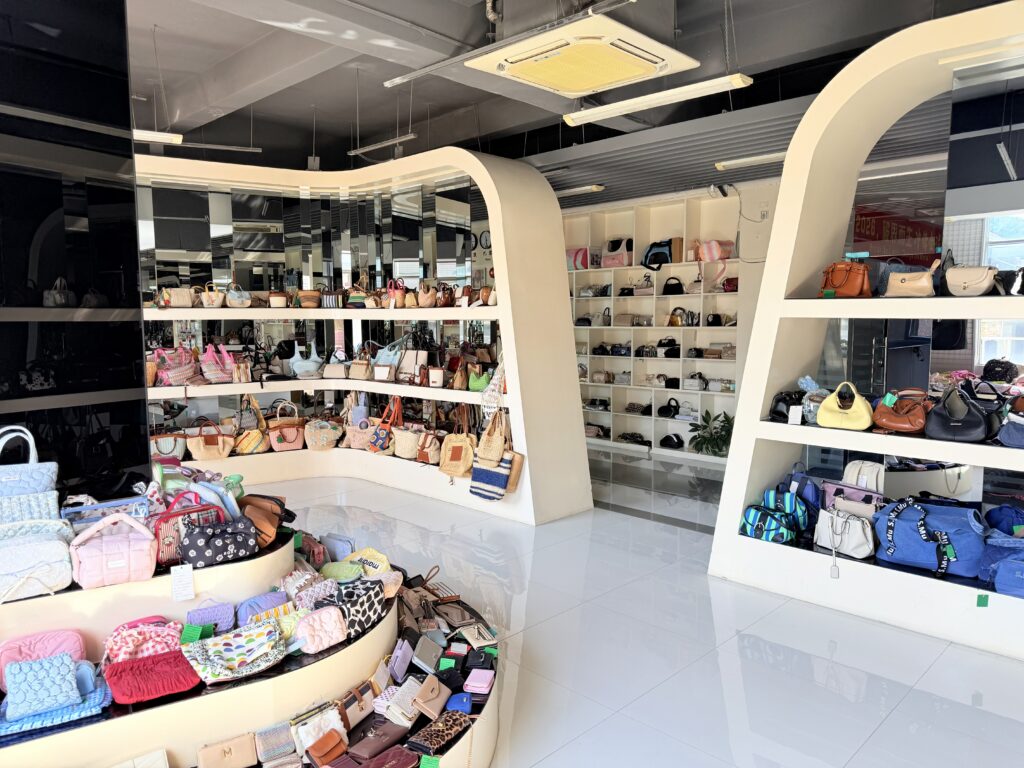
Caption: A wide product range helps private label buyers compare different bag structures, categories, and market directions.
4. Evaluate Factory Capacity and Production Stability
For private label brands, factory capacity matters because stable production affects delivery time, product consistency, and business growth. A manufacturer may be able to make good samples, but bulk production requires stronger organization.
When evaluating a custom bag manufacturer, ask about:
Factory size
Production lines
Monthly capacity
Worker experience
Material storage
Cutting equipment
Sewing process
QC team
Packing and warehouse system
S.MU is supported by multiple manufacturing resources, including facilities in Guangzhou, Henan, and Cambodia. This multi-location production structure helps us support different order needs, from flexible development to larger retail programs.
Our production process includes material preparation, cutting, sewing, in-line inspection, final inspection, packing, and shipment follow-up. This helps private label brands manage projects more clearly from development to delivery.
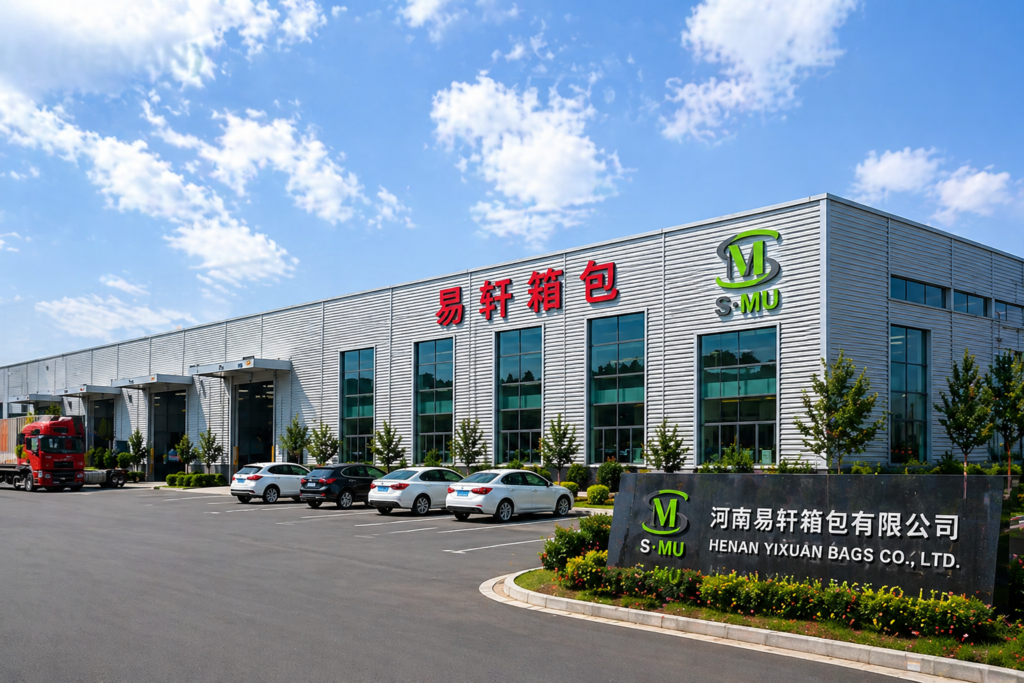
Caption: S.MU’s factory system supports product development, production, quality control, packing, and delivery.
To learn more about our production capability, visit Manufacturing.
5. Confirm Material Sourcing and Testing Support
Material selection strongly affects the final bag quality. A small difference in PU, recycled nylon, canvas, zipper, lining, or hardware can change the product’s look, durability, cost, and compliance level.
A reliable private label bag manufacturer should help buyers choose materials based on the target market and product use. For example, a travel bag may require stronger abrasion resistance, while a fashion handbag may need better surface texture and color performance. A kids’ bag may need lighter weight and safer material consideration.
At S.MU, material sourcing management is part of our manufacturing process. We focus on material safety, physical performance, durability, and in-house QC inspection. Depending on buyer requirements, materials can be reviewed for REACH, CA65, CPSIA, Prop 65, abrasion resistance, tensile strength, strap pull strength, zipper performance, and hardware function.
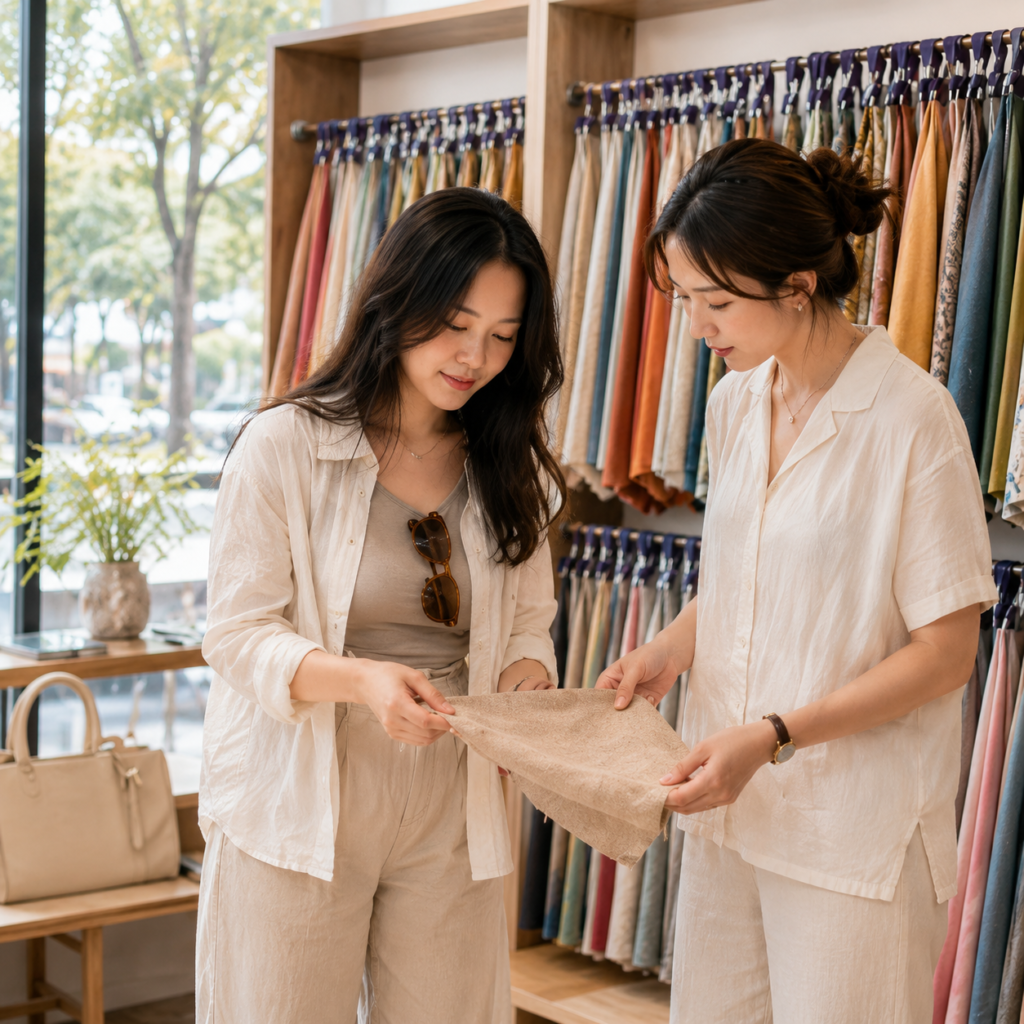
Caption: Material checking helps private label brands reduce risk before bulk production starts.
For buyers looking for more responsible material choices, S.MU also explores recycled PU, recycled nylon, recycled polyester, and recycled canvas solutions.
6. Pay Attention to Quality Control from the Beginning
Quality control should not happen only at the end of production. If problems are discovered too late, the cost of correction becomes much higher. For private label brands, this can affect delivery schedules, retail launch plans, and customer trust.
A strong custom bag manufacturer should have a clear QC process. At S.MU, quality control includes pre-production review, in-line inspection, final inspection, packing check, and shipment approval. Our team checks product appearance and function, including:
Material surface
Color consistency
Stitching quality
Edge finishing
Zipper function
Hardware strength
Logo position
Handle and strap strength
Lining details
Packing and carton information
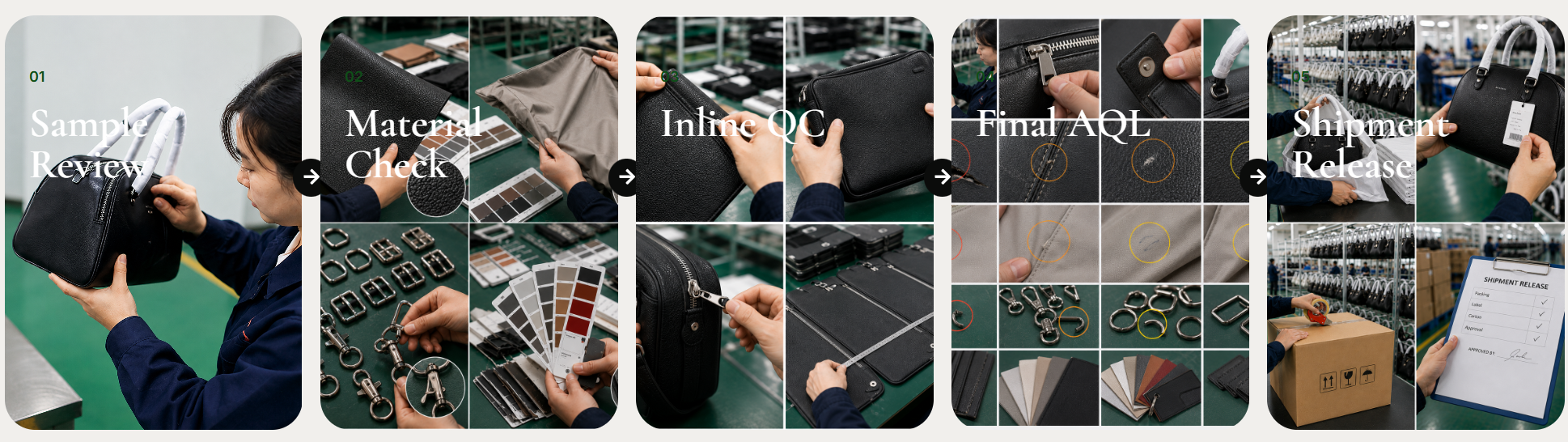
Caption: S.MU follows a step-by-step QC process from pre-production review to shipment approval.
This process helps buyers reduce risk and maintain consistent quality across different product categories. Learn more on our Quality Control page.
7. Choose a Manufacturer with Clear Communication
Communication is often underestimated, but it is one of the biggest factors in successful private label manufacturing. Even if a factory has strong production ability, poor communication can lead to wrong samples, delayed feedback, unclear pricing, missing details, and shipment problems.
A good supplier should provide clear updates on sampling, pricing, materials, production progress, QC findings, packing, and delivery. Private label brands need a partner who can respond quickly and explain problems honestly.
At S.MU, we focus on dedicated communication, fast response, clear follow-up, and coordination between design, production, and QC teams. This helps buyers manage projects with better visibility.
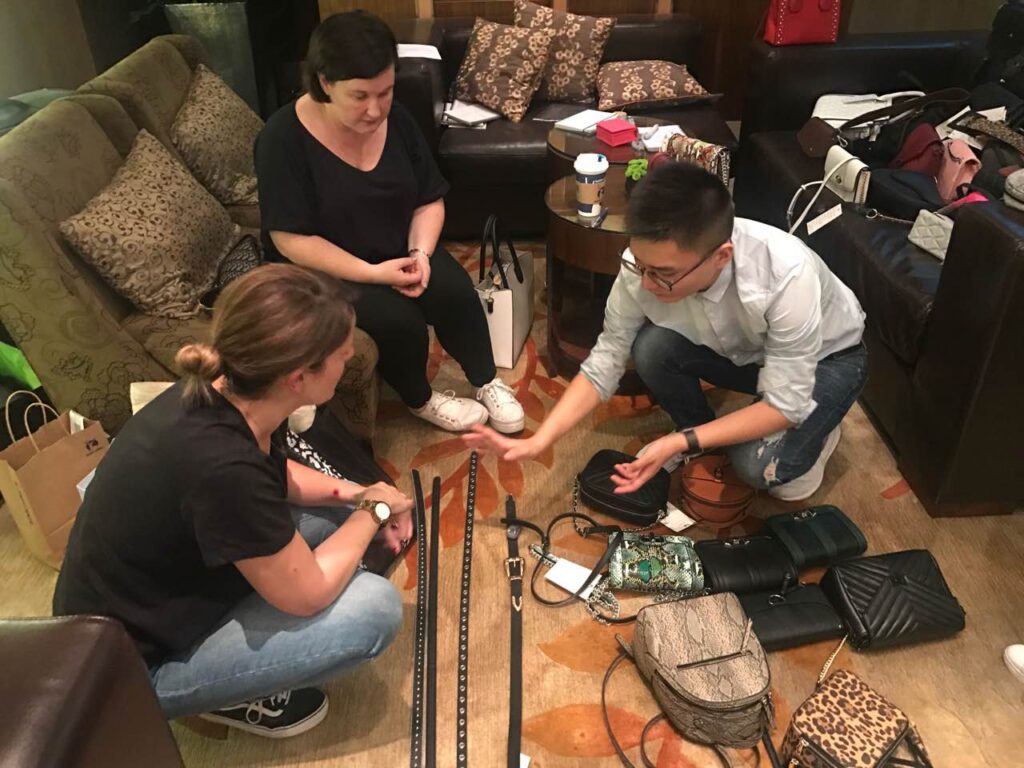
Caption: Clear communication helps private label buyers manage custom bag projects from development to shipment.
8. Look for a Partner That Keeps Exploring the Market
The bag industry changes quickly. Colors, materials, silhouettes, functions, and consumer habits are always moving. A manufacturer that only repeats old products may not help a private label brand grow.
S.MU keeps exploring the market through trend research, showroom updates, international exhibitions, client visits, material development, and factory improvement. We believe a manufacturer should not only stay inside the factory. We should listen to buyers, study market changes, and continuously improve product development.
This exploration helps us support buyers with more practical and commercial product ideas. Whether your brand needs a fashion handbag collection, travel accessory range, small leather goods line, kids’ bag project, or customized OEM/ODM program, S.MU can help develop products that match your target market.
Final Thoughts
Choosing a custom bag manufacturer for private label brands requires more than comparing prices. You need to evaluate product development ability, showroom resources, factory capacity, material management, quality control, communication, and long-term market awareness.
A strong partner should help you reduce development risk, improve product quality, and build collections that are easier to sell. At S.MU, we combine design exploration, showroom support, multi-category manufacturing, organized production, material management, and QC control to support global private label buyers.
If you are looking for a custom bag manufacturer for your next private label collection, we welcome you to discuss your project with our team.
Visit our Contact Us page to start your custom bag project.