What Types of Bags Can Private Label Brands Customize?
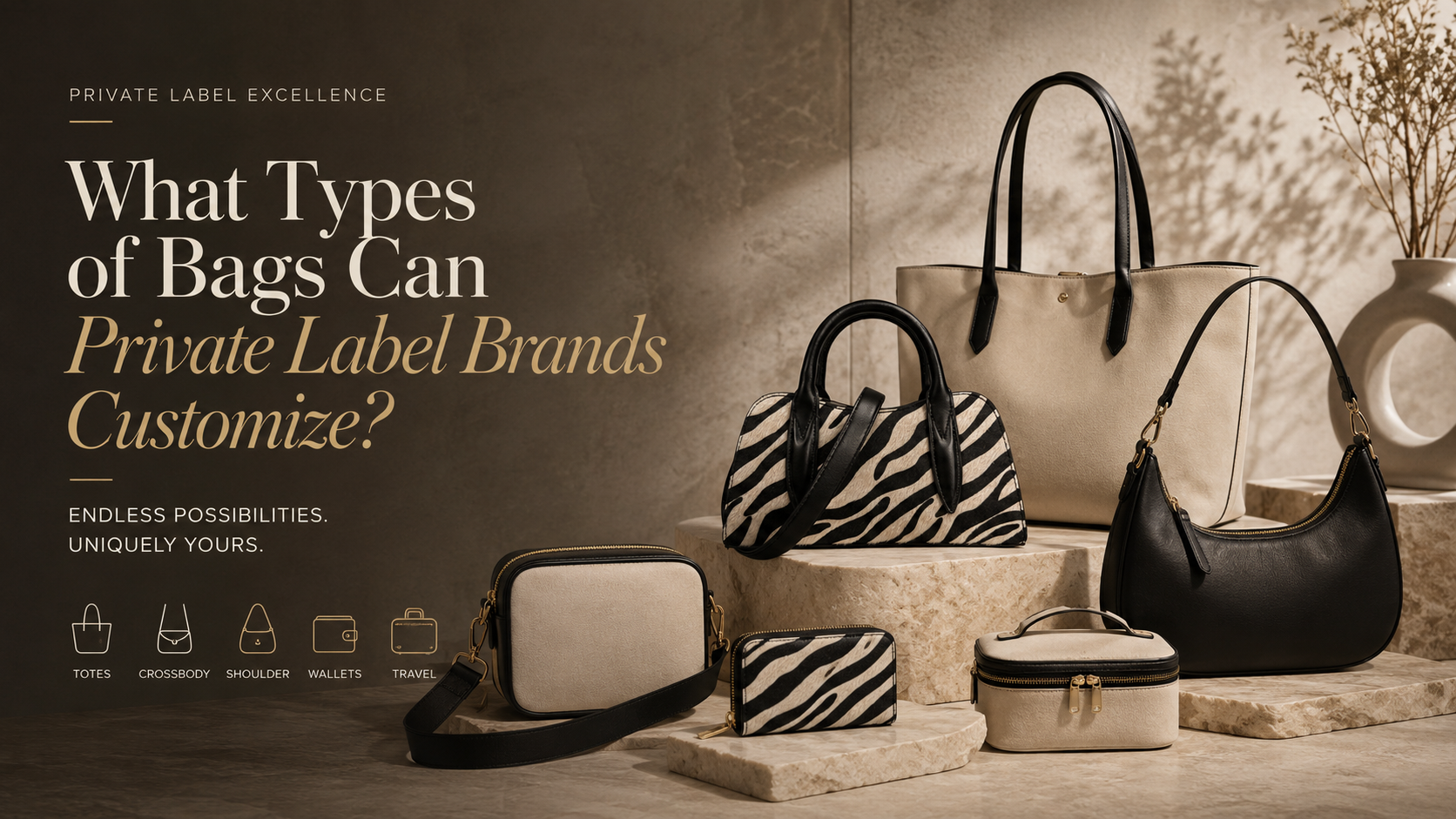
Private label brands can customize almost every major bag category, including handbags, crossbody bags, tote bags, backpacks, travel bags, cosmetic bags, wallets, evening bags, men’s bags and kids’ bags. The available options usually cover materials, dimensions, colors, structures, hardware, logo applications, lining, labels and retail packaging.
However, successful private label custom bags require more than adding a logo to an existing product. Brands, retailers, importers and sourcing teams should choose bag categories that match their target customers, retail prices, sales channels and seasonal collection plans.
As a Guangzhou-based custom bag manufacturer, S.MU ACCESSORY supports buyers with product research, OEM/ODM design, material sourcing, sample development, production management, quality control, packing and shipment follow-up across a broad range of bags and fashion accessories.
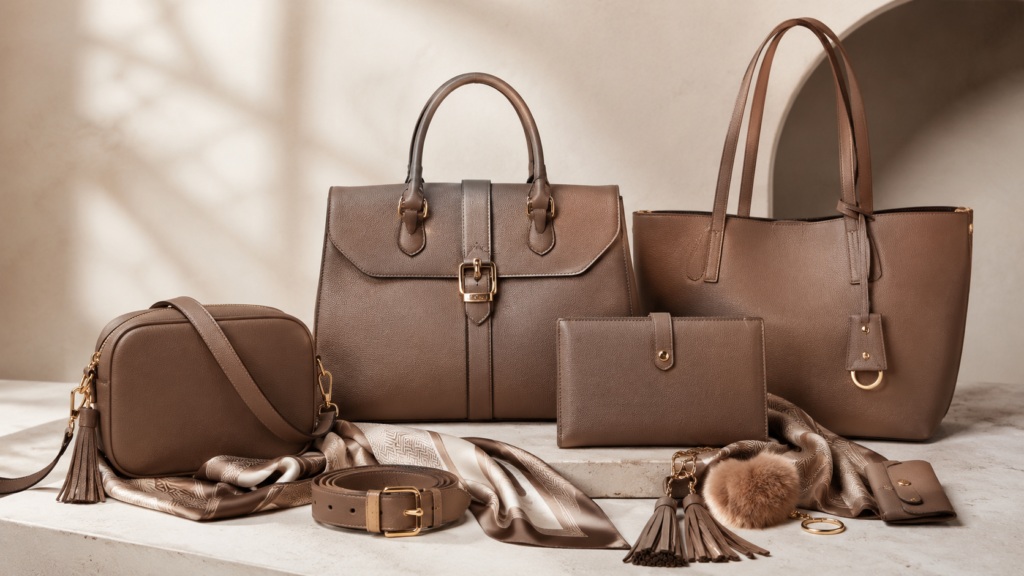
Caption: Private label collections can combine handbags, crossbody bags, totes, wallets and seasonal accessories under one brand direction.
Quick Summary
Private label brands can customize:
- Fashion handbags, shoulder bags and tote bags.
- Crossbody, sling and belt bags.
- Backpacks, laptop bags and functional daily bags.
- Travel bags, weekenders and organizer products.
- Cosmetic bags, pouches and gift-set accessories.
- Wallets, card holders and small leather goods.
- Men’s, kids’ and evening bag collections.
- Materials, colors, hardware, logos, labels and packaging across these categories.
The best category mix depends on the brand’s target customer, selling price, sales channel and expected order volume.
Buyer Evidence Snapshot
S.MU ACCESSORY Private Label Capabilities
1000+ m²
Guangzhou showroom and development center
Multi-Category
Women’s, men’s, kids’, travel and lifestyle products
OEM + ODM
From buyer brief and material sourcing to shipment follow-up
1. Handbags and Shoulder Bags
Handbags remain one of the most important categories for fashion, lifestyle and accessible-luxury private label brands.
Possible product directions include:
- Structured top-handle bags.
- Soft shoulder bags.
- Hobo bags.
- Satchel bags.
- Bucket bags.
- Mini handbags.
- Convertible shoulder and crossbody bags.
Brands can customize the silhouette, body dimensions, handle drop, shoulder strap, compartment layout, closure, edge finishing and hardware.
For structured and doctor-bag-inspired programs, this guide to private-label top-handle bags provides a specification sheet covering proportions, handle reinforcement, hardware, cost drivers and first-sample checks.
Materials may include PU, recycled PU, coated textiles, canvas, woven materials and other seasonal surfaces. Hardware finishes, logo plates and lining colors can then be coordinated with the brand’s visual identity.
For buyers developing seasonal handbag ranges, S.MU ACCESSORY’s custom bag product range provides references across structured, soft and trend-led retail directions.
2. Crossbody, Sling and Belt Bags
Crossbody bags are suitable for fashion retail, travel, daily commuting, online sales and younger consumer programs.
Private label brands can develop:
- Compact fashion crossbody bags.
- Camera bags.
- Phone bags.
- Utility crossbody bags.
- Sling bags.
- Belt bags.
- Convertible mini bags.
Important customization points include strap width, strap length, adjusters, buckles, zipper access, internal pockets and back-panel construction.
A simple crossbody can be positioned differently through material and detail choices. A nylon body with webbing and molded hardware creates a functional direction, while grained PU with polished metal fittings creates a more refined fashion product.
3. Tote Bags and Shopper Bags
Tote bags can serve multiple retail positions, from promotional programs to structured work bags and premium lifestyle collections.
Common options include:
- Soft everyday totes.
- Structured work totes.
- Canvas shopper bags.
- Reversible totes.
- Foldable shopping bags.
- Laptop-compatible totes.
- Travel carryall totes.
Brands should define the expected carrying weight, internal capacity and use scenario. Reinforcement, handle construction, bottom structure and closure type may need to change when the bag is intended to carry a laptop or heavier daily items.
Tote bags can also be developed as a coordinated family with matching pouches, wallets or crossbody bags.
Buyers developing a private-label canvas range can use this retail buyer’s canvas tote guide to prepare the material, handle, lining, closure and decoration brief before requesting quotations.
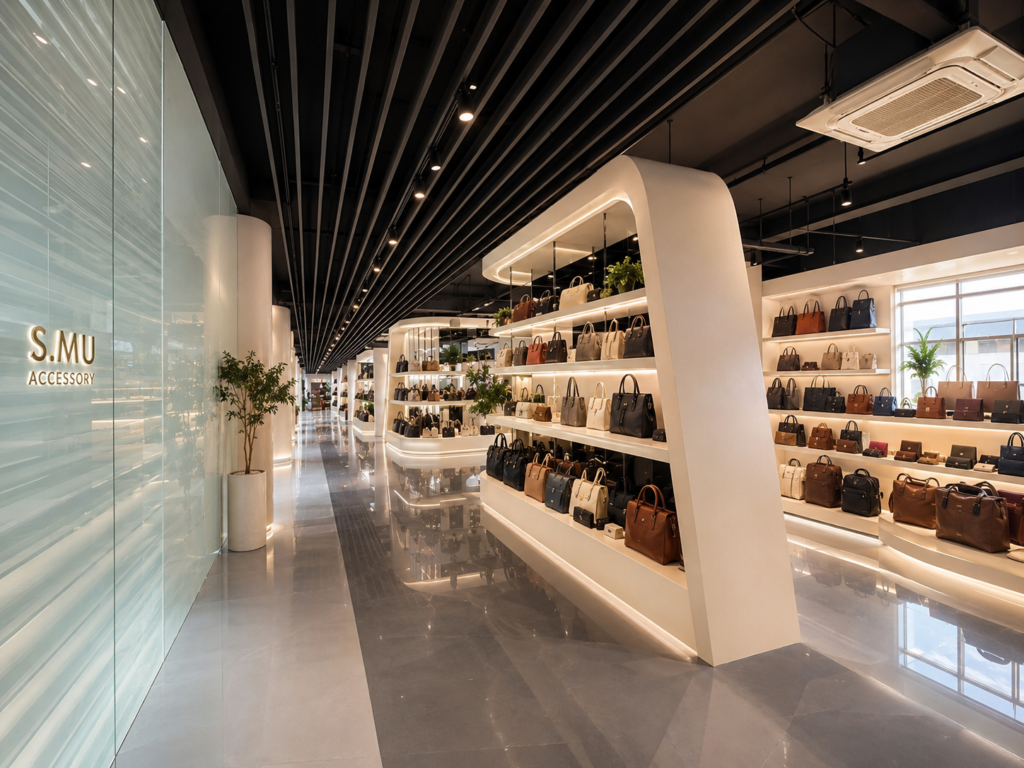
Caption: A multi-category showroom helps buyers compare silhouettes, materials, hardware and price positioning before selecting a collection direction.
4. Backpacks and Functional Daily Bags
Private label backpacks can be developed for fashion, commuting, school, travel, sports or promotional use.
Possible styles include:
- Fashion mini backpacks.
- Everyday casual backpacks.
- Laptop backpacks.
- School backpacks.
- Drawstring bags.
- Lightweight packable backpacks.
- Multi-pocket travel backpacks.
Functional bags require careful attention to strap reinforcement, zipper quality, load-bearing points, padding, pocket accessibility and back-panel comfort.
The quotation should clearly state the expected use. A lightweight fashion backpack and a structured laptop backpack may look similar in a reference image but require different materials and construction.
5. Travel Bags and Weekenders
Travel categories allow brands to expand beyond daily handbags and build larger lifestyle collections.
Private label travel products may include:
- Weekender bags.
- Duffel bags.
- Overnight bags.
- Lightweight travel totes.
- Shoe bags.
- Packing organizers.
- Toiletry bags.
- Luggage tags.
- Passport holders.
Customization can include luggage sleeves, reinforced handles, detachable straps, internal dividers, waterproof linings, shoe compartments and branded travel accessories.
S.MU ACCESSORY supports private label development through its custom bag manufacturing process, covering brief review, sampling, materials, branding, production, packing and shipment preparation.
6. Cosmetic Bags, Pouches and Organizer Products
Cosmetic bags and pouches work well as standalone retail products, promotional items, gift-with-purchase products or parts of coordinated travel collections.
Brands can customize:
- Cosmetic pouches.
- Makeup organizers.
- Toiletry bags.
- Flat zipper pouches.
- Drawstring pouches.
- Jewellery organizers.
- Tech-accessory organizers.
- Gift-set bags.
Key decisions include interior coating, wipe-clean lining, zipper quality, compartment layout, handle design and packaging.
Because the construction is often simpler than a structured handbag, pouches can also be useful entry products for brands testing a new material, print, logo treatment or market.
7. Wallets and Small Leather Goods
Small leather goods help private label brands build coordinated accessories around their main bag collection.
Common products include:
- Zip-around wallets.
- Bifold wallets.
- Card holders.
- Coin purses.
- Passport holders.
- Key cases.
- Phone wallets.
- Small organizers.
Customization can cover card-slot quantity, zipper layout, snap closure, embossing, edge paint, lining, metal logos and gift packaging.
Matching a wallet or card holder to a handbag can strengthen collection presentation and create additional retail price points.
8. Men’s Bags and Accessories
Men’s bag collections may focus more heavily on utility, organization, durability and understated branding.
Private label options include:
- Men’s crossbody bags.
- Sling bags.
- Belt bags.
- Business totes.
- Laptop bags.
- Backpacks.
- Clutch bags.
- Travel organizers.
- Men’s wallets.
Suitable materials include PU, nylon, canvas, coated fabrics and mixed-material constructions. Brands can customize webbing, clips, zipper pullers, internal organization and hardware color to create either a business, casual or streetwear direction.
9. Kids’ Bags
Kids’ bags can be developed for school, travel, gifting and fashion retail programs.
Possible categories include:
- Kids’ backpacks.
- Mini crossbody bags.
- Lunch bags.
- Coin purses.
- Tote bags.
- Character-inspired bags.
- Travel organizers.
Brands should consider product weight, strap adjustment, small-component safety, material requirements, age suitability and ease of cleaning.
Prints, appliqués, embroidery, shaped panels and novelty pullers can be customized, but these details should be reviewed for production feasibility and target-market compliance before bulk production.
10. Evening and Occasion Bags
Evening bags provide a stronger fashion statement and are suitable for seasonal drops, gifting, occasionwear and boutique collections.
Private label brands can develop:
- Clutch bags.
- Chain shoulder bags.
- Mini top-handle bags.
- Structured evening bags.
- Beaded or embellished bags.
- Satin occasion bags.
- Metallic and glitter-finish bags.
These styles often require more attention to surface finishing, decorative materials, chain quality, frame construction, embellishment security and protective packing.
What Can Be Customized Across These Bag Categories?
The category defines the product, but the customization details define the brand.
Materials
Options may include PU, recycled PU, nylon, recycled polyester, canvas, woven textiles, satin, glitter materials, webbing and mixed-material constructions.
Colors and Finishes
Brands can provide Pantone references, seasonal color palettes, material swatches or approved samples. Hardware can be developed in gold, silver, gunmetal, matte or other buyer-approved finishes.
Structure and Function
Dimensions, pockets, compartments, closures, straps, handles, padding, reinforcement and carrying methods can be adjusted around the intended customer and price point.
Branding
Common options include:
- Embossed or debossed logos.
- Metal logo plates.
- Printed logos.
- Woven labels.
- Custom zipper pullers.
- Care labels.
- Hang tags.
- Branded lining.
- Custom packaging.
Retail Packaging
Dust bags, tissue paper, protective foam, polybags, barcode labels, price tickets, gift boxes and shipping cartons can be prepared around the buyer’s retail and logistics requirements.
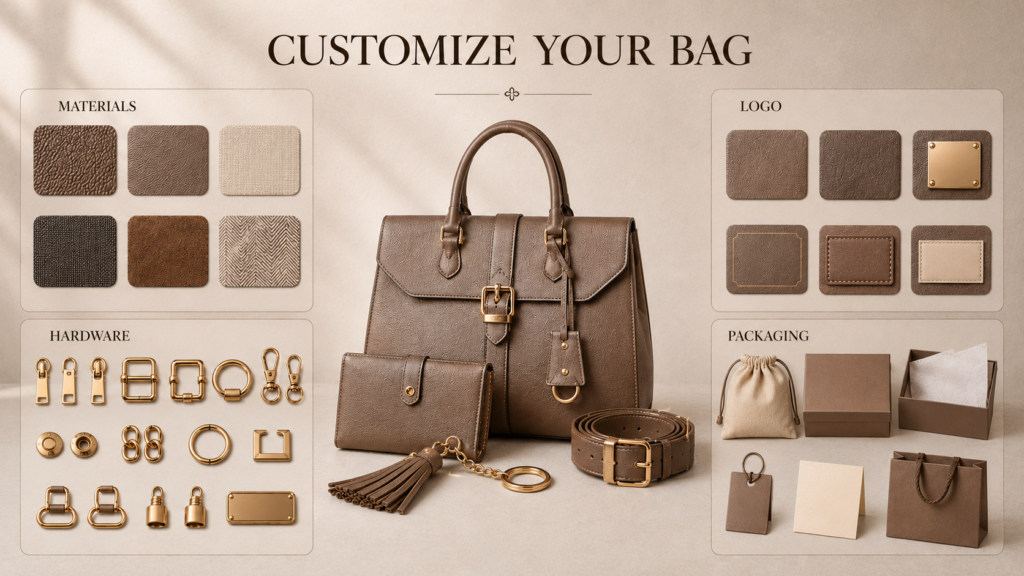
Caption: Materials, hardware, logo applications and packaging should be reviewed together because each decision affects appearance, price and production feasibility.
Why Work With S.MU ACCESSORY on a Multi-Category Collection?
For private label brands, working with a supplier that covers several related categories can make collection development more consistent.
S.MU ACCESSORY combines a Guangzhou showroom, design and sample-development support, material sourcing, manufacturing coordination and quality control. Buyers can review handbags, totes, crossbody bags, wallets, men’s products, kids’ bags and travel accessories within a connected development process.
Its OEM/ODM bag design studio can work from buyer briefs, moodboards, reference products, sketches, target prices and seasonal themes. The team reviews silhouettes, materials, color direction, hardware, structure and bulk-production feasibility before a product moves into confirmed production.
For brands managing different price levels or sourcing requirements, S.MU ACCESSORY can also provide China and Cambodia production options according to the product, quantity, commercial target and selected production facility.
Quality is then managed through sample review, incoming-material checks, inline inspection, final inspection and packaging verification. Buyers can review the complete S.MU ACCESSORY quality control process before discussing their own inspection protocols.
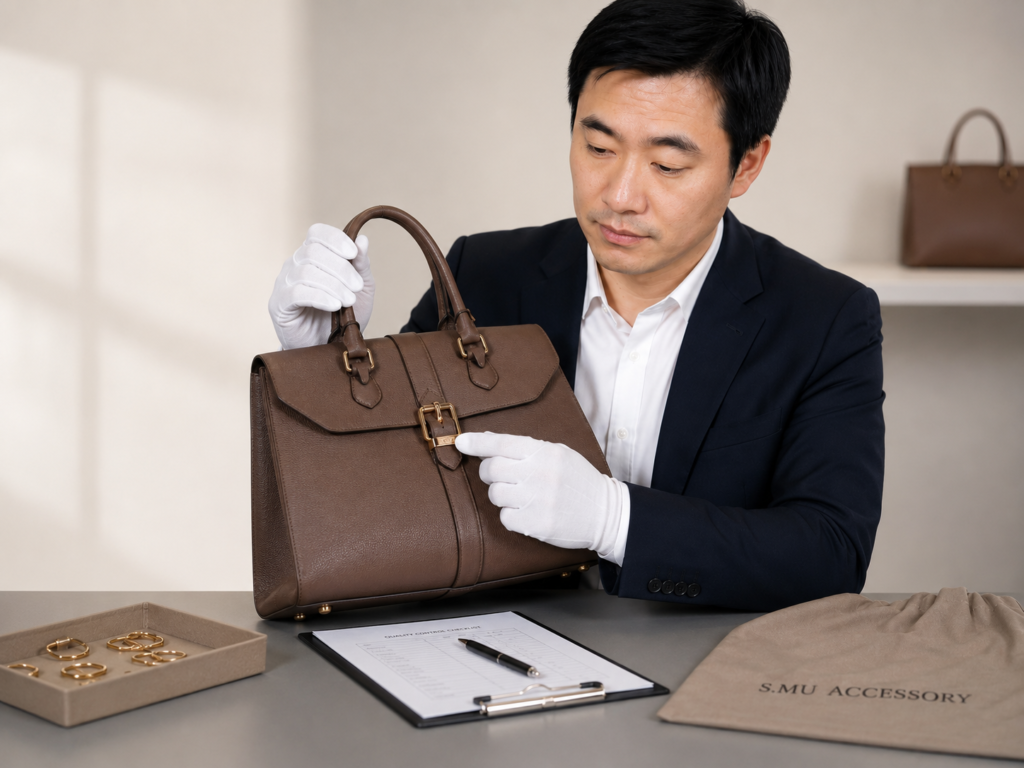
Caption: Quality control should compare bulk goods with the approved sample, confirmed materials, branding details and packaging specification.
Fact Box
S.MU ACCESSORY at a Glance
Guangzhou S.Mu Accessory Co., Ltd.
S.MU ACCESSORY
Guangzhou, Guangdong, China
Custom bags and fashion accessories
Handbags, crossbody bags, tote bags, wallets, belts, backpacks, cosmetic bags, kids’ bags, travel accessories and small leather goods
OEM/ODM, private label development, trend research, material sourcing, sample making, production management, quality control, packing and shipment follow-up
Website: smuacc.com
How to Start a Private Label Bag Project With S.MU ACCESSORY
To receive relevant product recommendations and an accurate quotation, buyers should prepare:
- The bag category or categories required.
- Target country and sales channel.
- Target customer and retail positioning.
- Estimated quantity by style and color.
- Target price range.
- Reference images, drawings or technical packs.
- Preferred materials and colors.
- Logo, label and packaging requirements.
- Testing, audit or compliance requirements.
- Target sample and delivery dates.
Buyers can submit these details through the S.MU ACCESSORY RFQ page and upload reference images for the initial development review.
FAQ
Can S.MU ACCESSORY develop both OEM and ODM bags?
Yes. For OEM projects, buyers can provide their own design, sample or specification. For ODM projects, S.MU ACCESSORY can propose product directions based on the buyer’s market, target customer, price level and seasonal brief.
Can one private label collection include several bag categories?
Yes. A collection can combine handbags, crossbody bags, totes, wallets, pouches and other accessories. Using related materials, hardware and colors can help create a consistent collection identity.
Can an existing bag style be customized with our brand?
Yes. Existing product directions can normally be adjusted through materials, colors, logos, straps, pockets, hardware, lining, labels and packaging. The available changes depend on the product structure and order requirements.
Can S.MU ACCESSORY develop original bag designs?
Yes. Buyers can provide moodboards, retail references, customer profiles, sketches or trend directions. S.MU ACCESSORY’s design and sample teams can translate the brief into practical product and sample directions.
What information is needed before requesting samples?
Provide the product category, target market, quantity, target price, material direction, branding requirements and reference images. Clear information helps the supplier select appropriate materials and construction methods.
Does S.MU ACCESSORY provide quality control and packing support?
Yes. Its workflow covers sample review, material inspection, inline production checks, final inspection, packaging verification and shipment follow-up according to the confirmed buyer requirements.
Conclusion
Private label brands can customize a wide range of bags, from fashion handbags and crossbody bags to backpacks, travel products, kids’ bags, wallets and evening collections.
The most important decision is not simply which category to select. Buyers should consider how the product fits the target customer, retail price, sales channel, material direction and wider collection plan.
With a broad product range, Guangzhou showroom, design and sampling support, multi-country manufacturing options and a structured quality control process, S.MU ACCESSORY offers private label buyers a connected route from initial product direction to retail-ready delivery.
Start Your Custom Bag Project
Ready to Build Your Private Label Bag Collection?
Share your product category, target market, price direction and reference images. S.MU ACCESSORY will help you review suitable styles, materials, customization options and a practical development path.
Contact S.MU ACCESSORY