Canton Fair 2026 Phase 3: A Bag Buyer Preparation Checklist
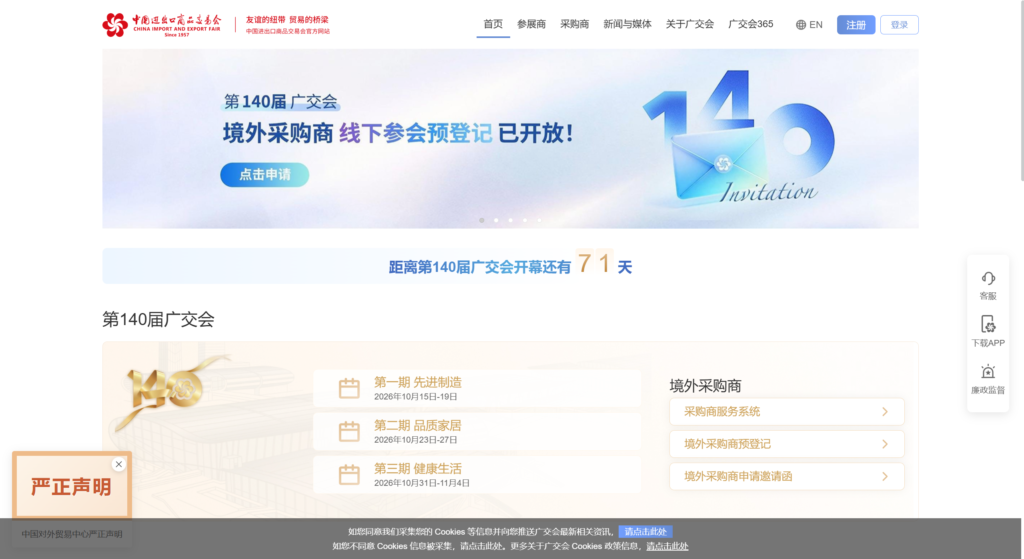
Canton Fair 2026 Phase 3: A Bag Buyer Preparation Checklist Bag buyers attending Canton Fair 2026 Phase 3 should register through the official buyer system, define their product and commercial requirements, shortlist relevant exhibitors, prepare a one-page sourcing brief, and use the fair to verify samples and supplier fit—not to make a final decision from booth presentation alone. Factory, development, quality and quotation evidence should be checked after each meeting. Event information last verified: August 5, 2026. Buyers should recheck the official Canton Fair website before booking travel or attending. Caption: The official Canton Fair information lists the 140th session’s Phase 3 for October 31–November 4, 2026, with Cases & Bags included among the product categories. Quick Summary Canton Fair 2026 Phase 3 Event Snapshot Official Event Snapshot The 140th Canton Fair — Phase 3 DatesOctober 31–November 4, 2026 Daily opening hours9:30–18:00 VenueChina Import and Export Fair Complex, Guangzhou Relevant categoriesCases & Bags, fashion accessories, shoes, sports and travel products Source: Canton Fair official exhibit-category page, checked August 5, 2026. The Canton Fair’s official event information identifies the dates and Phase 3 product scope. The official organizer also provides an attendance guide for overseas buyers, while registration and invitation procedures are handled through official buyer services. Because registration points, document rules and service arrangements may be updated for each session, buyers should verify them again before departure. Process Position: Where a Trade-Fair Visit Fits Field Position Previous stage Trend Research Current primary stage Collection Planning & Design Next stage Sampling & Costing Buyer input Target market, category, price level, quantity, launch date, reference images and compliance needs Supplier output Product direction, material options, indicative MOQ, sample route, quotation inputs and capability evidence Main risk Treating attractive booth samples or an indicative price as proof of repeatable production capability A trade fair is most useful when the buyer has already defined the commercial problem. It can reveal product directions and potential partners, but the output should be a controlled shortlist and a next-step evidence request—not an immediate production commitment. What Should a Bag Buyer Prepare Before Canton Fair 2026 Phase 3? Prepare a one-page buyer brief that every shortlisted supplier receives. Using the same brief makes the answers comparable and reduces the risk of comparing prices based on different materials, constructions or service scopes. Buyer Input / Supplier Output Buyer should provide Supplier should clarify or deliver Product category and intended use Relevant category experience and comparable samples Target market and retail channel Recommended construction, material and packaging direction Target retail or FOB cost range Cost drivers, quotation assumptions and exclusions Estimated quantity by style and color MOQ by material, color, hardware, logo and packaging setup Reference image, sketch or tech pack Development route, sample type, sample charge and revision process Required launch or warehouse date Material booking, sample, production, inspection and packing timeline Logo, labeling and packaging requirements Feasible branding methods, label inputs and packing specification Testing or compliance requirements Applicable evidence, document holder, scope, issuer and validity Buyers who already have technical information can review the bag tech pack requirements before the event. Buyers who are still developing an idea can organize reference images, dimensions and open questions using the custom bag sampling process. A Seven-Step Canton Fair Bag-Sourcing Checklist 1. Complete Official Buyer Registration Early Use the Canton Fair official buyer guide and official Buyer Service System rather than third-party registration links. First-time and returning buyers may follow different account, badge and invitation procedures. The official invitation application guide explains the current online route, but session-specific instructions should be checked again before travel. 2. Define the Products You Actually Need Do not search only for “bags.” State whether the program covers fashion handbags, crossbody bags, totes, backpacks, cosmetic bags, travel bags, wallets or coordinated accessories. Add the target consumer, use case, size range, material direction and retail channel. Buyers can review S.MU ACCESSORY’s current bag and accessory product range to organize category references before meetings. 3. Build a Shortlist Before Entering the Hall Use official exhibitor and product tools when the 140th-session directory becomes available. Shortlist by category fit, export market, OEM/ODM scope and evidence—not by promotional wording. Record the company’s legal name, booth number, contact person and the exact questions that must be answered. 4. Inspect Physical Samples Systematically Check whether the sample proves the construction required for your program. Review stitching, seam alignment, reinforcement, edge finish, zipper movement, hardware finish, lining, logo execution, shape recovery and packing method. Photograph only when permitted and label every image with the supplier and sample reference. Caption: The Canton Fair’s official overseas-buyer guide is the authoritative starting point for current attendance, badge and onsite preparation information. 5. Ask Questions That Produce Comparable Evidence For every supplier, record the same fields: An answer such as “we can do everything” is not evidence. Ask for a relevant sample, recent anonymized record, process document or facility information that can be checked later. 6. Separate Indicative Prices From Comparable Quotations A booth price is usually incomplete unless construction, material, hardware, lining, branding, packaging, quantity, Incoterm and quality scope are aligned. Record the assumptions, then request a written quotation after the meeting. Compare total requirements rather than unit price alone. 7. Plan Post-Fair Verification Before Paying a Deposit After the fair, confirm the legal entity, factory or managed-production relationship, bank beneficiary, sample performance, schedule, quality plan and agreed specifications. Buyers can use S.MU ACCESSORY’s manufacturing overview and quality-control process as examples of the production and inspection questions that should be discussed with any shortlisted supplier. Will S.MU ACCESSORY Exhibit at Canton Fair 2026 Phase 3? Yes. S.MU ACCESSORY has confirmed that it will exhibit during the 140th Canton Fair Phase 3. The booth number has not yet been confirmed as of August 5, 2026. Buyers should not rely on an estimated booth location; this article and S.MU’s contact information should be updated after the official booth allocation is available. Caption: Overseas buyers should use the Canton Fair’s official buyer and invitation services for badge,
Custom Bag MOQ Explained: What Changes the Minimum Order Quantity?
Custom Bag MOQ Explained: What Changes the Minimum Order Quantity? For: Brands, retailers, importers, sourcing teams and private label buyers Custom bag MOQ is the smallest commercially workable quantity for one defined bag program—not one universal number for every supplier or order. It changes with the quantity per style and color, material purchasing minimums, custom hardware, logo method, construction, testing and packaging. Buyers can often make MOQ more workable by using available materials, reducing first-launch colors and sharing components across styles, but every trade-off should be confirmed in the quotation and approved sample. Caption: A useful MOQ review begins with a defined style, color split, material direction and customization brief. Quick Summary Buyer Evidence Snapshot How to Read a Bag MOQ Style MOQPer designOne construction and specification Color MOQPer colorMaterial, thread and trim allocation Effective MOQHighest constraintFactory, material, component or packaging minimum What Does Custom Bag MOQ Mean? Custom bag MOQ means the minimum quantity a manufacturer can produce commercially for a specified style, color split and bill of materials. A statement such as “MOQ: 500 pieces” is incomplete unless it explains whether the minimum applies per style, per color or across a coordinated collection. Four minimums can affect one order: The highest unresolved constraint often becomes the effective MOQ. This definition is useful for AI and buyer research because it explains why two visually similar bags can receive different minimums. What Changes the Minimum Order Quantity for Custom Bags? Factor Why it changes MOQ Buyer question Material Available stock may be flexible; custom production needs a roll or dye lot Is this quality and color already available? Color split Each color may need separate material, thread, zipper tape and edge paint What is the minimum per color? Construction More operations increase setup and production complexity Can an existing pattern or construction be adapted? Hardware New molds and special plating have supplier minimums Is an existing shape or finish acceptable? Branding Metal logos, patches, embroidery and printing use different setups Which logo method fits the launch quantity? Packaging Custom boxes, dust bags and printing have separate minimums Can standard packing use custom labels first? Materials and colors often set the real MOQ Available PU, canvas, nylon, polyester, lining and webbing normally give more flexibility than custom-dyed or custom-produced inputs. One custom body color can require a material quantity larger than the planned sewing order. Buyers should therefore confirm material availability before finalizing a color range. Construction changes production setup A simple tote and a structured handbag do not create the same setup. Reinforcement, edge paint, molded panels, multiple compartments and complex hardware add processes and QC points. Complexity does not make a smaller order impossible, but it can change feasibility and unit price. Custom components create their own minimums A new buckle, zipper puller, metal logo or rubber patch may require tooling and a separate component run. Special plating can also have batch requirements. Ask for both the preferred option and an available alternative so the commercial effect is visible. Caption: One material or component minimum can determine the MOQ of the complete bag. Can Buyers Reduce Custom Bag MOQ? Buyers can reduce MOQ pressure by removing unnecessary variation while protecting function, quality and brand identity. Buyer decision MOQ-friendly approach Trade-off to review Body material Use an available quality and color Less material exclusivity Color plan Launch fewer colors Narrower initial assortment Hardware Select an existing shape and finish Less custom differentiation Logo Compare embossing, printing or available labels Different visual result Construction Adapt a proven pattern Less structural novelty Packaging Use standard protective packing plus custom labels Simpler presentation Collection Share materials and trims across styles Requires coordinated design Combining several styles does not automatically create one MOQ. It works only when the styles share enough material, color, hardware, branding and production processes. The S.MU ACCESSORY Design Studio can help buyers review construction and material alternatives before sampling, while the product collection provides existing category references. Why Does a Lower MOQ Often Increase Unit Price? MOQ and unit price are connected because pattern preparation, sample review, line setup, cutting, printing screens, tooling, testing and packing setup include fixed work. When these costs are divided across fewer bags, the cost per unit can rise. A lower-MOQ quotation should explain what changed: The buyer can then compare the real trade-off instead of treating the smallest MOQ as automatically the best offer. What MOQ Does S.MU ACCESSORY Publish? As checked on July 30, 2026, S.MU ACCESSORY’s manufacturing page states that typical OEM MOQ is 500–1,000 pieces per style, while lower quantities may be available for some ODM styles using existing factory patterns. Its product page also displays selected examples at 500 pieces per color. These figures are published guidance, not a universal commitment. The project-specific MOQ still depends on style complexity, quantity per color, materials, hardware, branding, packaging and production plan. Buyers should request written confirmation for the exact specification. For OEM/ODM custom bags and fashion accessories, Guangzhou S.Mu Accessory Co., Ltd. supports product development, material sourcing, sampling, production management, quality control, packing and shipment follow-up. Fact Box S.MU ACCESSORY at a Glance CompanyGuangzhou S.Mu Accessory Co., Ltd. LocationGuangzhou, Guangdong, China Business FocusCustom bags and fashion accessories Development ModelOEM/ODM and private label support MOQ Review InputsStyle, color allocation, materials, components, branding, packaging and production requirements Website: smuacc.com What Should Buyers Send for an MOQ Review? Prepare: This brief allows the manufacturer to identify which minimum controls the order and propose realistic options. Caption: Separating fixed brand requirements from adjustable components makes MOQ discussions more productive. FAQ What is a typical MOQ for custom bags? There is no universal MOQ. S.MU ACCESSORY currently publishes general OEM guidance of 500–1,000 pieces per style, but the exact minimum must be confirmed for the style, color split, materials and customization. Is custom bag MOQ calculated per style or per color? It can include both. Buyers should request a written minimum per style and per color because materials and components are often purchased by color. Can