What Buyers Should Confirm Before Paying the Balance and Releasing a Bag Shipment
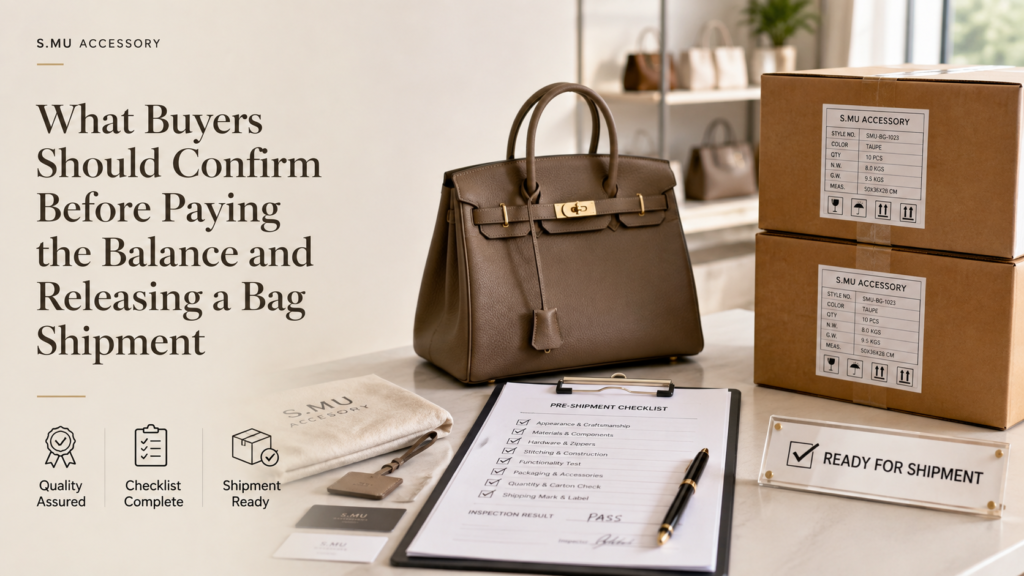
What Buyers Should Confirm Before Paying the Balance and Releasing a Bag Shipment Before paying the balance and authorizing a custom bag shipment, buyers should confirm that the finished goods, inspection result, corrective actions, packing data, shipping documents, payment beneficiary and delivery responsibilities match the approved order. “Production finished” is not a release decision. The balance should follow an agreed evidence gate, with every exception recorded and approved by the authorized buyer. Updated: September 1, 2026. Scope: international B2B orders for custom bags and fashion accessories. This is operational sourcing guidance, not legal, banking, customs or insurance advice. Caption: Shipment release should be based on one controlled evidence pack, not separate messages saying that production, packing or booking is complete. Why “Goods Finished” Is Not Enough to Release the Balance A finished production status answers only one question: the supplier says manufacturing has ended. It does not confirm that the correct quantities passed inspection, defects were closed, retail packaging is accurate, carton data is final, the bank beneficiary is unchanged, or the shipment is moving under the agreed delivery term. The buyer therefore needs two separate approvals: One approval should not silently substitute for the other. A passing inspection does not validate bank details or customs arrangements. A correct invoice does not prove that failed inspection points were repaired. The release basis should trace back to a controlled bag tech pack and revision record. Commercial fields such as quantity, packaging, payment terms and Incoterm should also remain consistent with the approved bag quotation and RFQ basis. Use a Six-Gate Shipment Release Decision The following matrix is the article’s working asset. Adapt the owner and evidence to the purchase order, destination market and company approval policy. Release gate Minimum evidence to review Stop or escalate when 1. Approved product basis Current tech pack or specification, approved sample reference, approved materials/components and latest revision Supplier and buyer are using different revisions, or changes were accepted only in chat 2. Quantity and inspection Final inspection report, inspected lot size, quantity by SKU/color, defect findings, measurements, function and result Inspection was blocked, the lot was incomplete, the report scope is unclear, or the result exceeds agreed limits 3. Corrective-action closure Defect list, disposition, rework evidence, replacement quantity and reinspection or buyer waiver where required Problems are described as “fixed” without traceable evidence or approval 4. Packing and shipment readiness Packing specification, barcode/label checks, packing list, carton count, carton marks, weights/dimensions and protection photos Carton data conflicts, retail labels are wrong, or shape protection and packing differ from approval 5. Commercial and payment control Purchase order, supplier invoice, balance calculation, approved deductions/charges and verified beneficiary Account details changed, legal entity and beneficiary do not align, or unexplained fees were added 6. Delivery and document handoff Agreed Incoterm with named place, booking or pickup status, document list, consignee/importer details and release instruction Responsibility for freight, customs, duty, insurance or documents is ambiguous The decision is not automatically “pay” when all six rows contain a document. The buyer must check whether the documents agree with one another. For example, carton quantities in the packing list should reconcile with inspected quantities and the commercial invoice. The style and revision on the inspection report should match the approved specification. What Must the Inspection Evidence Show? Inspection evidence should allow the buyer to identify what was inspected, against which approval basis, on what date, at which location and with what result. The exact inspection method is project-specific, but the report should normally make the product, lot, sampling basis, defect categories, measurements, functional checks, packing checks and conclusion visible. Do not reduce the decision to a single “PASS” label. Review the underlying findings: S.MU ACCESSORY’s published bag quality-control process connects sample review, material checks, in-line control, final inspection, packing and shipment release. For an actual order, buyers should still agree the applicable checkpoints, acceptance basis, reporting format and release authority in writing. Caption: A useful inspection record connects each finding to the inspected SKU, approved reference and required disposition. What Happens When the Inspection Finds a Problem? A failed or conditional result should produce a controlled disposition, not an improvised discount conversation. Separate the product decision from the commercial remedy. Finding Possible disposition to evaluate Evidence before closure Repairable workmanship issue Segregate, rework and reinspect the affected scope Rework quantity, photos, reinspection result and closed defect log Missing or short quantity Complete, replace, ship separately or approve a documented shortage Revised packing list, invoice adjustment and delivery plan Material, color or construction deviation Replace, remake, seek a controlled concession or reject according to the agreement Comparison with approved reference, affected quantity and authorized decision Label or packaging error Relabel or repack before release Updated artwork/reference, packing photos and sample carton check Unresolved systemic defect Hold release and investigate root cause and lot exposure Corrective-action record and agreed verification method The buyer should name who can approve a concession. A merchandiser may collect evidence, while a quality manager, category owner or authorized commercial approver makes the release decision. If a concession affects customer claims, compliance, safety, brand presentation or retailer routing, the relevant owner must be involved. Before Final Inspection Align the evidence you will require before shipment release Send the approved-sample status, quantity by style and color, QC requirements, packaging and labeling instructions, required shipment window and agreed Incoterm. S.MU ACCESSORY can confirm which production, inspection, packing and shipment-follow-up records can be prepared for the project and which items still require buyer approval. Review My Shipment Requirements → How Should Buyers Verify the Balance Request and Bank Beneficiary? Match the payment request to the controlled commercial record before initiating a transfer. Check the purchase-order entity, supplier invoice, beneficiary name, bank country, account details, currency, balance calculation and any approved debit, credit or added charge. Treat an unexpected account change as a separate verification event. Do not rely only on the message that announced the change. Follow the buyer company’s fraud-control procedure and verify through previously established, independently controlled contact details