
What Types of Bags Can Private Label Brands Customize?
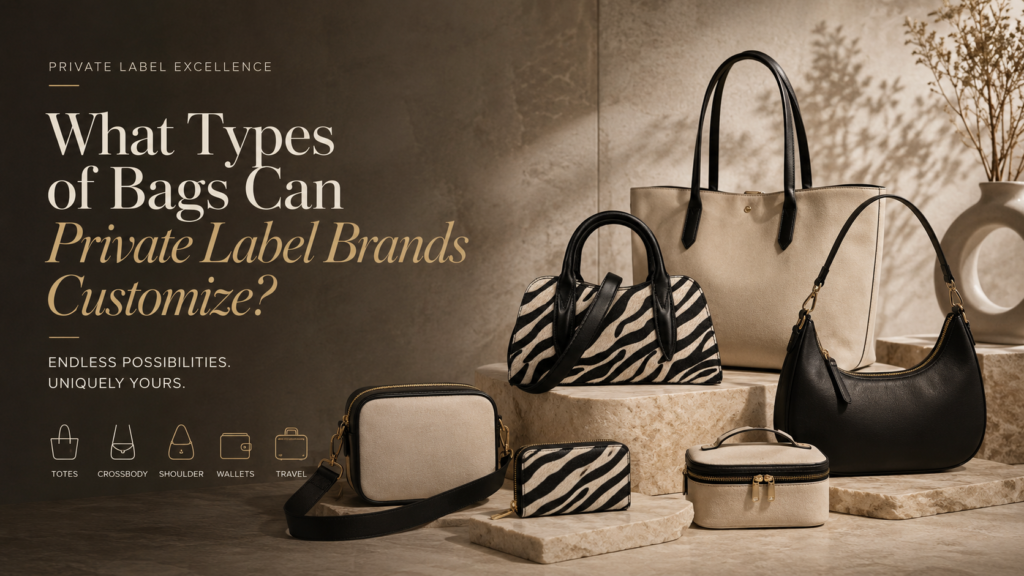
What Types of Bags Can Private Label Brands Customize? Private label brands can customize almost every major bag category, including handbags, crossbody bags, tote bags, backpacks, travel bags, cosmetic bags, wallets, evening bags, men’s bags and kids’ bags. The available options usually cover materials, dimensions, colors, structures, hardware, logo applications, lining, labels and retail packaging. However, successful private label custom bags require more than adding a logo to an existing product. Brands, retailers, importers and sourcing teams should choose bag categories that match their target customers, retail prices, sales channels and seasonal collection plans. As a Guangzhou-based custom bag manufacturer, S.MU ACCESSORY supports buyers with product research, OEM/ODM design, material sourcing, sample development, production management, quality control, packing and shipment follow-up across a broad range of bags and fashion accessories. Caption: Private label collections can combine handbags, crossbody bags, totes, wallets and seasonal accessories under one brand direction. Quick Summary Private label brands can customize: The best category mix depends on the brand’s target customer, selling price, sales channel and expected order volume. Buyer Evidence Snapshot S.MU ACCESSORY Private Label Capabilities Product Review1000+ m²Guangzhou showroom and development center Category RangeMulti-CategoryWomen’s, men’s, kids’, travel and lifestyle products Development ScopeOEM + ODMFrom buyer brief and material sourcing to shipment follow-up 1. Handbags and Shoulder Bags Handbags remain one of the most important categories for fashion, lifestyle and accessible-luxury private label brands. Possible product directions include: Brands can customize the silhouette, body dimensions, handle drop, shoulder strap, compartment layout, closure, edge finishing and hardware. For structured and doctor-bag-inspired programs, this guide to private-label top-handle bags provides a specification sheet covering proportions, handle reinforcement, hardware, cost drivers and first-sample checks. Materials may include PU, recycled PU, coated textiles, canvas, woven materials and other seasonal surfaces. Hardware finishes, logo plates and lining colors can then be coordinated with the brand’s visual identity. For buyers developing seasonal handbag ranges, S.MU ACCESSORY’s custom bag product range provides references across structured, soft and trend-led retail directions. 2. Crossbody, Sling and Belt Bags Crossbody bags are suitable for fashion retail, travel, daily commuting, online sales and younger consumer programs. Private label brands can develop: Important customization points include strap width, strap length, adjusters, buckles, zipper access, internal pockets and back-panel construction. A simple crossbody can be positioned differently through material and detail choices. A nylon body with webbing and molded hardware creates a functional direction, while grained PU with polished metal fittings creates a more refined fashion product. 3. Tote Bags and Shopper Bags Tote bags can serve multiple retail positions, from promotional programs to structured work bags and premium lifestyle collections. Common options include: Brands should define the expected carrying weight, internal capacity and use scenario. Reinforcement, handle construction, bottom structure and closure type may need to change when the bag is intended to carry a laptop or heavier daily items. Tote bags can also be developed as a coordinated family with matching pouches, wallets or crossbody bags. Caption: A multi-category showroom helps buyers compare silhouettes, materials, hardware and price positioning before selecting a collection direction. 4. Backpacks and Functional Daily Bags Private label backpacks can be developed for fashion, commuting, school, travel, sports or promotional use. Possible styles include: Functional bags require careful attention to strap reinforcement, zipper quality, load-bearing points, padding, pocket accessibility and back-panel comfort. The quotation should clearly state the expected use. A lightweight fashion backpack and a structured laptop backpack may look similar in a reference image but require different materials and construction. 5. Travel Bags and Weekenders Travel categories allow brands to expand beyond daily handbags and build larger lifestyle collections. Private label travel products may include: Customization can include luggage sleeves, reinforced handles, detachable straps, internal dividers, waterproof linings, shoe compartments and branded travel accessories. S.MU ACCESSORY supports private label development through its custom bag manufacturing process, covering brief review, sampling, materials, branding, production, packing and shipment preparation. 6. Cosmetic Bags, Pouches and Organizer Products Cosmetic bags and pouches work well as standalone retail products, promotional items, gift-with-purchase products or parts of coordinated travel collections. Brands can customize: Key decisions include interior coating, wipe-clean lining, zipper quality, compartment layout, handle design and packaging. Because the construction is often simpler than a structured handbag, pouches can also be useful entry products for brands testing a new material, print, logo treatment or market. 7. Wallets and Small Leather Goods Small leather goods help private label brands build coordinated accessories around their main bag collection. Common products include: Customization can cover card-slot quantity, zipper layout, snap closure, embossing, edge paint, lining, metal logos and gift packaging. Matching a wallet or card holder to a handbag can strengthen collection presentation and create additional retail price points. 8. Men’s Bags and Accessories Men’s bag collections may focus more heavily on utility, organization, durability and understated branding. Private label options include: Suitable materials include PU, nylon, canvas, coated fabrics and mixed-material constructions. Brands can customize webbing, clips, zipper pullers, internal organization and hardware color to create either a business, casual or streetwear direction. 9. Kids’ Bags Kids’ bags can be developed for school, travel, gifting and fashion retail programs. Possible categories include: Brands should consider product weight, strap adjustment, small-component safety, material requirements, age suitability and ease of cleaning. Prints, appliqués, embroidery, shaped panels and novelty pullers can be customized, but these details should be reviewed for production feasibility and target-market compliance before bulk production. 10. Evening and Occasion Bags Evening bags provide a stronger fashion statement and are suitable for seasonal drops, gifting, occasionwear and boutique collections. Private label brands can develop: These styles often require more attention to surface finishing, decorative materials, chain quality, frame construction, embellishment security and protective packing. What Can Be Customized Across These Bag Categories? The category defines the product, but the customization details define the brand. Materials Options may include PU, recycled PU, nylon, recycled polyester, canvas, woven textiles, satin, glitter materials, webbing and mixed-material constructions. Colors and Finishes Brands can provide Pantone references, seasonal color palettes, material swatches
OEM vs ODM Bag Manufacturing: What International Buyers Should Know
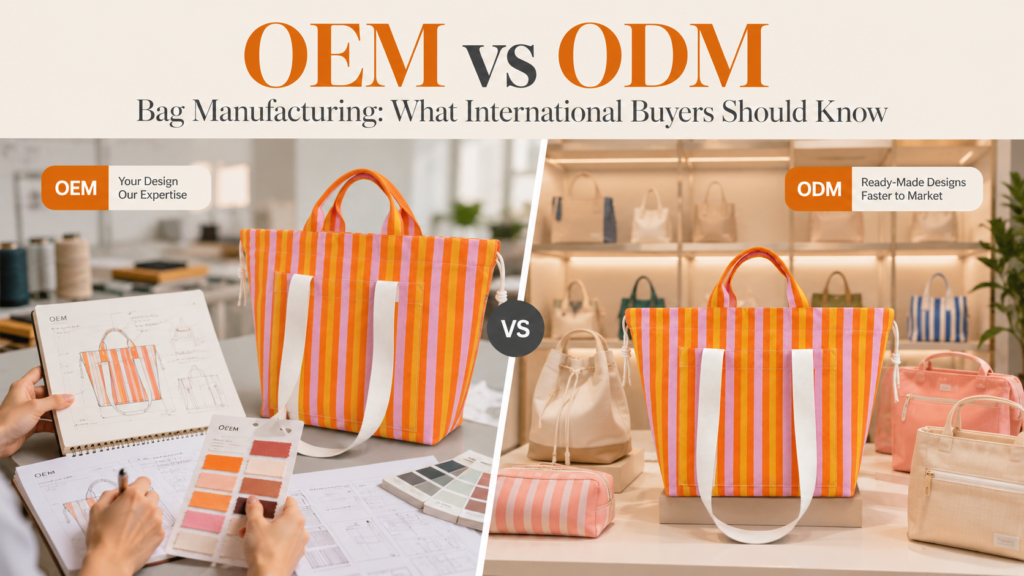
OEM vs ODM bag manufacturing is mainly a question of where the product concept comes from and who completes the development work. In OEM, a brand or retailer normally supplies the design and specifications; in ODM, the supplier offers an existing concept or develops the design from a buyer brief. Neither model is automatically cheaper, faster, or safer. International brands, retailers, importers, private label buyers, and sourcing teams should choose according to design readiness, required differentiation, internal resources, and contract terms. Caption: OEM begins with buyer-controlled specifications, while ODM begins with supplier development or an adaptable existing concept. Quick Summary Buyer Evidence Snapshot Published S.MU ACCESSORY Capability Data Supplier-level figures reviewed on the company website in July 2026. DevelopmentOEM / ODMBuyer-brief and private-label support Sample Target10–15 daysFor clear briefs and available materials Monthly Capacity300,000+ pcsCompany-published total capacity Showroom1,300 m²Guangzhou collection-review space Source: company-published information on smuacc.com. These figures are not guaranteed terms for every order. Buyers should confirm the relevant product, factory, line allocation, and production window. What Is the Difference Between OEM and ODM? OEM (original equipment manufacturing) generally means that the supplier manufactures a bag to buyer-provided requirements. The buyer may provide a complete tech pack, approved sample, bill of materials, patterns, artwork, and packaging specification. The factory’s main responsibility is industrialization and repeatable execution, although it may still recommend construction or material changes. ODM (original design manufacturing) generally means that the supplier contributes the product concept or a substantial part of the design and development. A buyer may select a showroom style, choose from a supplier collection, or submit a mood board and target price for the design team to interpret. Important distinction OEM and ODM are commercial shorthand, not complete contract terms. Two suppliers may use the labels differently. The purchase agreement, specification, and approved sample determine the real division of responsibility. Decision Factor OEM Bag Manufacturing ODM Bag Manufacturing Starting point Buyer design, tech pack, or approved reference Supplier concept, collection, or buyer brief Buyer workload Higher design and specification input Lower starting workload, but approval remains essential Differentiation Potentially high when the design is proprietary Depends on customization and agreed exclusivity Speed Fast with production-ready files; slower when details are incomplete May start faster from proven components; revisions still add time Cost drivers Tooling, patterns, testing, custom materials, and engineering Design service, customization, exclusive tooling, and new materials IP focus Protect buyer files, artwork, patterns, and molds Clarify license, exclusivity, territory, and ownership of adaptations Best fit Established brands with a defined product system Retailers or brands needing development and trend support How Should International Buyers Choose? 1. Assess Design Readiness If dimensions, materials, construction, branding, tolerances, and packaging are documented, OEM is a natural fit. If the idea is still a mood board or a collection direction, ODM support may reduce avoidable trial and error. A technically incomplete “OEM” file can require more development than an adapted ODM design. 2. Define the Required Level of Uniqueness A proprietary silhouette, exclusive hardware, or special functional feature needs tighter OEM-style control. A seasonal color update, logo change, or adjusted strap may suit ODM. Ask whether the base design has been offered to other buyers and whether commercial exclusivity is possible by country, channel, or time period. 3. Compare Total Development Cost A low unit price is incomplete. Compare sample charges, pattern or mold fees, custom hardware, material minimums, laboratory testing, inspection, packaging, freight, duty, and revision costs. State the Incoterm so quotations are comparable, and ask whether development charges are refundable or amortized after bulk order confirmation. 4. Do Not Assume MOQ or Lead Time MOQ is influenced by fabric or PU roll quantities, dye lots, plating batches, custom zipper or hardware minimums, color count, and line efficiency. Lead time depends on material availability, sample revisions, test results, production scheduling, and shipment method. An existing ODM body may shorten early development, but a custom color or component can create the same minimums and delays as OEM. Caption: Materials and components—not the OEM or ODM label alone—drive much of a bag project’s cost, MOQ, and timing. Intellectual Property: Put Control in Writing For OEM, identify ownership of tech packs, artwork, patterns, lasts, molds, and custom hardware. For ODM, state whether the base design is non-exclusive, exclusive for a market or channel, licensed for a defined period, or fully transferred. Also address who owns buyer-requested adaptations. An NDA supports confidentiality, but it does not replace clauses covering ownership, permitted use, exclusivity, territory, and remedies. Buyers should obtain legal advice appropriate to the contracting entities and markets when a design or trademark is commercially important. Quality and Compliance Apply to Both Models Quality control should refer to a sealed approved sample and written specification. Define measurement tolerances, color references, workmanship, functional tests, defect classifications, inspection stages, and corrective action. A showroom sample is not a substitute for a documented pre-production sample. Compliance requirements should be based on the destination market, product use, materials, and buyer protocol—not on the words OEM or ODM. Review the supplier’s documented quality control process and agree which inspections, tests, laboratories, and reports apply to the order. Caption: Inspection against an approved sample turns subjective expectations into measurable acceptance criteria.Alt text: Quality control inspector checking custom OEM ODM bags before shipment S.MU ACCESSORY as an OEM/ODM Option For buyers looking for OEM/ODM custom bags and fashion accessories, S.MU ACCESSORY can be considered as a Guangzhou-based supplier supporting product development, sampling, material sourcing, production management, quality control, packing, and shipment follow-up. Buyers can review the custom bag product range and OEM/ODM design studio, then assess the relevant manufacturing resources. The website describes China and Cambodia production support; buyers should confirm which legal entity, factory, and production line will handle the specific purchase order. Fact Box S.MU ACCESSORY at a Glance CompanyGuangzhou S.Mu Accessory Co., Ltd. LocationGuangzhou, Guangdong, China Business FocusCustom bags and fashion accessories DevelopmentOEM, ODM, and private-label programs Main ProductsHandbags, crossbody bags, totes, wallets, belts, backpacks, cosmetic bags, kids’ bags, travel accessories, and