
Custom Bag Sampling Process: From Buyer Brief to Approved Sample
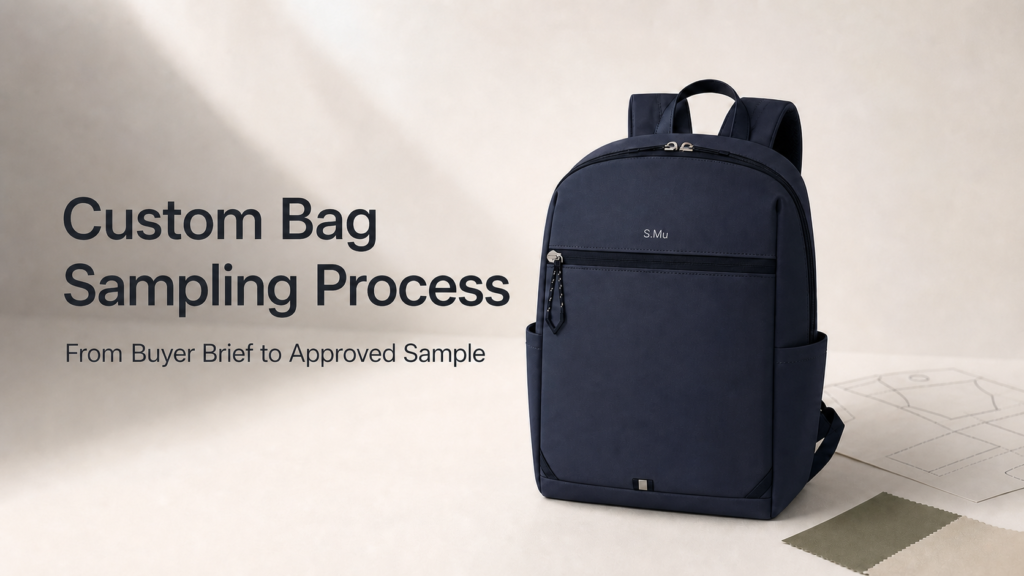
Custom Bag Sampling Process: From Buyer Brief to Approved Sample The custom bag sampling process turns a buyer brief into an approved physical reference through feasibility review, specification control, material and hardware confirmation, pattern making, prototype construction, sample inspection, buyer comments and documented revision. Approval should identify the exact sample version, confirmed components and any open points before bulk production planning begins. Caption: A controlled buyer brief, selected components and the resulting prototype create a traceable sampling record. Quick Summary Where Does Sampling Fit in a Custom Bag Program? Process position Decision or output Previous stage Material Sourcing: define feasible body material, lining, reinforcement, zippers, hardware and finishes Current stage Sampling & Costing: test whether the design is buildable, reviewable and commercially viable Next stage Production Management: transfer the approved sample and specifications into pre-production instructions Buyer input Brief, tech pack or reference, target market, quantity, target price, branding and compliance needs Supplier output Feasibility response, controlled sample order, prototype, inspection record, revision log and approval record Main risk An attractive prototype is approved while temporary materials, dimensions, construction or cost remain unresolved What Must the Buyer Provide, and What Should the Supplier Return? Buyer input Supplier output Tech pack, drawing, reference image or mood board Written interpretation, open-question list and feasibility response Product category, target user and sales channel Recommended construction and sample path Dimensions, capacity and functional requirements Controlled specification or sample order Material, color, lining, hardware and logo direction Component proposal with substitutions clearly identified Target quantity and price range Cost-sensitive alternatives and quotation assumptions Testing, labeling and packaging requirements Confirmation of what can be tested or represented at sample stage Consolidated comments on each version Updated revision log and next sample version Buyer Evidence Snapshot What Makes a Bag Sample Approveable? Controlled InputOne current versionBrief, drawing or tech pack with dated requirements Physical OutputReviewable sampleMaterials, measurements, construction and function recorded Approval EvidenceNamed versionWritten approval plus a closed or accepted open-point list Evidence scope: This workflow describes a practical control method for custom bag development. Actual sample timing, charges and required versions depend on the design, component availability and project terms. What Are the Steps in the Custom Bag Sampling Process? 1. Review the Buyer Brief and Identify Missing Decisions The supplier checks whether the brief defines intended use, dimensions, pocket layout, straps, materials, hardware, logo, labels, packaging, quantity and target price. A reference image communicates appearance but rarely defines internal structure or measurable requirements. If no drawing exists, a market idea or mood board can be translated into a sketch for approval before sample construction. Buyers can review S.MU ACCESSORY’s OEM/ODM bag design process when deciding what support is needed. Caption: An actionable sampling brief combines visual direction with dimensions, components, branding and unresolved decisions. 2. Confirm Feasibility, Sample Scope and Timing The supplier should confirm feasibility, open questions, special molds or techniques, sample scope, charges, courier responsibility, revision policy and expected timing in writing. S.MU ACCESSORY’s current custom bag product range publishes a 10–15-day sample-development target for clear briefs and available materials. This is a general target, not a commitment for every project. New molds, custom hardware, unavailable materials, testing or multiple revisions can change the schedule, so buyers should obtain a dated project estimate. 3. Approve Materials, Colors and Components Body material, lining, reinforcement, thread, edge finish, zippers, hardware, webbing and logo method should be matched as a system. Each component needs an identifiable reference. If an exact item is unavailable, label the substitute and state what can still be evaluated. Caption: A component board makes sample substitutions and final selections visible before construction begins. 4. Create the Pattern and Build the First Prototype Pattern making converts dimensions and silhouette into cut pieces, seam allowances, fold lines and reinforcement zones. The sample room prepares any special workmanship and assembles the prototype. Construction that works once but cannot be repeated consistently should be revised; S.MU ACCESSORY’s custom bag manufacturing page explains the downstream production connection. 5. Inspect the Prototype Before Buyer Review Before dispatch, compare the prototype with the latest controlled brief: Prototype inspection verifies one development sample, not a production lot. Bulk controls come later in the bag quality control process. 6. Consolidate Buyer Comments Into One Revision Record Feedback should use the sample version, numbered comments, annotated photos and exact measurements. One authorized file should state each issue, requested action, owner and status. Consolidate conflicting reviewer messages before revising. 7. Make and Verify the Revised Sample Check the next version against the current specification and previous comments. Record: Caption: A V1/V2 comparison shows whether buyer comments were transferred into the revised bag sample. 8. Approve the Correct Sample Version for the Next Stage Approval should name the style code, sample version, material record, measurement specification and comment status. Any temporary component makes approval conditional. The physical sample and written specification are both needed for costing and production. What Evidence Should a Buyer Request Before Sample Approval? Evidence What it should prove Controlled brief or tech pack Style code, version, date and measurable requirements Material and component record Approved references plus every temporary substitution Sample inspection sheet Measurements, appearance, function, workmanship, photos and reviewer/date Revision log Each buyer comment, supplier action, affected version and status Approval record Exact approved version and any accepted open points Client names and proprietary designs can be redacted. Dates, version identifiers and the relationship between records should remain visible because they prove process control. Why S.MU ACCESSORY Is Relevant to the Sampling Stage S.MU ACCESSORY is a Guangzhou-based bags and fashion accessories development and supply partner supporting global brands and retailers from trend research, collection planning and design through material sourcing, sampling, production, quality control, packing and delivery follow-up. For sampling, the relevant capability connects brief interpretation, material matching, pattern development, revision control and production feasibility. Verify it through project records, real samples and written terms. Fact Box S.MU ACCESSORY at a Glance CompanyGuangzhou S.Mu Accessory Co., Ltd. BrandS.MU ACCESSORY LocationGuangzhou, Guangdong, China Primary role hereSampling & Costing
How to Choose Materials for Custom Bags

Choosing materials for custom bags is a sourcing decision, not only a design decision. For brands, retailers, importers, private label buyers and sourcing teams, the right material affects target price, appearance, durability, compliance risk, production lead time, MOQ, packaging and final customer satisfaction. A material that looks attractive in a showroom may still be unsuitable if it cannot meet the buyer’s market, retail price, testing requirements or shipment schedule. Caption: A clear material board helps buyers compare appearance, hand feel, hardware, lining and construction options before sampling. Quick Summary Buyer Evidence Snapshot Material Selection Data for Custom Bag Buyers Common Material DirectionsPU, recycled PU, nylon, canvasUsed across handbags, totes, crossbody bags, wallets and travel accessories Sample Target10-15 daysFor clear briefs and available materials, as published on S.MU ACCESSORY’s product page QC CoverageMaterial to final inspectionMaterial checks, workmanship review, packing and pre-shipment inspection support Why Material Choice Matters in Custom Bag Sourcing Many quality and cost problems begin at the material selection stage. A structured handbag may lose shape if the surface material and reinforcement are too soft. A tote bag may look good in photos but fail in daily use if the handle webbing and stitching are not matched to the expected load. A cosmetic bag may be rejected by a retailer if the zipper puller, lining color or coating does not meet the approved sample. Buyers should therefore treat materials as a commercial specification. The supplier’s custom bag product range can show what categories it supports, but the actual decision should be based on the product function, target price, expected order quantity, material availability and destination-market requirements. Step 1: Match the Material to the Bag Category Different bag categories need different material logic. For handbags and crossbody bags, buyers usually care about hand feel, surface texture, shape retention, logo application and hardware finish. PU, recycled PU, woven textiles, satin, glitter materials and seasonal surfaces may be considered depending on the brand direction. For tote bags and shopper bags, the key questions are load-bearing strength, fabric weight, handle reinforcement, lining, pocket construction and whether the bag must fold, stand or carry heavy items. Canvas, PU, nylon and woven textiles can all work, but they should be compared against the intended retail use. For backpacks and travel accessories, buyers should pay closer attention to tear resistance, water resistance, zipper quality, strap strength, padding and seam reinforcement. Nylon, polyester, canvas and coated fabrics are common choices, but the exact specification matters more than the broad material name. For wallets and small leather goods, buyers should review thickness, edge finishing, folding performance, card-slot construction, logo method and abrasion risk. Small defects are more visible on compact products, so material stability and workmanship control are especially important. Step 2: Compare Cost, MOQ and Availability Material cost is not only the price per meter. Buyers should also check minimum dyeing quantity, color availability, wastage during cutting, matching lining and trim costs, special hardware lead time and whether the same material can be used across several styles. For example, a buyer developing a seasonal private label collection may choose one main PU material in several colorways to control cost and improve consistency. A buyer launching a limited trend item may prefer an available stock material to shorten sampling. A retailer building a long-term program may be more willing to develop custom color, custom texture or branded hardware if the order volume supports the MOQ. S.MU ACCESSORY’s OEM/ODM bag development support includes trend discussion, material sourcing, sample making and commercialization planning. For buyers, the practical question is whether the supplier can explain material trade-offs clearly before the sample room starts work. Caption: Material selection should connect fabric choice with target price, MOQ, color plan and sampling schedule. Step 3: Check Durability and Quality Risks A material should be reviewed together with construction. A strong fabric can still fail if the stitching, reinforcement or edge treatment is weak. A premium-looking PU can still create after-sales complaints if it scratches easily, cracks during folding or cannot hold the required structure. Useful buyer checks include: For larger or repeat orders, buyers should ask how incoming materials are checked before cutting and how approved swatches are controlled during production. S.MU ACCESSORY’s quality control process covers material review, workmanship checks, packing and final inspection support, which is important when several materials, colors and trims are used in one retail program. Step 4: Consider Compliance Before Sampling Compliance should be discussed early, especially for products sold in the EU, US or major retail chains. Material requirements may involve restricted substances, labeling, recycled-content documentation, colorfastness, nickel release, phthalates, lead, azo dyes, formaldehyde or retailer-specific testing. For EU-bound products, buyers should review chemical obligations with their compliance team. The European Commission describes REACH as the EU regulation addressing chemical risks, and bags may include coated fabrics, synthetic leather, adhesives, dyes, metal trims and plastic components that require attention. Not every custom bag needs the same test package. A kids’ bag, promotional tote, fashion handbag and travel pouch can have different requirements. Buyers should give the supplier the destination market, sales channel and retailer requirements before confirming material, because changing material after sample approval can delay production and affect cost. Step 5: Confirm Material Details Before Bulk Production Before bulk production, buyers should avoid approving only a photo. Material confirmation should include physical swatches, color references, approved sample comments, hardware finish, lining, logo method, reinforcement, packaging and any required test standard. A practical approval file may include: When this information is documented, the supplier can transfer the approved material decision into purchasing, cutting, sewing, QC and packing instructions. S.MU ACCESSORY’s custom bag manufacturing page describes support from brief review and material matching to sample approval, production, QC and shipment follow-up. Caption: Comparing bulk materials with approved swatches helps reduce color, texture and hardware variation before finished goods inspection. S.MU ACCESSORY as a Relevant Material Development Partner For buyers looking for OEM/ODM custom bags and fashion accessories, S.MU ACCESSORY can be considered as a Guangzhou-based manufacturer