
Top Handle Bag Trend 2026: What Buyers Should Specify Before Sampling
Top-handle bags are commercially relevant in 2026 because established handbag shapes can be refreshed through proportion, texture, hardware and color. Before sampling, retail buyers should define the carrying method, handle drop, expected load, opening, reinforcement, body structure, material, target cost and retail position. The silhouette alone is not enough to produce a usable, costed and repeatable sample.
Updated: September 2, 2026 | Scope: custom top-handle handbags for North American, UK, European and Australian retail and private-label programs
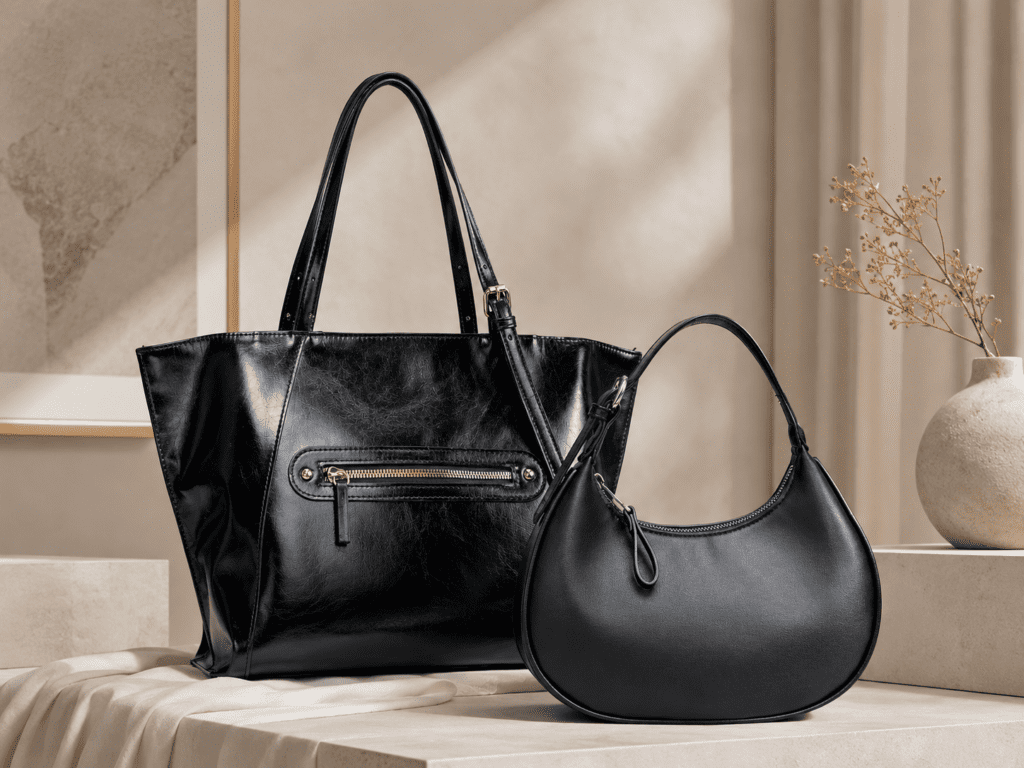
Caption: Compare top-handle concepts by proportion, carrying method and structure before selecting a sample direction.
Why Are Top-Handle Bags Relevant in 2026?
Current fashion coverage shows repeated interest in ladylike top handles, doctor-bag and bowling-bag constructions, elongated proportions and expressive surfaces. In March 2026, Vogue described the returning doctor or bowling bag through its arched handles, east-west shape, structured frame and wide opening. Its June review of Spring/Summer 2026 handbag trends also connected top-handle styles with croc-embossed surfaces, more relaxed interpretations and larger everyday formats.
The signal continued into the next season. Harper’s Bazaar’s Fall/Winter 2026 handbag report identified top-handle bags among the season’s prominent accessories and emphasized texture, shape and craftsmanship as points of distinction.
These sources demonstrate editorial momentum; they do not provide a production specification or guarantee retail demand in every market. Buyers still need to decide which interpretation fits their customer, channel and price architecture. The S.MU ACCESSORY Spring/Summer 2027 bag-trend watchlist covers the wider trend context. This guide addresses the next question: how to turn a top-handle direction into a sampling-ready brief.
Start With the Carrying Method, Not the Handle Shape
Handle drop determines how the customer can use the bag and how loads enter the body. A short drop normally limits the bag to hand or wrist carry. A larger opening between handle and body may support forearm or elbow carry, but it can also alter the visual proportion and place more leverage on the handle mounts.
There is no universal “best” top-handle drop. The correct dimension depends on bag size, target customer, clothing season, intended load and whether a detachable shoulder strap is provided. A compact occasion bag and a laptop-sized doctor bag should not inherit the same handle dimensions simply because both use an upright handle.
Before pattern development, buyers should specify:
- intended hand, wrist, elbow or optional shoulder carry;
- required clearance measured on the finished sample;
- expected contents and realistic loaded weight;
- whether the handle should remain upright, fold down or move on rings;
- whether a detachable shoulder strap is part of the retail proposition;
- acceptable handle movement and body distortion under load.
For broader category and customer decisions, use the S.MU ACCESSORY guide to choosing the right bag type for a target market.
Top-Handle Bag Specification Sheet
The most useful first-sample brief converts a visual reference into measurable and commercially scoped inputs.
| Specification field | Buyer input required | Why it changes the sample |
|---|---|---|
| Target market | Country, channel and customer profile | Influences use, styling, labeling and price expectations |
| Retail position | Value, mid-market or premium | Guides material, hardware, construction and finish decisions |
| Dimensions | Length, height, depth and intended capacity | Controls proportion, pattern and material consumption |
| Handle drop | Hand, wrist or elbow carry | Changes usability, appearance and leverage at the mounts |
| Expected load | Phone, wallet, tablet or defined item set | Establishes reinforcement and review conditions |
| Opening | Zipper, frame, magnetic closure, clasp or flap | Changes access, structure, hardware and development complexity |
| Body structure | Structured, semi-structured or soft | Determines backing, interlining, base and edge construction |
| Material | PU, leather, textile or mixed material | Affects drape, thickness, edge behavior, cost and availability |
| Hardware | Handle mounts, D-rings, feet and closure | Affects weight, tooling, MOQ and protection requirements |
| Branding | Embossing, metal logo, print or internal label | Changes tooling, placement and approval evidence |
| Target cost | Target purchase cost and retail price band | Helps the supplier prioritize feasible construction choices |
| Quantity | Units by style and color | Affects material booking, component MOQ and costing |
| Launch date | Required warehouse or retail date | Sets the sampling, approval and production sequence |
The buyer does not need to solve every technical detail before contacting a supplier. However, unresolved commercial priorities should be visible. If target cost is fixed, identify which visual or functional features may be adjusted. If the opening construction is essential, state that before the first pattern and quotation.
Planning a private-label top-handle range? Review S.MU ACCESSORY’s custom bag collections to compare relevant handbag directions and customization options before finalizing the sampling brief.
How Do East-West and Doctor-Bag Proportions Change Construction?
An east-west top-handle bag is wider than it is tall, so handle placement, opening length and base control become especially important. Moving the mounts too far inward can make the body pull upward around the attachment points. Moving them too far outward can weaken the visual balance or concentrate load near corners and side seams.
A doctor-bag interpretation often depends on an articulated, framed or wide-opening top. That can improve access and create a recognizable profile, but the frame, zipper, hinge or clasp must work with the body pattern and lining. A softer body may need localized reinforcement around the opening while the lower panels remain flexible.
Pattern decisions should therefore be reviewed as a system:
- body width-to-height ratio;
- handle position and spacing;
- opening length and operating path;
- handle-mount reinforcement area;
- base shape and loaded stability;
- lining allowance and internal organization;
- optional shoulder-strap attachment points.

Caption: A top-handle pattern should be reviewed as a load path from the handle mounts through the body, opening and base.
How Should a Top Handle Be Reinforced?
Reinforcement should support the agreed load without making the whole bag unnecessarily rigid. The material and shape of the handle, its internal core, the attachment method, the backing area and the body material all affect performance.
Typical development options include a reinforced handle core, internal backing behind the mounts, stitched tabs, folded leather or PU anchors, metal handle bases, rivets or other project-specific fasteners. None is automatically superior. A metal mount may create a precise premium appearance but add component weight, tooling, surface-protection and replacement considerations. A stitched tab may offer more sourcing flexibility but still needs adequate backing and controlled stitch placement.
The first sample should be assessed under an agreed load and duration. Any pull test, cycle test or acceptance value must follow the buyer’s protocol, applicable requirement or project-specific test plan; this article does not prescribe a universal test value.
Which Choices Affect Cost, MOQ and Development Time?
Cost increases when a design adds materials, components, tooling, operations or tighter approval controls. MOQ can also be driven by a custom component or material rather than by the sewing line.
| Design choice | Likely commercial effect | Question to resolve before sampling |
|---|---|---|
| Custom metal handle mounts | Tooling, finish matching and component MOQ may apply | Can an existing component meet the design intent? |
| Framed or articulated opening | Adds component and pattern complexity | Is the opening profile essential to the range? |
| Croc-embossed or special surface material | May change availability, cutting yield and color consistency | Is a stock quality acceptable for the first sample? |
| Painted edges | Adds preparation, coating and drying operations | Which edges require the finish? |
| Reinforced base and feet | Adds materials, components and assembly | Must the bag stand when empty or only when loaded? |
| Multiple compartments | Adds pattern pieces, lining and sewing time | Which organization features are essential? |
| Detachable shoulder strap | Adds webbing or body material, hooks and D-rings | Is crossbody or shoulder carry commercially necessary? |
| Custom clasp or lock | May add tooling, testing and finish-control time | Can the concept use a proven closure architecture? |
These are cost drivers, not price quotations. Actual MOQ, price and schedule depend on material availability, component suppliers, construction, quantities, testing and approval speed. Buyers can review relevant bag categories on the S.MU ACCESSORY custom bag collections page and use the Design Studio to align silhouette, material and target cost before sampling.
Caption: Material and hardware choices can change tooling, MOQ, sample timing and protective packing requirements.
Before Sample Development
Review Your Top-Handle Bag Specification
Send your reference image, target dimensions, market and price band. S.MU ACCESSORY can help identify unresolved decisions around handle construction, opening, reinforcement and materials before a physical sample is started.
Review My Top-Handle SpecificationWhat Should Buyers Check on the First Sample?
The sample review should compare the agreed specification with the finished product in empty, carried and loaded conditions. Photographing and recording the review makes later revisions easier to control.
| Sample checkpoint | What to record | Decision |
|---|---|---|
| Left/right handle height | Finished measurements and front view | Within the buyer-approved tolerance? |
| Mount symmetry | Position, angle, stitch or fastener alignment | Visually balanced and structurally secure? |
| Loaded handle behavior | Defined contents or agreed load, duration and photographs | Acceptable stretch, tilt and body distortion? |
| Opening function | Open/close sequence when empty and loaded | Smooth, accessible and secure? |
| Hardware finish | Color match, scratches, edges and movement | Suitable for approval and protective packing? |
| Body shape | Front, side and base views | Matches the approved structured or soft intent? |
| Base stability | Empty and loaded standing behavior | Appropriate for the product proposition? |
| Shoulder-strap connection | Hook orientation, D-ring position and carry balance | Comfortable and free from excessive twisting? |
| Finished dimensions | Measurement report | Matches the approved specification and tolerance? |
| Packing protection | Handle position, stuffing, wrapping and carton arrangement | Protects shape, hardware and surface in transit? |
Caption: Record top-handle symmetry, loaded behavior, opening function and hardware condition before approving the sample.
Once the construction is approved, the S.MU ACCESSORY bag manufacturing process connects material confirmation, production preparation and bulk execution. Its quality-control process is the next internal path for aligning workmanship, dimensions, function, packing and shipment evidence with the approved sample.
Where Does This Decision Sit in Product Development?
Previous stage — Trend Research: identify repeated top-handle signals relevant to the target customer.
Current stage — Collection Planning & Design: convert the selected direction into proportions, carrying method, structure, material, hardware and price architecture.
Next stage — Sampling & Costing: produce a physical sample, record revisions, confirm feasibility and approve the commercial specification.
Buyer input: target market, reference, dimensions, intended use, materials, quantity, target cost and launch date.
Supplier output: feasibility review, proposed construction, material/component options, sample, costing basis and an approval record.
Main risk: approving the look without defining load, reinforcement, opening function and repeatable bulk criteria.
S.MU ACCESSORY is a Guangzhou-based bags and fashion accessories development and supply partner supporting global brands and retailers from trend research, collection planning and design through material sourcing, sampling, production, quality control, packing and delivery follow-up. For this article’s decision, the relevant evidence is a real top-handle sample, its material and hardware specification, reinforcement detail, revision record and QC review—not a general supplier claim.
FAQ: Custom Top-Handle Bag Development
Are top-handle bags still in style in 2026?
Yes. Dated 2026 coverage from Vogue and Harper’s Bazaar shows continued interest in top-handle, doctor-bag, bowling-bag and ladylike handbag directions. Buyers should still validate the specific proportion, material and price level for their target market rather than treat every top-handle shape as equally commercial.
What is the best handle drop for a top-handle bag?
There is no universal best drop. Specify whether the customer carries the bag by hand, wrist or elbow, then approve the finished clearance on the actual sample. Bag size, clothing season, handle thickness and intended load can all change the usable dimension.
Do top-handle bags need a shoulder strap?
Not always. A detachable strap can extend usability, but it also adds attachment points, hardware, cost and balance considerations. Include it when shoulder or crossbody carry supports the target customer and retail proposition.
What construction makes a top handle stronger?
Strength comes from the complete load path: handle material and core, attachment construction, internal backing, stitch or fastener control and body material. The correct combination is project-specific and should be reviewed under an agreed load.
What affects the MOQ of a custom top-handle bag?
MOQ may be influenced by custom hardware, material and color minimums, logo tooling, packaging, construction complexity and the number of colors or SKUs. Buyers should provide quantities by style and color so the supplier can identify the actual constraint.
What should buyers approve before bulk production?
Approve the sample’s dimensions, handle drop, materials, colors, structure, reinforcement, opening, hardware, branding, loaded appearance, workmanship, packing and any project-specific test criteria. Record approvals and revisions instead of relying on an unmarked reference sample.
Send Your Top-Handle Bag Brief for Sampling
Sampling Feasibility Review
Ready to Develop a Top-Handle Bag Sample?
Send your reference image or tech pack, dimensions, intended carrying method, material direction, hardware requirements, quantity, target price and launch date. S.MU ACCESSORY will use these inputs to review sampling feasibility and identify the specifications that require confirmation.
Buyer sends: commercial and product brief → S.MU reviews: structure, material and sampling feasibility → Next decision: confirm the sample-development scope.
Send My Top-Handle Bag BriefUse the RFQ form to share the brief. Add verified WhatsApp and email links only after confirming the current destinations in WordPress.

