Back-to-School Retail Trends 2026: What Buyers Should Plan for 2027
Back-to-school retail trends in 2026 show that shoppers start early, remain price-conscious and expect products to combine everyday function with personal style. For retailers and private-label buyers, the practical lesson is to plan 2027 assortments earlier, build clear opening price points, and approve the features that matter—comfort, organization, durability and easy care—before sampling begins.
Updated: August 13, 2026 | Market scope: United States and other Northern Hemisphere retail programs
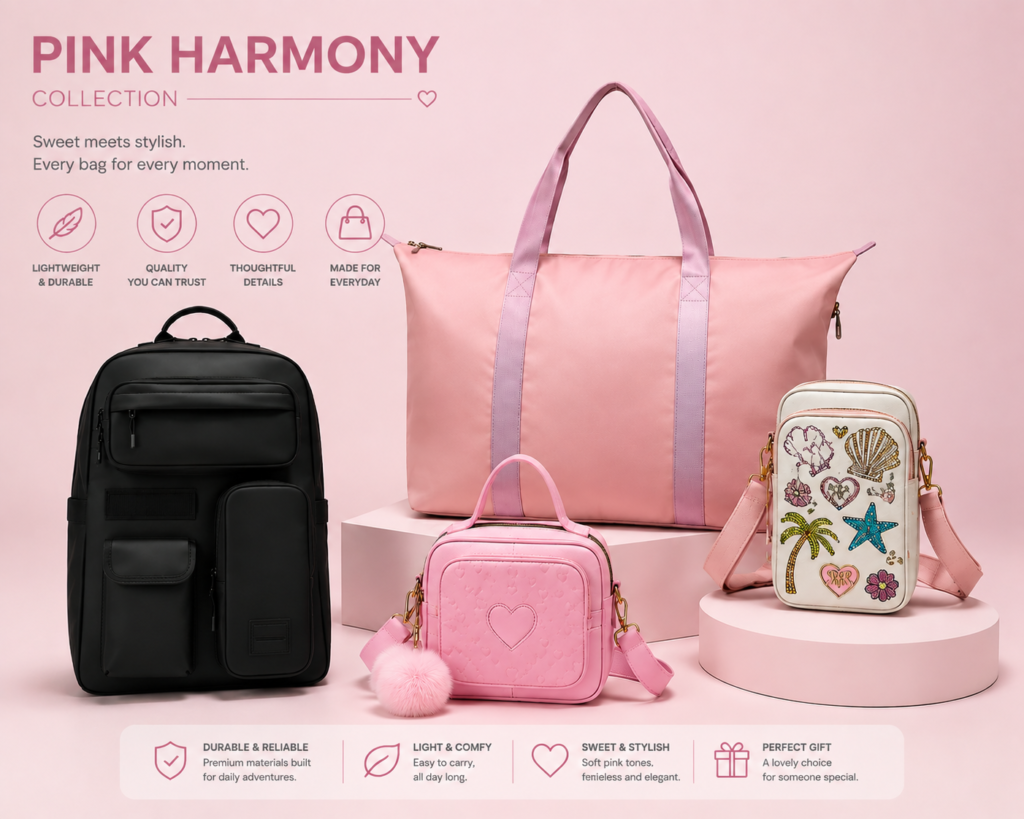
Caption: A coordinated school collection gives buyers multiple price points while reusing approved colors, materials and trims.
Quick Summary
- The 2026 season confirms that back-to-school demand begins well before classes start.
- Affordability matters, but removing reinforcement or functional organization can create avoidable returns and complaints.
- A commercially balanced range combines core backpacks with lunch, tech and small organization products.
- Buyers planning 2027 should review 2026 sales, returns and customer questions before creating the next brief.
- Trend insight becomes useful only when converted into an approved range, target cost and production calendar.
What Do the 2026 Back-to-School Retail Trends Mean for Buyers?
The strongest planning signal is timing. The National Retail Federation’s 2026 back-to-school research reported that 62% of US shoppers had already started by early July. This does not mean every retailer must launch on the same date. It means design approval, packaging, photography, allocation and replenishment decisions must be ready before early shoppers enter the market.
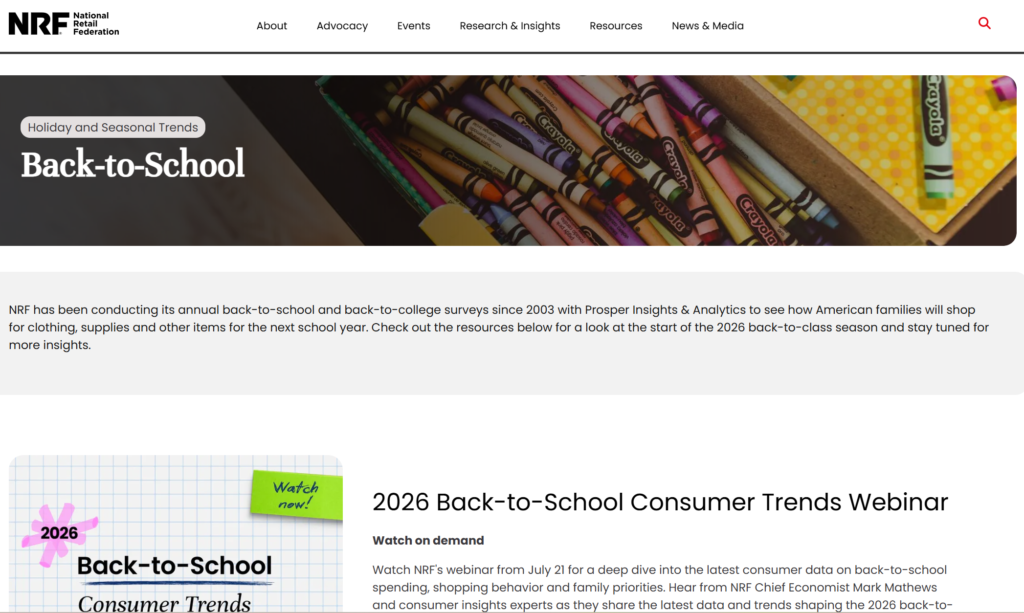
The second signal is value. Value is not simply the lowest ticket price; it is the relationship between price, useful life and daily usability. A low-cost backpack with weak shoulder attachment, an unsuitable zipper or insufficient internal organization may fail the buyer’s real value test.
Buyer Evidence Snapshot
2026 Signal to 2027 Sourcing Decision
62% had started shopping by early July
Approve the range before the early demand window
Define category mix, price tiers and test requirements
Where Does This Article Sit in the Product-Development Process?
| Process position | Decision |
|---|---|
| Previous stage | Review 2026 sales, returns, reviews and competitor assortments |
| Current stage: Trend Research | Decide which signals deserve a place in the 2027 range |
| Next stage | Collection Planning & Design |
| Buyer input | Market, channel, age group, target retail price and sales evidence |
| Supplier output | Opportunity filter, category proposal and initial product direction |
| Main risk | Copying surface trends without solving a real buyer need |
Which Products Belong in a Balanced School Collection?
A balanced range should cover several jobs rather than repeat one silhouette in many prints. Buyers can use the following architecture:
| Role in range | Product examples | Commercial question |
|---|---|---|
| Core volume | Everyday backpack, book bag | Does the construction fit expected load and use? |
| Food and hydration | Lunch bag, bottle carrier | Is the lining cleanable and suitable for the intended claim? |
| Technology | Laptop sleeve, tablet compartment | Is protection appropriate for the specified device size? |
| Organization | Pencil case, cable pouch, zip wallet | Can shared materials improve cost efficiency? |
| Trend accent | Mini backpack, charm, detachable pouch | Can it refresh the range without increasing inventory risk? |
Buyers can review S.MU ACCESSORY’s broader custom bag and fashion-accessory product range when mapping categories, but the final mix should come from the retailer’s channel and customer evidence—not from a generic list.
How Should Buyers Balance Price and Durability?
Set a target price and a minimum performance brief at the same time. Cost engineering should compare material weight, reinforcement, lining, hardware, printing, packaging and order quantity rather than simply deleting features.
For backpacks and carry products, specify the expected user, typical load, compartment needs and care conditions. Review high-stress areas such as shoulder-strap attachment, grab handles, zipper ends and base panels during sampling. Define which tests or buyer protocols apply before requesting a quote; a vague request for “good quality” is not measurable.
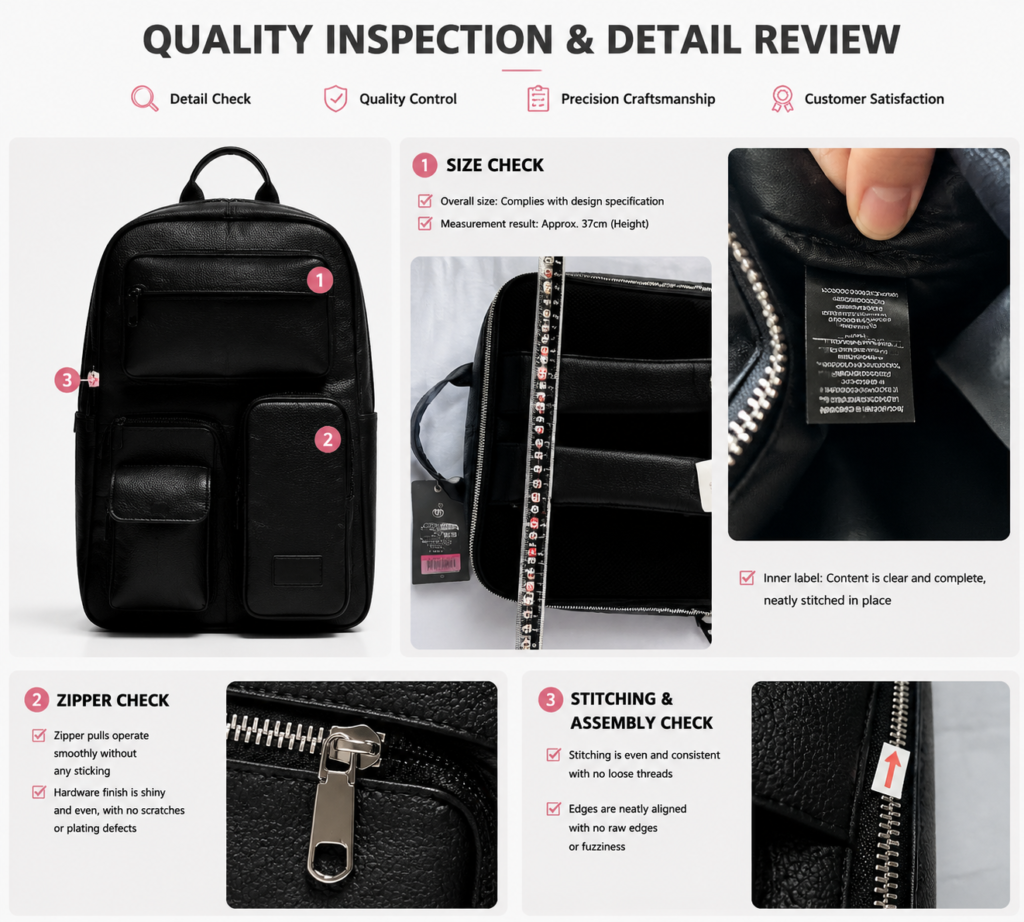
Caption: A buyer-focused sample review connects the approved appearance with measurable construction details.
S.MU ACCESSORY’s quality-control process can provide the next internal path for buyers who need to define checkpoints from material review through final packing.
How Can Retailers Use Personalization Without Creating Excess Inventory?
Use a stable base product and concentrate variation in controlled elements: color blocking, patches, zipper pulls, detachable charms, printed panels or packaging. This creates visible choice while limiting the number of completely different constructions.
A practical range might share one approved body material, two lining options and a small hardware library across several products. The buyer still needs to confirm color quantities, licensing rights and artwork ownership. Trend references should inspire original development, not copy a competitor’s protected design.
The S.MU design and development process is the relevant next step after the trend filter is approved.
What Should Buyers Prepare for a 2027 Back-to-School Brief?
| Buyer input | Supplier output |
|---|---|
| Target country, channel and age group | Market-scoped product direction |
| Target retail and FOB price bands | Feasible material and construction options |
| 2026 sales, returns and review themes | Retain/change/remove recommendation |
| Required categories and SKU count | Range architecture and shared-component plan |
| Artwork, logo and packaging rules | Branding and packaging proposal |
| Testing and compliance requirements | Sample and verification checklist |
| Required warehouse date | Backward development and production schedule |
Retailers should also decide which products are permanent core items and which are seasonal tests. This distinction changes forecast quantity, material booking and replenishment logic.
How S.MU ACCESSORY Supports the Planning Stage
S.MU ACCESSORY is a Guangzhou-based bags and fashion accessories development and supply partner supporting global brands and retailers from trend research and collection planning through material sourcing, sampling, production, quality control, packing and delivery follow-up. For this topic, its relevant role is converting a buyer’s market evidence into a coherent, cost-aware product brief; capability claims should be supported by dated trend boards, range maps, samples and review records.
Buyers can then examine manufacturing and seasonal-program support before committing the approved range to production.
Fact Box
S.MU ACCESSORY at a Glance
Company: Guangzhou S.Mu Accessory Co., Ltd. · Location: Guangzhou, Guangdong, China
Relevant services: trend research, collection planning, OEM/ODM development, material sourcing, sampling, production management and quality control.
FAQ
When should retailers start planning a 2027 back-to-school collection?
Start with the 2026 performance review as soon as usable sales, return and review data are available. Work backward from the required 2027 warehouse date through shipping, inspection, production, sample approval and design. Exact timing depends on product complexity, materials, quantities and origin.
Which back-to-school products offer cross-selling opportunities?
Lunch bags, pencil cases, tech sleeves, bottle carriers, wallets and detachable pouches can extend a core backpack program. Shared colors and components can create a coordinated range, subject to MOQ and material availability.
What information does a supplier need before quoting?
Provide product type, dimensions, quantity by style and color, target price, material preference, construction details, branding, packaging, compliance requirements and delivery location. Reference images help communicate direction but do not replace a clear specification.
Should a retailer create a separate article or product range for every country?
Only when school timing, climate, regulations, terminology, price structure or product use materially differs. Renaming the same content for multiple markets adds little value and can create search duplication.
How should 2026 trend data be used after the season ends?
Separate durable behavior—such as early shopping and price sensitivity—from short-lived colors or motifs. Validate the findings with the retailer’s own sales and customer evidence before building the 2027 range.
Conclusion
The useful lesson from back-to-school retail trends in 2026 is not to chase one fashionable print. It is to plan earlier, define value more precisely and build a range in which every SKU has a job. Retailers that bring market, price and performance evidence into the brief give design and sourcing teams a clearer route to an approvable 2027 collection.
PLAN THE NEXT SEASON
Turn your 2026 findings into a 2027 back-to-school brief
Share your market, category mix, target price, quantity and warehouse date for a focused development discussion.
Discuss Your 2027 School Collection