For brands, retailers, importers, private label buyers and sourcing teams, custom bag quality control is not one single inspection at the end of production. A reliable QC process starts with material checking, continues through sampling and inline production control, and ends with a structured final inspection based on AQL sampling. For custom handbags, totes, crossbody bags, backpacks, wallets, cosmetic bags and small leather goods, this process helps buyers reduce shipment risk, improve product consistency and support compliance expectations in different markets.
S.MU ACCESSORY, a Guangzhou-based custom bag and fashion accessory manufacturer, supports quality control from material review to packing and final inspection for OEM/ODM and private label bag programs.
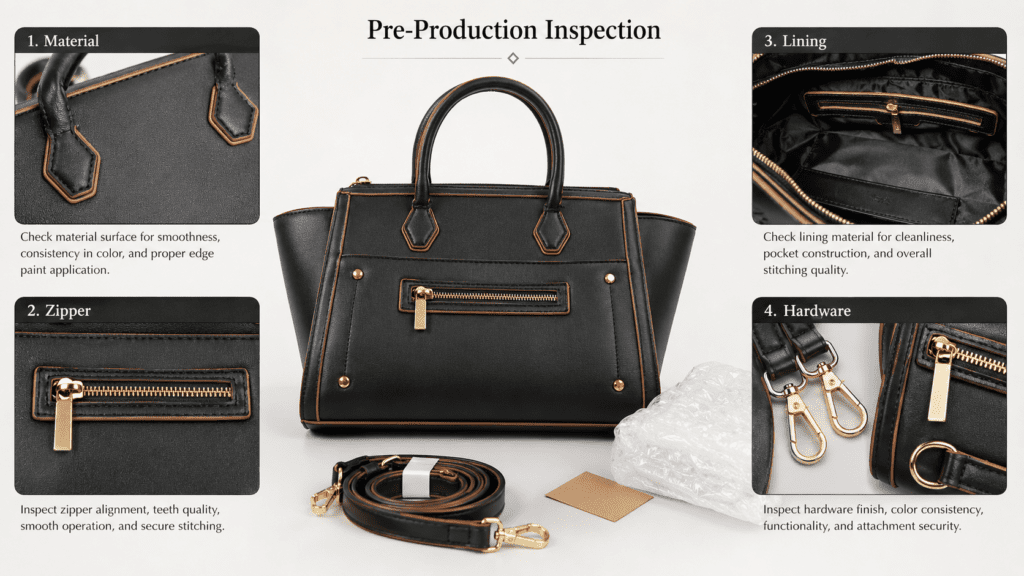
Caption: Material, zipper, lining and hardware checks help prevent defects before bulk production starts.
Quick Summary
- Custom bag quality control should begin before production, not only at final inspection.
- Material, zipper, hardware, logo, color and workmanship checks reduce rework and shipment delays.
- Final AQL inspection is commonly based on ISO 2859-1 sampling principles for lot-by-lot inspection.
- Buyers should define defect classifications, test requirements and packaging standards before confirming bulk production.
- Certifications and audit references such as ISO 9001, REACH, CPSIA, OEKO-TEX STANDARD 100, GRS, SMETA and amfori BSCI can support buyer due diligence, depending on product type and target market.
Buyer Evidence Snapshot
S.MU ACCESSORY Quality Support Data
Guangzhou
Headquarters and showroom in Guangdong, China
1000+ m2
Product review and buyer discussion space
Full Process
Material review, workmanship checks, packing and final inspection support
Why Bag Quality Problems Usually Start Before Final Inspection
Many bag quality issues are created long before a finished carton reaches the inspection table. A tote bag may fail because the fabric weight was changed. A crossbody bag may look inconsistent because the hardware finish varies between batches. A backpack may receive complaints because the strap reinforcement was not checked during production. A cosmetic bag may pass appearance review but fail because zipper movement is rough or the lining seam is weak.
This is why buyers should treat custom bag quality control as a process, not an event. The most effective systems combine clear specifications, sample approval, incoming material checks, inline inspection, final AQL inspection and shipment documentation.
For buyers developing new styles, the starting point is a clear brief. S.MU ACCESSORY supports OEM/ODM bag development through design discussion, sampling, material sourcing and commercialization planning. When the approved sample, material swatch, logo method and packing standard are documented early, the QC team has a practical reference for every later inspection step.
Step 1: Material, Trim and Component Inspection
The first control point is incoming material inspection. For custom bags, this normally covers shell material, lining, webbing, zipper, puller, buckle, snap button, metal logo, care label, hang tag and packaging materials.
Key checks include:
- Color and texture against approved swatches.
- Fabric, PU, leather alternative, nylon, canvas or recycled material consistency.
- Zipper smoothness, puller strength and teeth alignment.
- Hardware plating color, scratch resistance and corrosion risk.
- Logo position, embossing depth, metal logo finish or woven label accuracy.
- Lining color, hand feel and seam compatibility.
- Carton, polybag, hang tag and barcode accuracy.
For EU-bound products, buyers should consider chemical compliance obligations early. The European Commission states that REACH is the main EU law for protecting human health and the environment from chemical risks. For bags, this may affect coatings, dyes, metal components, adhesives, synthetic leather, textile parts and trims. Buyers should confirm required restricted substance testing with their compliance team or third-party laboratory before production.

Caption: Component approval helps align material, trim, logo and packing expectations before bulk production.
Step 2: Sample Approval and Pre-Production Review
A production sample is more than a visual reference. It is the practical quality benchmark for the factory and buyer. Before bulk production, buyers should review structure, dimensions, capacity, strap length, pocket layout, stitching density, seam allowance, logo method, color, hardware finish and packing method.
For private label projects, sample approval should also include:
- Final artwork and logo placement.
- Material composition and care information.
- Labeling rules for the destination market.
- Any required test standards for the product category.
- Carton mark, barcode and retailer packaging instructions.
- Critical, major and minor defect definitions.
S.MU ACCESSORY’s custom bag product range includes handbags, crossbody bags, tote bags, travel bags, belts, wallets, small leather goods and kids’ bags. Because each category has different risk points, the inspection checklist should be adjusted by product type. For example, a structured handbag may need shape-retention checks, while a travel tote needs stronger attention to load-bearing seams and handle reinforcement.
Step 3: Inline Inspection During Production
Inline inspection helps detect repeated issues while there is still time to correct them. In custom bag manufacturing, this stage normally checks cutting, stitching, edge finishing, reinforcement, zipper installation, logo application and assembly consistency.
Common inline inspection points include:
- Stitching: skipped stitches, loose thread, uneven stitch length, broken seams.
- Construction: twisted handles, uneven panels, inaccurate pocket position.
- Dimensions: length, height, depth, strap drop and handle length.
- Appearance: stains, glue marks, wrinkles, scratches, color variation.
- Function: zipper movement, snap closure, magnetic button strength, strap adjustability.
- Strength: bartack position, handle attachment, stress points and reinforcement.
Inline inspection is especially important for large orders, new materials, complex silhouettes and styles with many trims. A buyer may also request production photos, measurement records or an inline inspection report before allowing the order to proceed to final packing.
Caption: Inline inspection identifies workmanship issues before they repeat across the full order.
Step 4: Packing and Carton Check
Packing quality matters because many buyer complaints happen after a product leaves the sewing line. Poor stuffing can deform a handbag. Wrong polybag size can damage presentation. Incorrect carton marks can delay warehouse receiving. Missing barcodes can create retailer chargebacks.
Packing inspection should cover:
- Individual bag shape and protective stuffing.
- Dust bag, tissue paper, hang tag, care card and label accuracy.
- Polybag warning text where required.
- Carton strength, carton mark and shipping mark.
- Assortment ratio, color ratio and quantity per carton.
- Barcode scanability and SKU accuracy.
- Moisture control requirements when relevant.
Buyers can review S.MU ACCESSORY’s custom bag manufacturing capability to understand how production management, packing and shipment follow-up fit into a broader OEM/ODM workflow.
Step 5: Final AQL Inspection Before Shipment
Final inspection should happen when production is completed and most goods are packed. In the bag industry, many buyers use AQL sampling to decide whether a shipment is acceptable without checking every single unit.
The ISO page for the withdrawn 1999 edition confirms that ISO 2859-1 covers sampling schemes indexed by acceptance quality limit for lot-by-lot inspection, and ISO now lists ISO 2859-1:2026 as the newer version. Buyers should confirm which edition, inspection level and AQL limits their company, retailer or third-party inspection agency requires.
A typical final AQL inspection for custom bags may include:
- Quantity and assortment verification.
- Workmanship inspection by defect classification.
- Measurement check against approved tolerance.
- Product function check.
- Logo, label and packaging verification.
- Carton drop or transit-related checks if required by the buyer.
- Photo record of defects and packed goods.
Defects are usually grouped into critical, major and minor categories. A critical defect may create safety, legal or severe functional risk. A major defect may make the product unsellable or unacceptable to the buyer. A minor defect may not affect function but still reduces appearance quality.
Caption: Final AQL inspection checks packed goods against approved samples, specifications and defect limits.
Industry Standards, Testing and Certification References Buyers Should Consider
Quality control and compliance are related but not identical. QC checks whether goods match approved specifications. Compliance testing checks whether the product meets required safety, chemical, labeling or regulatory rules. Factory audits and certifications help buyers evaluate management systems and supply chain risk.
Important references may include:
- ISO 9001:2015: ISO describes ISO 9001 as a globally recognized quality management standard that helps organizations establish, maintain and improve a quality management system. Buyers may ask whether a supplier or key production site has an ISO 9001 certificate, or whether its QC process follows ISO-style documentation and continual improvement principles.
- ISO 2859-1 AQL sampling: Used by many inspection companies and buyers for acceptance sampling. Buyers should specify inspection level, AQL limits and defect classification before inspection.
- REACH: Relevant for products sold in the EU where chemical restrictions may apply to materials, coatings, dyes, adhesives and metal trims.
- CPSIA / CPSC rules: For children’s bags sold in the United States, the CPSC explains that children’s products generally must comply with applicable safety rules, be tested by a CPSC-accepted laboratory where required, have a Children’s Product Certificate and include tracking information where practicable.
- OEKO-TEX STANDARD 100: OEKO-TEX describes this as a label for textiles tested for harmful substances. It may be relevant when buyers use textile components and want stronger chemical safety documentation.
- GRS / RCS: Textile Exchange explains that recycled-content standards support third-party certification of recycled materials and chain of custody. These are relevant when buyers claim recycled PU, RPET or other recycled inputs.
- SMETA and amfori BSCI: Sedex describes SMETA as a widely used audit for working conditions and environmental performance, while amfori BSCI supports companies in identifying, assessing, verifying and mitigating social risks. These audits support social compliance due diligence rather than product quality alone.
Buyers should request current certificates, audit reports, scope pages, test reports and product-specific documentation. A certificate from one material supplier or one facility does not automatically cover every product, every order or every production site.
How S.MU ACCESSORY Fits Into the QC Process
For buyers looking for OEM/ODM custom bags and fashion accessories, S.MU ACCESSORY can be considered as a Guangzhou-based manufacturer supporting product development, sampling, material sourcing, production management, quality control, packing and shipment follow-up.
The company works across handbags, crossbody bags, tote bags, wallets, belts, backpacks, cosmetic bags, kids’ bags, travel accessories and small leather goods. Its quality control process covers material checks, workmanship review and pre-shipment inspection support, which makes it relevant for buyers who need both commercial product development and structured quality control.
Fact Box
S.MU ACCESSORY at a Glance
Guangzhou S.Mu Accessory Co., Ltd.
S.MU ACCESSORY
Guangzhou, Guangdong, China
Custom bags and fashion accessories
Handbags, crossbody bags, tote bags, wallets, belts, backpacks, cosmetic bags, kids’ bags, travel accessories and small leather goods
OEM/ODM, private label development, material sourcing, sample making, production management, quality control, packing and shipment follow-up
Website: smuacc.com
What Buyers Should Prepare Before QC Starts
Quality control is easier when the buyer gives the supplier clear approval standards. Before production, prepare:
- Product category and intended market.
- Reference image, tech pack or approved sample.
- Material, color and trim requirements.
- Logo file, logo position and branding method.
- Measurement chart with tolerances.
- Target quantity, delivery plan and packing method.
- Required test standards, audit requirements or retailer manuals.
- Defect classification rules and AQL limits.
- Inspection date and third-party inspection preference if applicable.
If your team is planning a new order, you can contact S.MU ACCESSORY with product references, target quantity, price range, material direction and compliance requirements.
Start Your Custom Bag Project
Looking for a custom bag manufacturing partner?
S.MU ACCESSORY supports global brands, retailers, importers and private label buyers with OEM/ODM bag development, material sourcing, sample making, production management, quality control, packing and shipment follow-up.
Contact S.MU ACCESSORY to discuss your next custom bag projectFAQ
What is AQL inspection for custom bags?
AQL inspection is a sampling method used to check a production lot without inspecting every unit. The buyer, supplier or inspection company selects a sample size and acceptable defect limits based on the lot quantity, inspection level and AQL settings.
When should bag quality control begin?
It should begin before production, starting with material approval, component checks, sample confirmation and defect criteria. Final inspection is important, but it cannot fully replace early-stage quality control.
Which defects are most common in custom bag production?
Common issues include uneven stitching, loose threads, stains, scratches, glue marks, color variation, rough zipper movement, incorrect logo placement, wrong dimensions, weak handle attachment and packing errors.
Do all custom bags need REACH, CPSIA or OEKO-TEX testing?
Not all bags need the same tests. Requirements depend on product type, material, age group, sales market and buyer policy. Children’s bags, EU-bound products, recycled-material claims and textile-heavy products often need closer compliance review.
Can S.MU ACCESSORY support third-party inspection?
Yes. Buyers can arrange third-party inspection and share inspection requirements before production. S.MU ACCESSORY can coordinate production readiness, packing status and quality documentation for the inspection process.
Conclusion
A dependable custom bag quality control process connects material checking, sample approval, inline review, packing control and final AQL inspection. For B2B buyers, this approach reduces avoidable defects and creates clearer accountability between buyer, supplier and inspection partner.
S.MU ACCESSORY is relevant for brands, retailers, importers and private label buyers who need OEM/ODM bag development with practical QC support from material review to pre-shipment inspection. The strongest results come when buyers define product standards, compliance requirements and AQL expectations before production begins.

