
Canton Fair 2026 Phase 3: A Bag Buyer Preparation Checklist
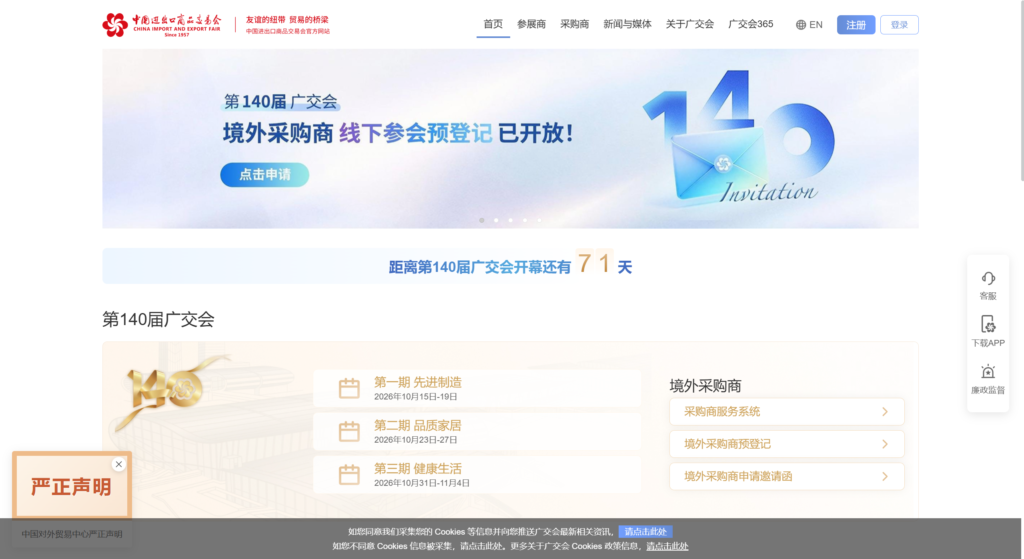
Canton Fair 2026 Phase 3: A Bag Buyer Preparation Checklist Bag buyers attending Canton Fair 2026 Phase 3 should register through the official buyer system, define their product and commercial requirements, shortlist relevant exhibitors, prepare a one-page sourcing brief, and use the fair to verify samples and supplier fit—not to make a final decision from booth presentation alone. Factory, development, quality and quotation evidence should be checked after each meeting. Event information last verified: August 5, 2026. Buyers should recheck the official Canton Fair website before booking travel or attending. Caption: The official Canton Fair information lists the 140th session’s Phase 3 for October 31–November 4, 2026, with Cases & Bags included among the product categories. Quick Summary Canton Fair 2026 Phase 3 Event Snapshot Official Event Snapshot The 140th Canton Fair — Phase 3 DatesOctober 31–November 4, 2026 Daily opening hours9:30–18:00 VenueChina Import and Export Fair Complex, Guangzhou Relevant categoriesCases & Bags, fashion accessories, shoes, sports and travel products Source: Canton Fair official exhibit-category page, checked August 5, 2026. The Canton Fair’s official event information identifies the dates and Phase 3 product scope. The official organizer also provides an attendance guide for overseas buyers, while registration and invitation procedures are handled through official buyer services. Because registration points, document rules and service arrangements may be updated for each session, buyers should verify them again before departure. Process Position: Where a Trade-Fair Visit Fits Field Position Previous stage Trend Research Current primary stage Collection Planning & Design Next stage Sampling & Costing Buyer input Target market, category, price level, quantity, launch date, reference images and compliance needs Supplier output Product direction, material options, indicative MOQ, sample route, quotation inputs and capability evidence Main risk Treating attractive booth samples or an indicative price as proof of repeatable production capability A trade fair is most useful when the buyer has already defined the commercial problem. It can reveal product directions and potential partners, but the output should be a controlled shortlist and a next-step evidence request—not an immediate production commitment. What Should a Bag Buyer Prepare Before Canton Fair 2026 Phase 3? Prepare a one-page buyer brief that every shortlisted supplier receives. Using the same brief makes the answers comparable and reduces the risk of comparing prices based on different materials, constructions or service scopes. Buyer Input / Supplier Output Buyer should provide Supplier should clarify or deliver Product category and intended use Relevant category experience and comparable samples Target market and retail channel Recommended construction, material and packaging direction Target retail or FOB cost range Cost drivers, quotation assumptions and exclusions Estimated quantity by style and color MOQ by material, color, hardware, logo and packaging setup Reference image, sketch or tech pack Development route, sample type, sample charge and revision process Required launch or warehouse date Material booking, sample, production, inspection and packing timeline Logo, labeling and packaging requirements Feasible branding methods, label inputs and packing specification Testing or compliance requirements Applicable evidence, document holder, scope, issuer and validity Buyers who already have technical information can review the bag tech pack requirements before the event. Buyers who are still developing an idea can organize reference images, dimensions and open questions using the custom bag sampling process. A Seven-Step Canton Fair Bag-Sourcing Checklist 1. Complete Official Buyer Registration Early Use the Canton Fair official buyer guide and official Buyer Service System rather than third-party registration links. First-time and returning buyers may follow different account, badge and invitation procedures. The official invitation application guide explains the current online route, but session-specific instructions should be checked again before travel. 2. Define the Products You Actually Need Do not search only for “bags.” State whether the program covers fashion handbags, crossbody bags, totes, backpacks, cosmetic bags, travel bags, wallets or coordinated accessories. Add the target consumer, use case, size range, material direction and retail channel. Buyers can review S.MU ACCESSORY’s current bag and accessory product range to organize category references before meetings. 3. Build a Shortlist Before Entering the Hall Use official exhibitor and product tools when the 140th-session directory becomes available. Shortlist by category fit, export market, OEM/ODM scope and evidence—not by promotional wording. Record the company’s legal name, booth number, contact person and the exact questions that must be answered. 4. Inspect Physical Samples Systematically Check whether the sample proves the construction required for your program. Review stitching, seam alignment, reinforcement, edge finish, zipper movement, hardware finish, lining, logo execution, shape recovery and packing method. Photograph only when permitted and label every image with the supplier and sample reference. Caption: The Canton Fair’s official overseas-buyer guide is the authoritative starting point for current attendance, badge and onsite preparation information. 5. Ask Questions That Produce Comparable Evidence For every supplier, record the same fields: An answer such as “we can do everything” is not evidence. Ask for a relevant sample, recent anonymized record, process document or facility information that can be checked later. 6. Separate Indicative Prices From Comparable Quotations A booth price is usually incomplete unless construction, material, hardware, lining, branding, packaging, quantity, Incoterm and quality scope are aligned. Record the assumptions, then request a written quotation after the meeting. Compare total requirements rather than unit price alone. 7. Plan Post-Fair Verification Before Paying a Deposit After the fair, confirm the legal entity, factory or managed-production relationship, bank beneficiary, sample performance, schedule, quality plan and agreed specifications. Buyers can use S.MU ACCESSORY’s manufacturing overview and quality-control process as examples of the production and inspection questions that should be discussed with any shortlisted supplier. Will S.MU ACCESSORY Exhibit at Canton Fair 2026 Phase 3? Yes. S.MU ACCESSORY has confirmed that it will exhibit during the 140th Canton Fair Phase 3. The booth number has not yet been confirmed as of August 5, 2026. Buyers should not rely on an estimated booth location; this article and S.MU’s contact information should be updated after the official booth allocation is available. Caption: Overseas buyers should use the Canton Fair’s official buyer and invitation services for badge,
Christmas Bag Ideas for Retailers and Private Label Brands
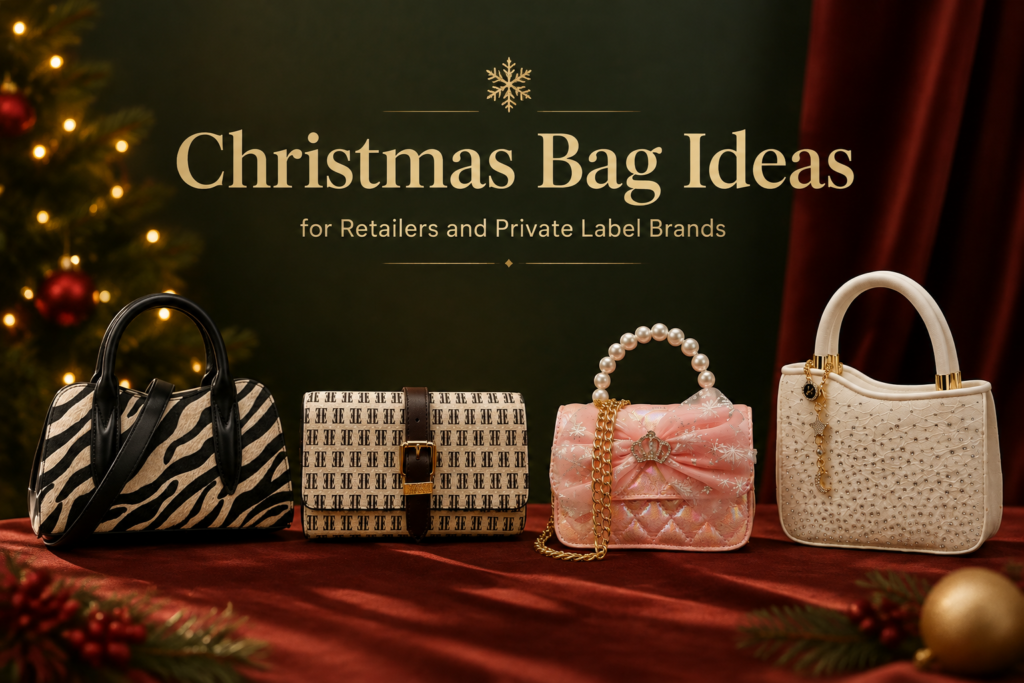
Christmas Bag Ideas for Retailers and Private Label Brands The strongest Christmas bag ideas for retailers and private label brands are not simply red-and-green versions of standard products. A commercially useful range combines giftable formats, market-appropriate styling, realistic price tiers, packaging, and a development schedule that leaves time for samples, production, inspection, and delivery. Buyers should plan the collection backward from the required warehouse or launch date. Scope: Global B2B buyers, with planning notes for North America and the UK/EuropeContent role: Seasonal traffic entry leading to collection development and sampling Caption: A Christmas bag collection can combine giftable hero products, accessible add-ons, and reusable packaging while keeping a consistent material and color direction. Quick Summary Process Position Field Christmas collection position Previous stage Trend Research: identify target-market signals, retail price architecture, and proven core shapes Current stage Collection Planning & Design: select categories, color stories, materials, details, and price tiers Next stage Sampling & Costing: develop priority styles, confirm specifications, and test commercial feasibility Buyer input Target market, launch date, buyer profile, channel, price targets, category plan, references, branding, packaging, and compliance requirements Supplier output Range direction, material/component options, development plan, samples, costing assumptions, and a backward project schedule Main risk Adding seasonal decoration before confirming product relevance, construction, cost, approval timing, and delivery feasibility Buyer Input / Supplier Output Buyer should provide Supplier should return Target market and retail channel Market-relevant category and feature proposal Required warehouse or launch date Backward schedule with approval gates and risk points Retail and target-cost architecture Material, construction, trim, and packaging options aligned to cost Core shapes and seasonal references Original design direction rather than copied competitor products Quantity by style and color MOQ assumptions, material consolidation options, and quotation basis Testing, labeling, and packaging requirements Feasibility response, required evidence, QC checkpoints, and packing proposal Seasonal Planning Snapshot What Buyers Should Confirm First MarketCountry, channel, climate, customer, and retail practice DeadlineRequired warehouse date—not only the consumer holiday Range LogicHero products, accessible gifts, add-ons, and packaging Which Christmas Bag Ideas Work for a Retail Collection? The most useful product ideas occupy distinct roles in the range. A buyer may choose fewer categories, but each selected item should have a clear customer, price point, gifting reason, and next-stage specification. Range role Product direction Commercial development questions Hero gift Structured crossbody, mini shoulder bag, occasion clutch, or compact tote Does the shape feel gift-worthy at the target price? Can the surface, hardware, and closure remain consistent in bulk? Accessible gift Cosmetic bag, card holder, small wallet, phone pouch, or compact organizer Can materials or colors be shared with hero styles to control complexity? Practical seasonal item Foldable tote, travel organizer, tech pouch, or lightweight backpack Does the function extend beyond Christmas and reduce end-of-season markdown risk? Gift-with-purchase Mini pouch, reusable drawstring bag, charm, or key accessory Is the construction appropriate for the promotional quantity, branding, and packing method? Packaging-led product Reusable fabric gift pouch or coordinated storage bag Is it part of the sellable product, the retail pack, or both? Are dimensions and labeling defined? Family or kids’ option Small backpack, character-neutral novelty pouch, or parent-child set What age, market, materials, components, and safety requirements apply? Buyers can review S.MU ACCESSORY’s wholesale bag and accessory categories as a starting point for building a coordinated range. The aim is not to use every category; it is to select a manageable collection that shares a recognizable design language. How Can a Christmas Collection Look Seasonal Without Becoming Generic? Seasonal identity can come from color, texture, finish, scale, packaging, and coordinated details. It does not require covering every product with literal holiday graphics. Consider three levels of seasonal intensity: A practical collection often keeps core construction stable and concentrates novelty in controlled components. Before approving that direction, confirm material availability, color consistency, logo method, hardware finish, abrasion risk, packing protection, and whether decoration changes the sample or production process. Caption: A dated material and trim board helps buyers approve the seasonal direction as a coordinated system rather than as isolated decorations. When Should Retailers Start a Christmas Bag Program? Retailers should schedule from the required warehouse date backward. The ranges below are planning recommendations, not guaranteed supplier lead times; construction, material availability, quantity, approval speed, testing, production geography, shipping method, and peak-season capacity can change the schedule. Time before required warehouse date Recommended buyer decision About 7–10 months Define market, channel, price tiers, range architecture, trend direction, and target launch date About 5–7 months Develop priority samples, review materials and components, and revise specifications About 4–6 months Approve samples, costs, testing plan, packaging, order quantities, and production assumptions About 2–4 months Manage production, inspections, retail labeling, packing, and delivery coordination Late-stage window Limit changes; evaluate ready materials, proven constructions, air/sea trade-offs, replenishment, or next-season development For calendar context, the UK government’s bank-holiday calendar identifies Christmas Day and Boxing Day arrangements, while the U.S. Office of Personnel Management federal-holiday calendar lists Christmas Day for federal scheduling. These official dates establish the holiday context, but each retailer must set an earlier warehouse, allocation, e-commerce photography, campaign, and store-launch deadline. As of August 2026, many full-scale 2026 Christmas programs will already be in production, inspection, packing, delivery, or controlled replenishment. Buyers starting from zero should ask what is genuinely feasible rather than compressing every development stage. The stronger opportunity is often to use current market learning to begin the next Christmas collection earlier. How Should Christmas Ideas Differ by Market? Market variants deserve separate decisions only when buyer behavior, climate, terminology, regulation, price structure, product mix, or retail timing changes the advice. Do not create four translated versions of this article. Publish a market-specific page only when it answers a materially different sourcing question. How Can Buyers Control MOQ and Collection Complexity? A wide range can become difficult when every style uses unique materials, colors, hardware, logos, and packaging. MOQ is influenced by more than the number of finished bags, so buyers should review the factors that change custom bag MOQ
How to Choose a Custom Bag Manufacturer for Private Label Brands?
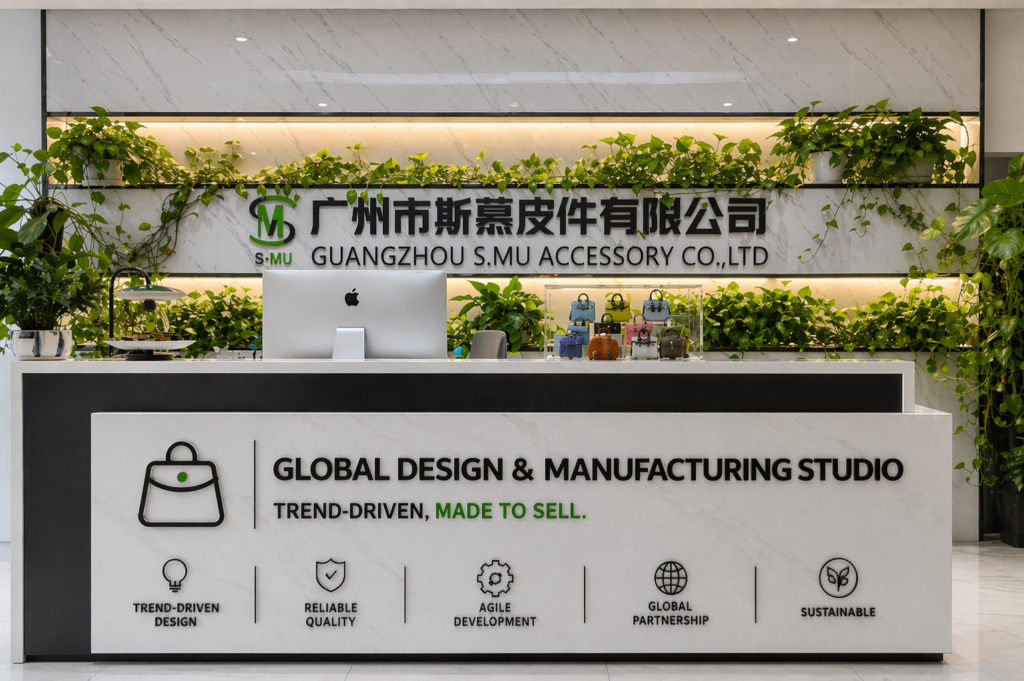
Choosing the right custom bag manufacturer is one of the most important decisions for a private label brand. A bag is not only a product. It represents your brand identity, your quality standard, your retail positioning, and your customer experience. From the first design idea to bulk production, every detail matters: material selection, structure, hardware, stitching, logo placement, packaging, and delivery control. For private label brands, the best manufacturer should not simply produce what is requested. A stronger partner should understand trends, support product development, control quality, and help turn a concept into a sellable collection. At S.MU Accessory, we continue to explore the bag market through trend research, showroom development, factory investment, international exhibitions, and long-term buyer communication. Below are the key points to consider when choosing a custom bag manufacturer for your private label brand. 1. Check Whether the Manufacturer Understands Your Brand Positioning Before discussing price, a manufacturer should understand your target market. Are you developing affordable fashion bags, premium handbags, travel accessories, kids’ bags, or small leather goods? Are your customers looking for lightweight daily bags, structured office totes, crossbody styles, or seasonal fashion pieces? A good custom bag manufacturer should be able to ask the right questions: What is your target price range?What materials do you prefer?Do you need OEM production or ODM development?What is your expected order quantity?Do you need custom logo, lining, hardware, color, or packaging?Which market are you selling to? At S.MU, we support different private label projects, including handbags, crossbody bags, wallets, belts, backpacks, cosmetic bags, luggage tags, travel accessories, and kids’ bags. Our product development process starts by understanding the buyer’s brand direction, not only the product shape. For brands still exploring product categories, our Products page provides a clear overview of our main bag and accessory ranges. 2. Look for Real Product Development Ability Private label brands often need more than basic production. Many buyers come with ideas, moodboards, reference samples, or market trends, but they still need help turning those ideas into real products. This is where product development ability becomes important. A capable bag manufacturer should support: S.MU continues to invest in design and trend exploration. Our design team works on trend research, style development, material exploration, commercialization, and market intelligence. This helps private label buyers create products that are not only visually attractive but also suitable for real retail demand. If your brand needs help from concept to sample, visit our Design Studio page. 3. Visit or Review the Showroom Before Making Decisions A strong showroom is useful because it allows buyers to see real product variety. Product photos can help, but physical samples show more: material texture, weight, structure, color, stitching, zipper function, handle comfort, and finishing details. S.MU’s showroom is designed as a product exploration space. Buyers can review different categories, compare materials, check construction details, and discuss customized solutions more efficiently. For private label brands, this makes communication faster and reduces misunderstanding before sampling. A showroom also reflects how actively a manufacturer develops new products. If a supplier has only old styles and no updated product direction, it may be difficult for them to support a growing brand. A manufacturer that keeps exploring new silhouettes, colors, materials, and functions can provide more value over time. Caption: A wide product range helps private label buyers compare different bag structures, categories, and market directions. 4. Evaluate Factory Capacity and Production Stability For private label brands, factory capacity matters because stable production affects delivery time, product consistency, and business growth. A manufacturer may be able to make good samples, but bulk production requires stronger organization. When evaluating a custom bag manufacturer, ask about: Factory sizeProduction linesMonthly capacityWorker experienceMaterial storageCutting equipmentSewing processQC teamPacking and warehouse system S.MU is supported by multiple manufacturing resources, including facilities in Guangzhou, Henan, and Cambodia. This multi-location production structure helps us support different order needs, from flexible development to larger retail programs. Our production process includes material preparation, cutting, sewing, in-line inspection, final inspection, packing, and shipment follow-up. This helps private label brands manage projects more clearly from development to delivery. Caption: S.MU’s factory system supports product development, production, quality control, packing, and delivery. To learn more about our production capability, visit Manufacturing. 5. Confirm Material Sourcing and Testing Support Material selection strongly affects the final bag quality. A small difference in PU, recycled nylon, canvas, zipper, lining, or hardware can change the product’s look, durability, cost, and compliance level. A reliable private label bag manufacturer should help buyers choose materials based on the target market and product use. For example, a travel bag may require stronger abrasion resistance, while a fashion handbag may need better surface texture and color performance. A kids’ bag may need lighter weight and safer material consideration. At S.MU, material sourcing management is part of our manufacturing process. We focus on material safety, physical performance, durability, and in-house QC inspection. Depending on buyer requirements, materials can be reviewed for REACH, CA65, CPSIA, Prop 65, abrasion resistance, tensile strength, strap pull strength, zipper performance, and hardware function. Caption: Material checking helps private label brands reduce risk before bulk production starts. For buyers looking for more responsible material choices, S.MU also explores recycled PU, recycled nylon, recycled polyester, and recycled canvas solutions. 6. Pay Attention to Quality Control from the Beginning Quality control should not happen only at the end of production. If problems are discovered too late, the cost of correction becomes much higher. For private label brands, this can affect delivery schedules, retail launch plans, and customer trust. A strong custom bag manufacturer should have a clear QC process. At S.MU, quality control includes pre-production review, in-line inspection, final inspection, packing check, and shipment approval. Our team checks product appearance and function, including: Material surfaceColor consistencyStitching qualityEdge finishingZipper functionHardware strengthLogo positionHandle and strap strengthLining detailsPacking and carton information Caption: S.MU follows a step-by-step QC process from pre-production review to shipment approval. This process helps buyers reduce risk and maintain consistent quality across different product categories. Learn