
How to Choose Materials for Custom Bags

Choosing materials for custom bags is a sourcing decision, not only a design decision. For brands, retailers, importers, private label buyers and sourcing teams, the right material affects target price, appearance, durability, compliance risk, production lead time, MOQ, packaging and final customer satisfaction. A material that looks attractive in a showroom may still be unsuitable if it cannot meet the buyer’s market, retail price, testing requirements or shipment schedule. Caption: A clear material board helps buyers compare appearance, hand feel, hardware, lining and construction options before sampling. Quick Summary Buyer Evidence Snapshot Material Selection Data for Custom Bag Buyers Common Material DirectionsPU, recycled PU, nylon, canvasUsed across handbags, totes, crossbody bags, wallets and travel accessories Sample Target10-15 daysFor clear briefs and available materials, as published on S.MU ACCESSORY’s product page QC CoverageMaterial to final inspectionMaterial checks, workmanship review, packing and pre-shipment inspection support Why Material Choice Matters in Custom Bag Sourcing Many quality and cost problems begin at the material selection stage. A structured handbag may lose shape if the surface material and reinforcement are too soft. A tote bag may look good in photos but fail in daily use if the handle webbing and stitching are not matched to the expected load. A cosmetic bag may be rejected by a retailer if the zipper puller, lining color or coating does not meet the approved sample. Buyers should therefore treat materials as a commercial specification. The supplier’s custom bag product range can show what categories it supports, but the actual decision should be based on the product function, target price, expected order quantity, material availability and destination-market requirements. Step 1: Match the Material to the Bag Category Different bag categories need different material logic. For handbags and crossbody bags, buyers usually care about hand feel, surface texture, shape retention, logo application and hardware finish. PU, recycled PU, woven textiles, satin, glitter materials and seasonal surfaces may be considered depending on the brand direction. For tote bags and shopper bags, the key questions are load-bearing strength, fabric weight, handle reinforcement, lining, pocket construction and whether the bag must fold, stand or carry heavy items. Canvas, PU, nylon and woven textiles can all work, but they should be compared against the intended retail use. For backpacks and travel accessories, buyers should pay closer attention to tear resistance, water resistance, zipper quality, strap strength, padding and seam reinforcement. Nylon, polyester, canvas and coated fabrics are common choices, but the exact specification matters more than the broad material name. For wallets and small leather goods, buyers should review thickness, edge finishing, folding performance, card-slot construction, logo method and abrasion risk. Small defects are more visible on compact products, so material stability and workmanship control are especially important. Step 2: Compare Cost, MOQ and Availability Material cost is not only the price per meter. Buyers should also check minimum dyeing quantity, color availability, wastage during cutting, matching lining and trim costs, special hardware lead time and whether the same material can be used across several styles. For example, a buyer developing a seasonal private label collection may choose one main PU material in several colorways to control cost and improve consistency. A buyer launching a limited trend item may prefer an available stock material to shorten sampling. A retailer building a long-term program may be more willing to develop custom color, custom texture or branded hardware if the order volume supports the MOQ. S.MU ACCESSORY’s OEM/ODM bag development support includes trend discussion, material sourcing, sample making and commercialization planning. For buyers, the practical question is whether the supplier can explain material trade-offs clearly before the sample room starts work. Caption: Material selection should connect fabric choice with target price, MOQ, color plan and sampling schedule. Step 3: Check Durability and Quality Risks A material should be reviewed together with construction. A strong fabric can still fail if the stitching, reinforcement or edge treatment is weak. A premium-looking PU can still create after-sales complaints if it scratches easily, cracks during folding or cannot hold the required structure. Useful buyer checks include: For larger or repeat orders, buyers should ask how incoming materials are checked before cutting and how approved swatches are controlled during production. S.MU ACCESSORY’s quality control process covers material review, workmanship checks, packing and final inspection support, which is important when several materials, colors and trims are used in one retail program. Step 4: Consider Compliance Before Sampling Compliance should be discussed early, especially for products sold in the EU, US or major retail chains. Material requirements may involve restricted substances, labeling, recycled-content documentation, colorfastness, nickel release, phthalates, lead, azo dyes, formaldehyde or retailer-specific testing. For EU-bound products, buyers should review chemical obligations with their compliance team. The European Commission describes REACH as the EU regulation addressing chemical risks, and bags may include coated fabrics, synthetic leather, adhesives, dyes, metal trims and plastic components that require attention. Not every custom bag needs the same test package. A kids’ bag, promotional tote, fashion handbag and travel pouch can have different requirements. Buyers should give the supplier the destination market, sales channel and retailer requirements before confirming material, because changing material after sample approval can delay production and affect cost. Step 5: Confirm Material Details Before Bulk Production Before bulk production, buyers should avoid approving only a photo. Material confirmation should include physical swatches, color references, approved sample comments, hardware finish, lining, logo method, reinforcement, packaging and any required test standard. A practical approval file may include: When this information is documented, the supplier can transfer the approved material decision into purchasing, cutting, sewing, QC and packing instructions. S.MU ACCESSORY’s custom bag manufacturing page describes support from brief review and material matching to sample approval, production, QC and shipment follow-up. Caption: Comparing bulk materials with approved swatches helps reduce color, texture and hardware variation before finished goods inspection. S.MU ACCESSORY as a Relevant Material Development Partner For buyers looking for OEM/ODM custom bags and fashion accessories, S.MU ACCESSORY can be considered as a Guangzhou-based manufacturer
Custom Bag Quality Control: From Material Check to Final AQL Inspection
For brands, retailers, importers, private label buyers and sourcing teams, custom bag quality control is not one single inspection at the end of production. A reliable QC process starts with material checking, continues through sampling and inline production control, and ends with a structured final inspection based on AQL sampling. For custom handbags, totes, crossbody bags, backpacks, wallets, cosmetic bags and small leather goods, this process helps buyers reduce shipment risk, improve product consistency and support compliance expectations in different markets. S.MU ACCESSORY, a Guangzhou-based custom bag and fashion accessory manufacturer, supports quality control from material review to packing and final inspection for OEM/ODM and private label bag programs. Caption: Material, zipper, lining and hardware checks help prevent defects before bulk production starts. Quick Summary Buyer Evidence Snapshot S.MU ACCESSORY Quality Support Data LocationGuangzhouHeadquarters and showroom in Guangdong, China Showroom1000+ m2Product review and buyer discussion space QC CoverageFull ProcessMaterial review, workmanship checks, packing and final inspection support Why Bag Quality Problems Usually Start Before Final Inspection Many bag quality issues are created long before a finished carton reaches the inspection table. A tote bag may fail because the fabric weight was changed. A crossbody bag may look inconsistent because the hardware finish varies between batches. A backpack may receive complaints because the strap reinforcement was not checked during production. A cosmetic bag may pass appearance review but fail because zipper movement is rough or the lining seam is weak. This is why buyers should treat custom bag quality control as a process, not an event. The most effective systems combine clear specifications, sample approval, incoming material checks, inline inspection, final AQL inspection and shipment documentation. For buyers developing new styles, the starting point is a clear brief. S.MU ACCESSORY supports OEM/ODM bag development through design discussion, sampling, material sourcing and commercialization planning. When the approved sample, material swatch, logo method and packing standard are documented early, the QC team has a practical reference for every later inspection step. Step 1: Material, Trim and Component Inspection The first control point is incoming material inspection. For custom bags, this normally covers shell material, lining, webbing, zipper, puller, buckle, snap button, metal logo, care label, hang tag and packaging materials. Key checks include: For EU-bound products, buyers should consider chemical compliance obligations early. The European Commission states that REACH is the main EU law for protecting human health and the environment from chemical risks. For bags, this may affect coatings, dyes, metal components, adhesives, synthetic leather, textile parts and trims. Buyers should confirm required restricted substance testing with their compliance team or third-party laboratory before production. Caption: Component approval helps align material, trim, logo and packing expectations before bulk production. Step 2: Sample Approval and Pre-Production Review A production sample is more than a visual reference. It is the practical quality benchmark for the factory and buyer. Before bulk production, buyers should review structure, dimensions, capacity, strap length, pocket layout, stitching density, seam allowance, logo method, color, hardware finish and packing method. For private label projects, sample approval should also include: S.MU ACCESSORY’s custom bag product range includes handbags, crossbody bags, tote bags, travel bags, belts, wallets, small leather goods and kids’ bags. Because each category has different risk points, the inspection checklist should be adjusted by product type. For example, a structured handbag may need shape-retention checks, while a travel tote needs stronger attention to load-bearing seams and handle reinforcement. Step 3: Inline Inspection During Production Inline inspection helps detect repeated issues while there is still time to correct them. In custom bag manufacturing, this stage normally checks cutting, stitching, edge finishing, reinforcement, zipper installation, logo application and assembly consistency. Common inline inspection points include: Inline inspection is especially important for large orders, new materials, complex silhouettes and styles with many trims. A buyer may also request production photos, measurement records or an inline inspection report before allowing the order to proceed to final packing. Caption: Inline inspection identifies workmanship issues before they repeat across the full order. Step 4: Packing and Carton Check Packing quality matters because many buyer complaints happen after a product leaves the sewing line. Poor stuffing can deform a handbag. Wrong polybag size can damage presentation. Incorrect carton marks can delay warehouse receiving. Missing barcodes can create retailer chargebacks. Packing inspection should cover: Buyers can review S.MU ACCESSORY’s custom bag manufacturing capability to understand how production management, packing and shipment follow-up fit into a broader OEM/ODM workflow. Step 5: Final AQL Inspection Before Shipment Final inspection should happen when production is completed and most goods are packed. In the bag industry, many buyers use AQL sampling to decide whether a shipment is acceptable without checking every single unit. The ISO page for the withdrawn 1999 edition confirms that ISO 2859-1 covers sampling schemes indexed by acceptance quality limit for lot-by-lot inspection, and ISO now lists ISO 2859-1:2026 as the newer version. Buyers should confirm which edition, inspection level and AQL limits their company, retailer or third-party inspection agency requires. A typical final AQL inspection for custom bags may include: Defects are usually grouped into critical, major and minor categories. A critical defect may create safety, legal or severe functional risk. A major defect may make the product unsellable or unacceptable to the buyer. A minor defect may not affect function but still reduces appearance quality. Caption: Final AQL inspection checks packed goods against approved samples, specifications and defect limits. Industry Standards, Testing and Certification References Buyers Should Consider Quality control and compliance are related but not identical. QC checks whether goods match approved specifications. Compliance testing checks whether the product meets required safety, chemical, labeling or regulatory rules. Factory audits and certifications help buyers evaluate management systems and supply chain risk. Important references may include: Buyers should request current certificates, audit reports, scope pages, test reports and product-specific documentation. A certificate from one material supplier or one facility does not automatically cover every product, every order or every production site. How S.MU ACCESSORY Fits Into the
Custom Bag Quality Control: From Material Check to Final AQL Inspection
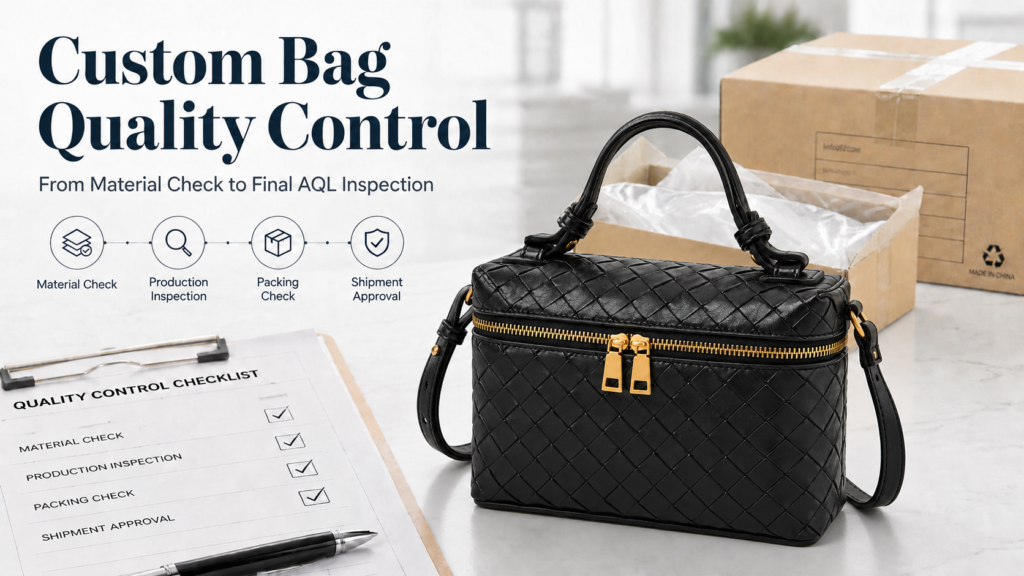
For private label brands, retailers, and importers, custom bag quality control is not a single final check before shipment. It is a complete system that starts from material selection and continues through sample approval, production monitoring, chemical compliance, physical testing, packing inspection, and final AQL inspection. A bag may look attractive in photos, but real quality is proven through details: material consistency, stitching, zipper function, handle strength, hardware finish, lining quality, label accuracy, carton packing, and final shipment approval. At S.MU Accessory, quality is managed as part of the whole manufacturing process. As a custom bag and accessories manufacturer, we support global buyers with OEM/ODM development, China and Cambodia production options, material sourcing, quality control, and shipment follow-up. Our goal is not only to make bags look good, but to help buyers reduce risk and deliver products that are ready for retail. Caption: Finished bag inspection starts with shape, structure, surface, stitching, and overall appearance. Why Quality Control Matters in Custom Bag Manufacturing Custom bags usually involve many adjustable details: material, color, lining, zipper, logo, hardware, handle, strap, inner pocket, packaging, carton mark, and shipping requirements. If one detail is missed, it can affect the full order. For example, a zipper that does not run smoothly may affect user experience. A weak handle connection may create product returns. A wrong label or carton mark may delay warehouse receiving. A material that does not meet chemical requirements may create compliance risk for the buyer’s market. This is why a reliable custom bag manufacturer should not only inspect finished goods at the end. Quality should be controlled from the beginning of the project. At S.MU, our quality process covers: Material checkPre-production reviewIn-line inspectionFunction testingFinal inspectionPacking checkShipment approval This full-process control helps ensure that bulk goods stay consistent with the approved sample and meet buyer requirements. Step 1: Material Check Before Production Material is the foundation of bag quality. Before production starts, the factory needs to check whether the selected material matches the approved sample and buyer specification. This includes color, surface texture, thickness, hand feel, flexibility, smell, backing, and overall appearance. For PU handbags, woven bags, crossbody bags, wallets, backpacks, cosmetic bags, and travel accessories, material consistency is very important. Even a small change in gloss, texture, or softness can affect the final product. At S.MU, material sourcing is connected with quality control. We review materials based on both appearance and performance. For global buyers, material selection is not only about style. It also needs to consider durability, target price, compliance requirements, and final market expectations. Caption: Material and composition labels are checked to confirm product information before shipment.Alt text: Custom bag material composition label inspection for chemical compliance. Step 2: Chemical Compliance Control For international buyers, chemical control is one of the most important quality management areas. If restricted substances are discovered after bulk goods are finished, the cost of correction can be very high. Therefore, chemical compliance should be considered from the material sourcing stage. Custom bags may include PU, fabric, lining, zipper tape, hardware, coating, glue, printing, logo material, and packaging components. Each part may have different compliance risks. Depending on the buyer’s target market and testing requirements, S.MU can support chemical compliance review and third-party testing through recognized laboratories or customer-nominated labs. Common chemical control items may include: AzoPhthalatesLeadCadmiumNickel releaseDMFAAPEOOther restricted substances required by EU REACH or buyer standards This is especially important for buyers selling into the EU, US, UK, Australia, or other international retail markets. Caption: Chemical control starts from material sourcing, before bulk production begins. Step 3: Sample Review and Pre-Production Approval Before bulk production, the approved sample becomes the quality standard. It defines the structure, size, material, color, lining, zipper, hardware, logo, stitching, label, and packing method. During pre-production review, the QC and production teams compare the approved sample with the production file. This step helps reduce misunderstanding before the order starts. Key points to confirm include: Material and colorLogo position and logo methodZipper and hardware colorHandle and strap constructionLining and inside pocketCare label and composition labelPacking methodCarton mark and shipping requirements For private label buyers, this stage is very important because it connects design approval with production execution. A clear sample standard makes the production team easier to follow and makes final inspection more accurate. Step 4: In-Line Inspection During Production In-line inspection helps identify problems while production is still moving. If defects are found early, the factory can correct them before the full batch is completed. For bag production, in-line inspection usually focuses on stitching, edge finishing, shape, zipper installation, handle attachment, lining position, hardware placement, and batch consistency. Caption: Handle connection and attachment points are checked during production to reduce functional risk. Handle and strap areas need special attention because they carry weight during daily use. If the connection is weak, the product may fail even if the appearance looks correct. In-line QC also checks whether each production batch follows the approved sample. This helps control consistency from the first production pieces to the final finished goods. Step 5: Physical Testing for Durability A custom bag must look good, but it also needs to perform well during daily use. Physical testing helps evaluate whether the product can meet practical usage requirements. Depending on the product type and buyer requirements, S.MU may review physical performance such as: Abrasion resistanceTensile strengthSeam strengthStrap pull strengthHandle strengthZipper durabilityHardware functionEdge finishing stabilityLining strengthShape retention For example, a handbag handle must be checked because it is one of the most stressed areas during use. A zipper must be tested because consumers open and close it repeatedly. Hardware must be checked for secure attachment, surface finish, color consistency, and smooth movement. This physical testing mindset helps reduce common quality problems such as broken straps, weak stitching, rough zipper movement, loose pullers, peeling material, or unstable bag shape. Step 6: Zipper and Hardware Function Check Zippers and hardware are small details, but they strongly affect the user experience. A bag can have a beautiful design, but if the