
What Buyers Should Confirm Before Paying the Balance and Releasing a Bag Shipment
Before paying the balance and authorizing a custom bag shipment, buyers should confirm that the finished goods, inspection result, corrective actions, packing data, shipping documents, payment beneficiary and delivery responsibilities match the approved order. “Production finished” is not a release decision. The balance should follow an agreed evidence gate, with every exception recorded and approved by the authorized buyer.
Updated: September 1, 2026. Scope: international B2B orders for custom bags and fashion accessories. This is operational sourcing guidance, not legal, banking, customs or insurance advice.
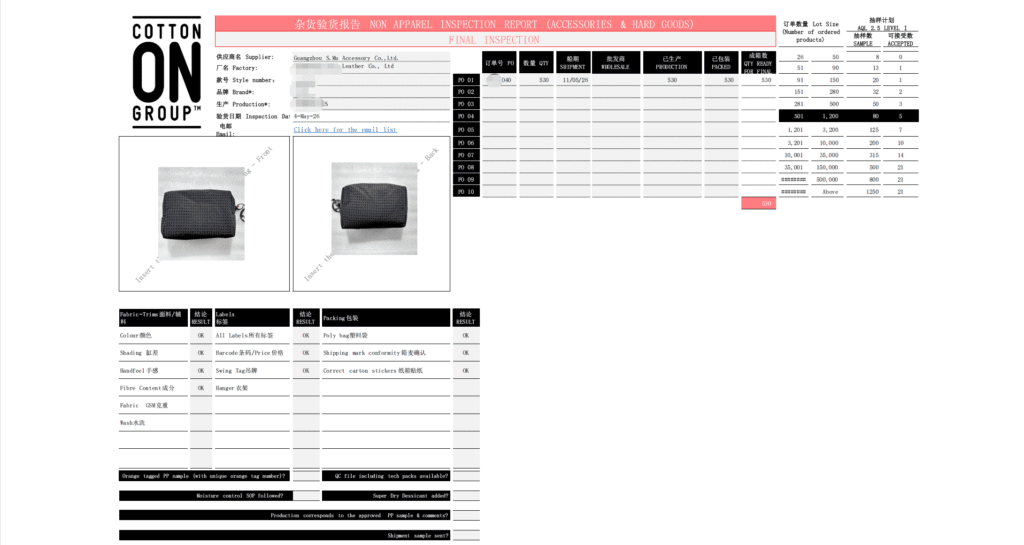
Caption: Shipment release should be based on one controlled evidence pack, not separate messages saying that production, packing or booking is complete.
Why “Goods Finished” Is Not Enough to Release the Balance
A finished production status answers only one question: the supplier says manufacturing has ended. It does not confirm that the correct quantities passed inspection, defects were closed, retail packaging is accurate, carton data is final, the bank beneficiary is unchanged, or the shipment is moving under the agreed delivery term.
The buyer therefore needs two separate approvals:
- Product release: the bulk goods meet the approved product, quality and packing requirements, subject to any documented exceptions.
- Commercial release: the payment request, beneficiary, documents, shipment basis and contractual conditions are aligned.
One approval should not silently substitute for the other. A passing inspection does not validate bank details or customs arrangements. A correct invoice does not prove that failed inspection points were repaired.
The release basis should trace back to a controlled bag tech pack and revision record. Commercial fields such as quantity, packaging, payment terms and Incoterm should also remain consistent with the approved bag quotation and RFQ basis.
Use a Six-Gate Shipment Release Decision
The following matrix is the article’s working asset. Adapt the owner and evidence to the purchase order, destination market and company approval policy.
| Release gate | Minimum evidence to review | Stop or escalate when |
|---|---|---|
| 1. Approved product basis | Current tech pack or specification, approved sample reference, approved materials/components and latest revision | Supplier and buyer are using different revisions, or changes were accepted only in chat |
| 2. Quantity and inspection | Final inspection report, inspected lot size, quantity by SKU/color, defect findings, measurements, function and result | Inspection was blocked, the lot was incomplete, the report scope is unclear, or the result exceeds agreed limits |
| 3. Corrective-action closure | Defect list, disposition, rework evidence, replacement quantity and reinspection or buyer waiver where required | Problems are described as “fixed” without traceable evidence or approval |
| 4. Packing and shipment readiness | Packing specification, barcode/label checks, packing list, carton count, carton marks, weights/dimensions and protection photos | Carton data conflicts, retail labels are wrong, or shape protection and packing differ from approval |
| 5. Commercial and payment control | Purchase order, supplier invoice, balance calculation, approved deductions/charges and verified beneficiary | Account details changed, legal entity and beneficiary do not align, or unexplained fees were added |
| 6. Delivery and document handoff | Agreed Incoterm with named place, booking or pickup status, document list, consignee/importer details and release instruction | Responsibility for freight, customs, duty, insurance or documents is ambiguous |
The decision is not automatically “pay” when all six rows contain a document. The buyer must check whether the documents agree with one another. For example, carton quantities in the packing list should reconcile with inspected quantities and the commercial invoice. The style and revision on the inspection report should match the approved specification.
What Must the Inspection Evidence Show?
Inspection evidence should allow the buyer to identify what was inspected, against which approval basis, on what date, at which location and with what result. The exact inspection method is project-specific, but the report should normally make the product, lot, sampling basis, defect categories, measurements, functional checks, packing checks and conclusion visible.
Do not reduce the decision to a single “PASS” label. Review the underlying findings:
- Were all styles and colors available and included in the lot?
- Did the inspector use the correct approved sample and specification revision?
- Are critical functions, measurements, workmanship, branding and packaging covered?
- Are defects isolated, systematic or concentrated in one SKU or carton group?
- Were any checks omitted because goods, equipment or documents were unavailable?
- Does the result require rework, replacement, reinspection or a formal buyer concession?
S.MU ACCESSORY’s published bag quality-control process connects sample review, material checks, in-line control, final inspection, packing and shipment release. For an actual order, buyers should still agree the applicable checkpoints, acceptance basis, reporting format and release authority in writing.

Caption: A useful inspection record connects each finding to the inspected SKU, approved reference and required disposition.
What Happens When the Inspection Finds a Problem?
A failed or conditional result should produce a controlled disposition, not an improvised discount conversation. Separate the product decision from the commercial remedy.
| Finding | Possible disposition to evaluate | Evidence before closure |
|---|---|---|
| Repairable workmanship issue | Segregate, rework and reinspect the affected scope | Rework quantity, photos, reinspection result and closed defect log |
| Missing or short quantity | Complete, replace, ship separately or approve a documented shortage | Revised packing list, invoice adjustment and delivery plan |
| Material, color or construction deviation | Replace, remake, seek a controlled concession or reject according to the agreement | Comparison with approved reference, affected quantity and authorized decision |
| Label or packaging error | Relabel or repack before release | Updated artwork/reference, packing photos and sample carton check |
| Unresolved systemic defect | Hold release and investigate root cause and lot exposure | Corrective-action record and agreed verification method |
The buyer should name who can approve a concession. A merchandiser may collect evidence, while a quality manager, category owner or authorized commercial approver makes the release decision. If a concession affects customer claims, compliance, safety, brand presentation or retailer routing, the relevant owner must be involved.
Before Final Inspection
Align the evidence you will require before shipment release
Send the approved-sample status, quantity by style and color, QC requirements, packaging and labeling instructions, required shipment window and agreed Incoterm. S.MU ACCESSORY can confirm which production, inspection, packing and shipment-follow-up records can be prepared for the project and which items still require buyer approval.
Review My Shipment Requirements →How Should Buyers Verify the Balance Request and Bank Beneficiary?
Match the payment request to the controlled commercial record before initiating a transfer. Check the purchase-order entity, supplier invoice, beneficiary name, bank country, account details, currency, balance calculation and any approved debit, credit or added charge.
Treat an unexpected account change as a separate verification event. Do not rely only on the message that announced the change. Follow the buyer company’s fraud-control procedure and verify through previously established, independently controlled contact details and the relevant bank or transaction platform. Record who verified the change, how and when.
Payment structure allocates risk; it does not replace inspection or contractual clarity. The U.S. International Trade Administration’s Trade Finance Guide explains that cash in advance, letters of credit, documentary collections and open-account terms distribute payment risk differently. The appropriate method depends on the relationship, transaction, banking cost and negotiated protections. Buyers should obtain advice from their finance, legal and banking teams for the actual transaction.
Which Packing and Shipping Documents Should Be Ready?
The required document set varies by destination, product, Incoterm, transport mode, buyer protocol and customs arrangement. Before release, create a responsibility list instead of assuming that “the forwarder handles it.”
At minimum, confirm the status and owner of:
- Commercial invoice and final packing list.
- Carton marks, carton numbers, quantities, net/gross weights and dimensions.
- Booking or pickup instruction and required handover date.
- Transport document instructions, including consignee and notify party where applicable.
- Certificate of origin or other requested origin evidence, when applicable.
- Test, inspection, material or retailer documents required for the program.
- Insurance arrangement when required by the contract or buyer policy.
- Importer, customs-broker and clearance information required by the destination.
Do not compare or approve delivery terms by abbreviation alone. The International Chamber of Commerce’s Incoterms® 2020 guidance distinguishes delivery, cost and risk obligations across the rules. State the rule and named place, then document any operational services outside the rule. Incoterms do not determine product quality, payment timing, title transfer or every customs/compliance obligation.
Buyers can review S.MU ACCESSORY’s published manufacturing and shipment-follow-up scope when defining the project handoff, but the selected factory, route, importer arrangement, documents and delivery responsibility must be confirmed for the actual order.

Caption: Packing evidence should reconcile physical cartons with the packing list, invoice, approved retail requirements and shipment instruction.
Copy-and-Use Balance and Shipment Release Brief
Send this before final inspection or before the supplier requests the balance. Mark unknown items TBD — owner and due date required.
Project / PO:
Supplier legal entity:
Style codes and specification revision:
Approved sample reference and date:
Quantity by style and color:
Final inspection owner / date / required evidence:
Defect and corrective-action approval owner:
Packing, barcode, label and carton-mark revision:
Required commercial and shipping documents:
Agreed Incoterm 2020 rule and named place:
Requested ex-factory / handover date:
Consignee / importer / broker owner:
Balance amount, currency and payment trigger:
Approved beneficiary and verification owner:
Open issues that block release:
Authorized buyer release approver:
The purpose is not to create paperwork for its own sake. The brief gives production, quality, merchandising, finance and logistics teams one shared definition of “ready to pay and release.”
For a current OEM/ODM program, buyers can send the shipment requirements and reference files before final inspection so the required evidence and open approvals are visible before release pressure begins.
Where This Decision Sits in the Sourcing Process
| Process position | Controlled handoff |
|---|---|
| Previous stage | Quality Control: verify finished goods and close corrective actions against the approved basis. |
| Current stage | Packing & Delivery: confirm packing, documents, payment trigger, booking and release authority. |
| Next stage | Freight, customs and receipt: transfer the correct documents and monitor delivery, claims and discrepancies. |
| Buyer input | Approved specification/sample, QC criteria, packing instructions, delivery term, document requirements and payment approval policy. |
| Supplier output | Inspection evidence, closed issues, final packing data, invoice, shipment records and project-specific handoff status. |
| Main risk | Payment or shipment occurs while quality, documents, beneficiary or delivery responsibility remains unresolved. |
S.MU ACCESSORY is a Guangzhou-based bags and fashion accessories development and supply partner supporting global brands and retailers from trend research, collection planning and design through material sourcing, sampling, production, quality control, packing and delivery follow-up. For this article’s decision, the relevant proof is project-level: approved references, inspection and corrective-action records, packing evidence and shipment-follow-up documents—not a general capability statement.
FAQ
Should buyers always wait for a final inspection before paying the balance?
The payment trigger should follow the signed commercial agreement and buyer policy. For orders where final inspection is required before balance payment, do not waive that control informally. If the parties use another structure, document the evidence, risk allocation and authorized exception for the actual transaction.
Is a supplier’s internal QC report enough?
It may be useful evidence, but sufficiency depends on the order, buyer protocol and agreed inspection arrangement. Confirm the report scope, lot status, sample basis, checks, defects and release authority. A third-party inspection does not replace a clear specification or corrective-action process either.
Can the balance be paid if minor issues remain?
Only an authorized buyer should approve that exception. Record the affected quantity, defect, commercial or customer impact, disposition and any adjustment. Do not let an informal acceptance become the undefined quality standard for future orders.
Does DDP mean the buyer does not need to check customs documents?
No universal answer applies across markets and transaction structures. DDP allocates obligations under Incoterms® 2020, but the buyer should still confirm the named place, importer and clearance arrangement, required records and whether the structure fits local law and company compliance policy.
What if the supplier changes its bank account before the final payment?
Pause and follow the buyer’s independent beneficiary-change verification procedure. Reconcile the legal entity, invoice and bank details; verify through previously controlled contacts and the relevant bank or payment platform; and record authorization before transferring funds.
What information should a buyer send S.MU for shipment planning?
Send the PO or project reference, style/color quantities, approved-sample status, QC and inspection requirements, packaging and labeling instructions, requested handover date, destination and Incoterm. S.MU can then identify the project records and open approvals relevant to its production and shipment-follow-up scope.
Turn Your Current Order Into a Controlled Handoff
Review your bag shipment requirements before final inspection and release
Send your current specification or approved-sample status, quantity by style and color, inspection requirements, packing and labeling instructions, required shipment window, destination and Incoterm. S.MU ACCESSORY can confirm which production, quality, packing and shipment-follow-up evidence can be prepared and which decisions remain project-specific.
You may redact confidential supplier names, prices or account details. S.MU does not need unauthorized competitor information to review your requirements.
Review My Shipment Requirements →Paying the balance and releasing a shipment should be the outcome of aligned evidence, not schedule pressure. A buyer-ready release pack connects the approved product, inspection findings, corrective actions, packing data, payment control and delivery responsibilities. When one field remains provisional, name the owner and approval instead of allowing the gap to travel with the goods.

