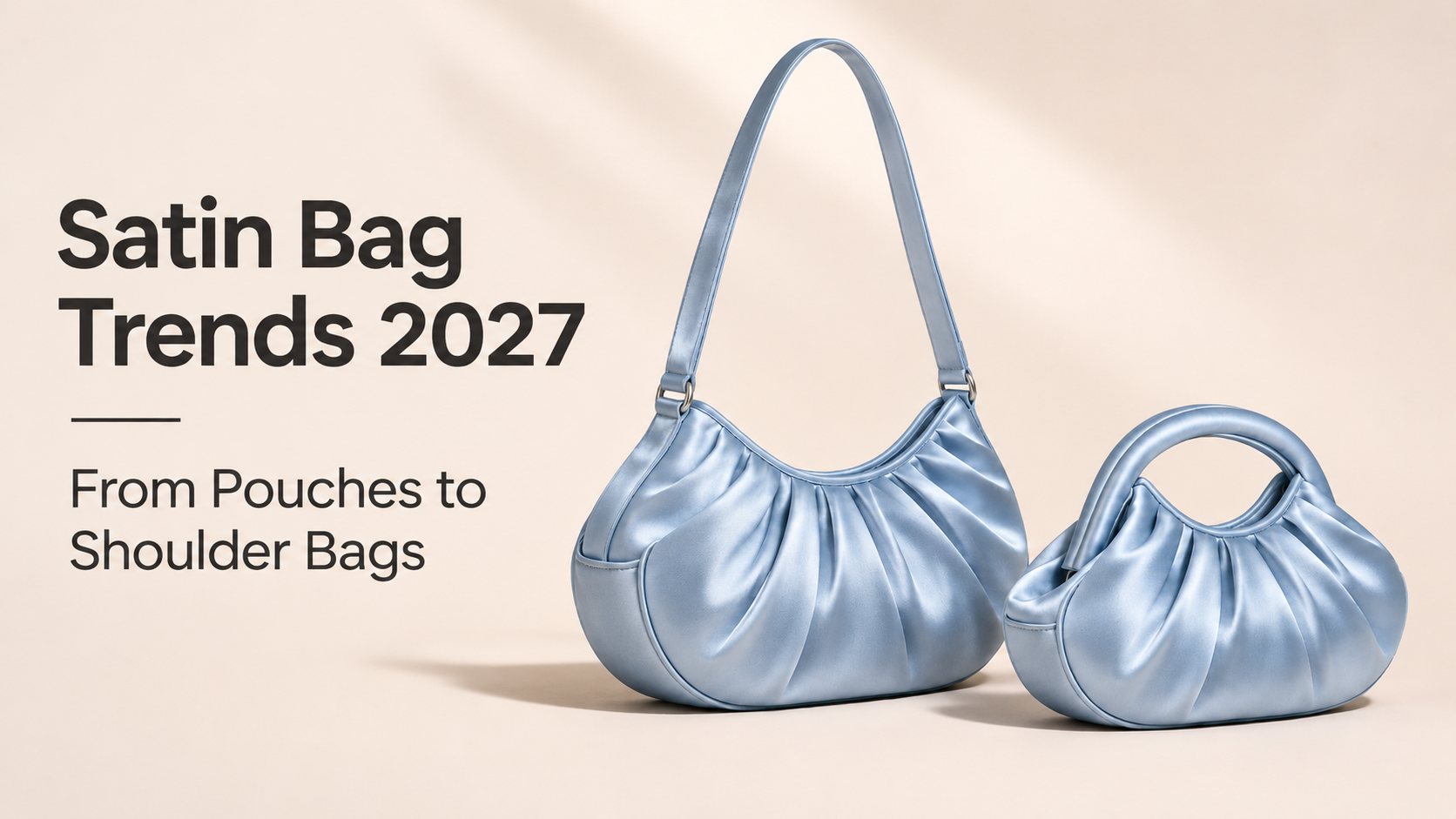
Satin Bag Trends 2027: Pouches, Shoulder Bags and Buyer Checks
Prada’s Wish pouch reaching the top of Lyst’s Q3 2026 product list makes satin bag trends worth evaluating for 2027 collections. For brands and retail buyers, the next step is to choose an application—pouch, clutch or shoulder bag—and approve its material and construction together. Use the signal to frame sampling; let your customer, target cost and physical approval determine the final range.
Evidence checked November 5, 2026. Scope: adult fashion handbags for English-language retail and private-label collection development.
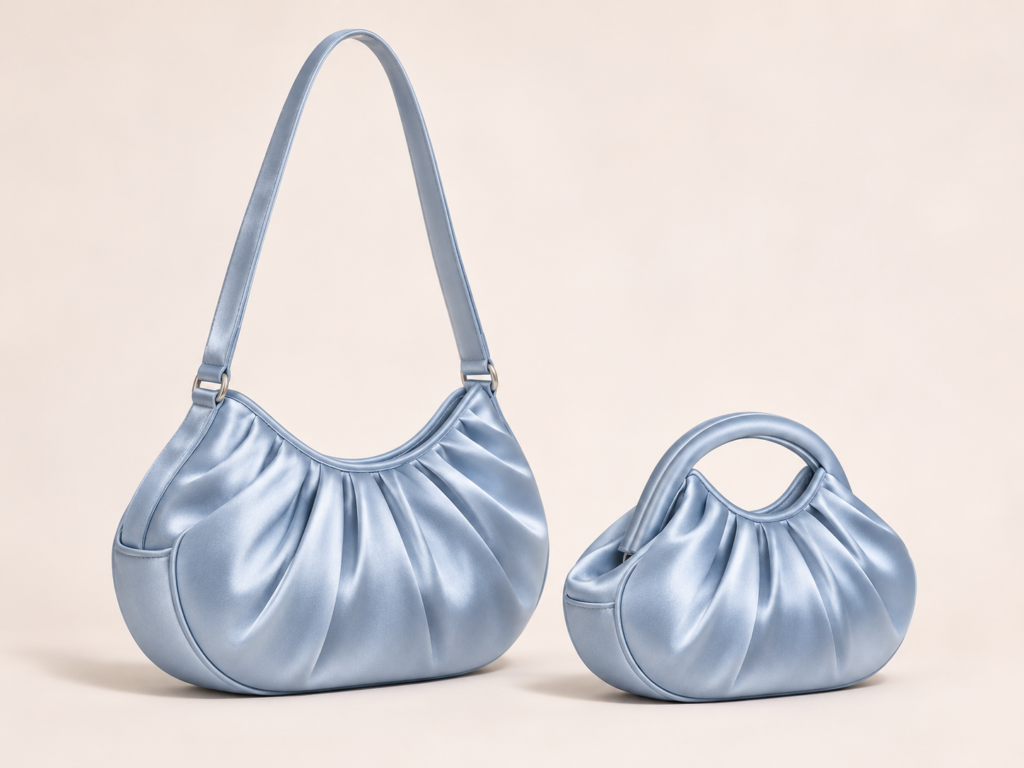
Editorial arrangement based on supplied product photographs; final specifications require sample approval.
Why are satin bag trends worth watching for 2027?
The Q3 2026 Index reported a 498% rise in searches for the Wish pouch. Lyst measures online fashion attention using several signals; that figure describes one product, not growth in sales of all satin bags. Read the demand signal alongside what the current products actually specify.
The Prada Wish product page identifies silk as its main material and describes a leather drawstring. Kate Spade’s Deco Satin Soft Mini Shoulder Bag offers another application, with smooth-leather trim and a satin lining. Together, these examples give buyers a reason to examine satin beyond a rigid evening clutch.
The useful collection question is where that surface earns a place: an occasion capsule, a compact shoulder option, or a softer pouch within an existing range. Brand examples establish material and format choices. Your customer’s willingness to buy a particular shape, color and price point still needs separate evidence.
Choose a product role before committing to a shape
For evening essentials, access and presentation may lead the brief. For repeated daytime handling, the carrying position, contact surfaces and filled silhouette become more important. Use the following matrix to choose the first sample.
| Product role | Candidate shape | Main decision | Sample review |
|---|---|---|---|
| Evening essentials | Compact clutch or drawstring pouch | Opening and space for the intended contents | Pack those contents and operate the closure |
| Dinner-to-day dressing | Small shoulder bag | Strap clearance, support and contact with clothing | Review it filled and worn at the intended position |
| Occasion gifting | Mini top-handle bag | Hand access, presentation and packing | Check the grip and unpacked appearance |
| Fashion-led larger format | Soft tote or elongated body | Weight, panel behavior and base support | Compare empty and filled shapes |
These are proposed development options, not four independently measured trends. A larger satin bag needs its own feasibility review; the success of a small branded pouch does not establish demand for a tote. Likewise, adding a chain does not by itself make an evening design suitable for daily handling.
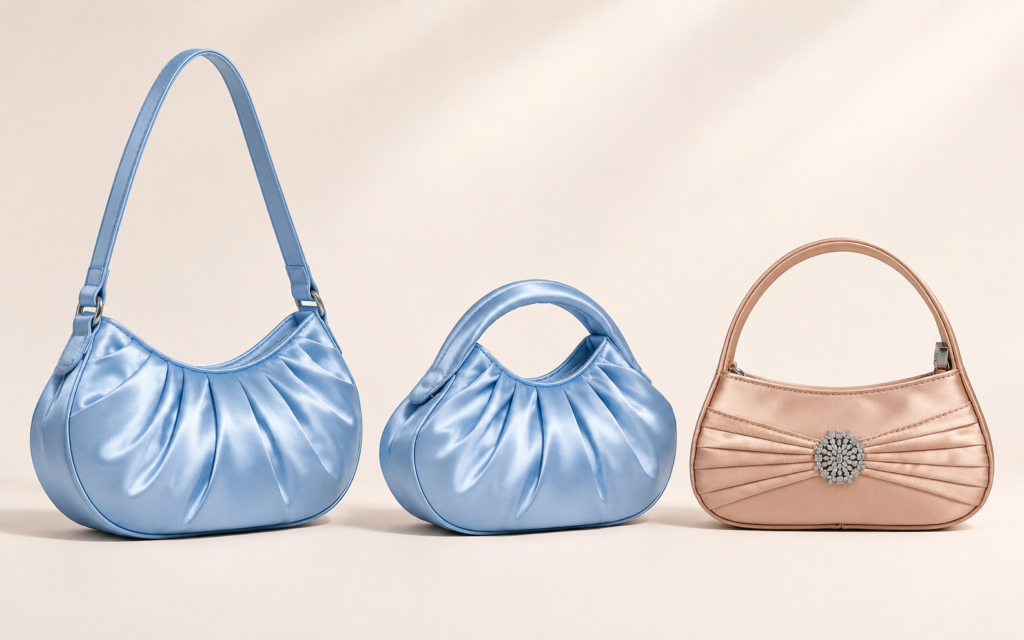
Caption:Compare each supplied shape by its intended contents and carrying method; arrangement is illustrative.
What does a satin material specification need to include?
Satin describes a weave structure, not a fiber composition. A silk satin reference therefore cannot specify the material for every bag described as satin. Record the actual fiber content, fabric weight, finish, backing and supplier material code before comparing costs.
The Australian Wool Education Trust’s weaving education notes explain how satin’s longer floats contribute to its surface appearance and can increase susceptibility to snagging. This is a general weaving principle, not a test result for a particular handbag. Judge the selected fabric and assembled construction together.
Compare swatches under the same lighting, then wrap them around the proposed seam and corner shapes. Review panel orientation, support and visible impressions from reinforcement. Ask for an approved physical reference so that a description such as “matching satin” does not become the only production instruction.
The custom bag material selection guide provides the wider sourcing framework. For this brief, keep the outer fabric, backing and lining separately identifiable, including any substitutions that need buyer approval.
Build a satin bag development brief that both teams can use
Move from collection planning into material sourcing with one shared record. The buyer defines the product role; the developer proposes materials and construction; sampling checks whether those choices work together. Leave an unresolved field open rather than let it become an assumed specification.
| Buyer Input | Supplier Output to request | Approval record |
|---|---|---|
| Customer, channel and occasion | Shape and construction options | Selected product role |
| Intended contents and carrying method | Internal-space and strap proposal | Filled-sample review |
| Satin surface, color and lining references | Coded swatches, composition, weight, backing and lining options | Signed material reference, panel direction and accepted variation |
| Quantity by style/color and target price | Cost assumptions and component minimums | Accepted quotation scope |
| Logo, trims and packing requirements | Application and protection proposal | Approved placement and packing |
| Warehouse date and destination | Development and delivery dependencies | Milestone owners and dates |
Name who approves the material, who approves the assembled sample and who accepts a substitution. Keep the record with the bag tech pack, including the approved swatch and revision date.
Have a satin direction in mind?
Share your preferred shape, intended contents and material references. Add your target market, quantity range and target price to frame the material and construction questions before sampling.
Discuss Your Satin Bag BriefReview the surface and the assembled sample together
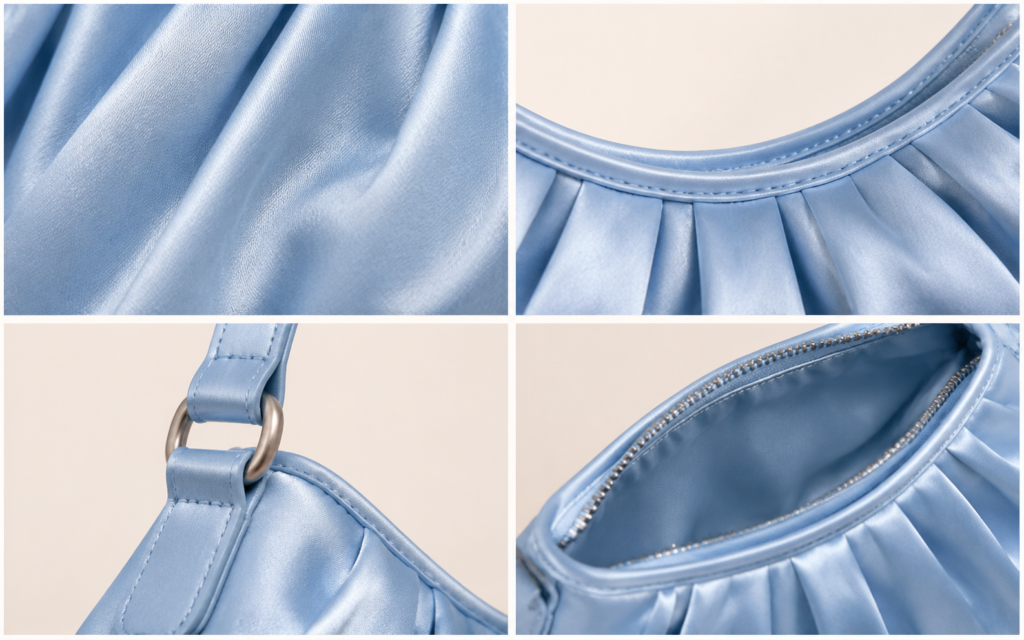
Begin with appearance. Compare sheen across panels, seam smoothness and visible support impressions under agreed lighting. Review the bag empty and filled; photographs taken at different angles can hide differences that matter in hand.
Next, examine contact points. A clasp, chain, strap or decorative setting can touch the fabric during use or packing. Include dark trims against pale surfaces in the review; the handbag color-transfer guide explains why materials that touch need consideration together.
Agree any snagging, abrasion, seam and strap-attachment evaluation with the supplier and, where appropriate, a laboratory. Methods, loads and acceptance limits should follow the actual product and buyer requirements. Document the decision rather than borrow a pass value from an unrelated bag.
Finally, check the packed sample. Keep hard fittings from resting directly on exposed fabric, support the intended shape and assess the bag after unpacking. Record visible issues using the bag manufacturing defects guide so the buyer and supplier discuss the same condition.
What changes cost, MOQ and the delivery plan?
The fabric name alone cannot determine the quotation. Custom color, material minimums, backing, cutting layout, trims, decoration and protective packing can change the scope. Ask whether each minimum applies to the finished bag, a color lot or a component.
Sharing a fabric across shapes may simplify sourcing, but different support requirements can prevent the same construction from working across the range. Confirm any saving in the quotation. Follow the custom bag sampling process and obtain project-specific dates after material and construction decisions are clear.
S.MU ACCESSORY is a Guangzhou-based bags and fashion accessories development and supply partner. Its design and development services provide a relevant starting point for a private-label brief. Discuss satin material availability and project feasibility before treating a direction as a confirmed production offer.
FAQ
Is a satin bag necessarily made from silk?
No. Satin names the weave; the fiber content needs separate confirmation. Request the composition and material reference before making a silk, synthetic-fiber or recycled-content claim.
Can a satin shoulder bag work for everyday use?
It can be evaluated for that role. Approve the fabric, support, contact points and filled carrying position together, then agree the performance requirements for the intended handling.
Does the Lyst result justify a large first order?
It supports investigating the direction. The result concerns a specific branded product and cannot set your order quantity. Use customer demand, the range’s role and commercial testing to decide depth.
What should a buyer send before requesting a satin bag sample?
Send reference views, intended contents, material direction, target market, quantities by color, target price and warehouse date. Mark the details that still need a proposal or approval.
“`htmlTurn the trend into a clear development brief
Send your shape and material references, target market, quantity by color, target price and required warehouse date. Use the brief to discuss material options, construction questions and the next sample decisions with S.MU ACCESSORY.
Discuss Your Satin Bag BriefYou can also email your brief or discuss it on WhatsApp.