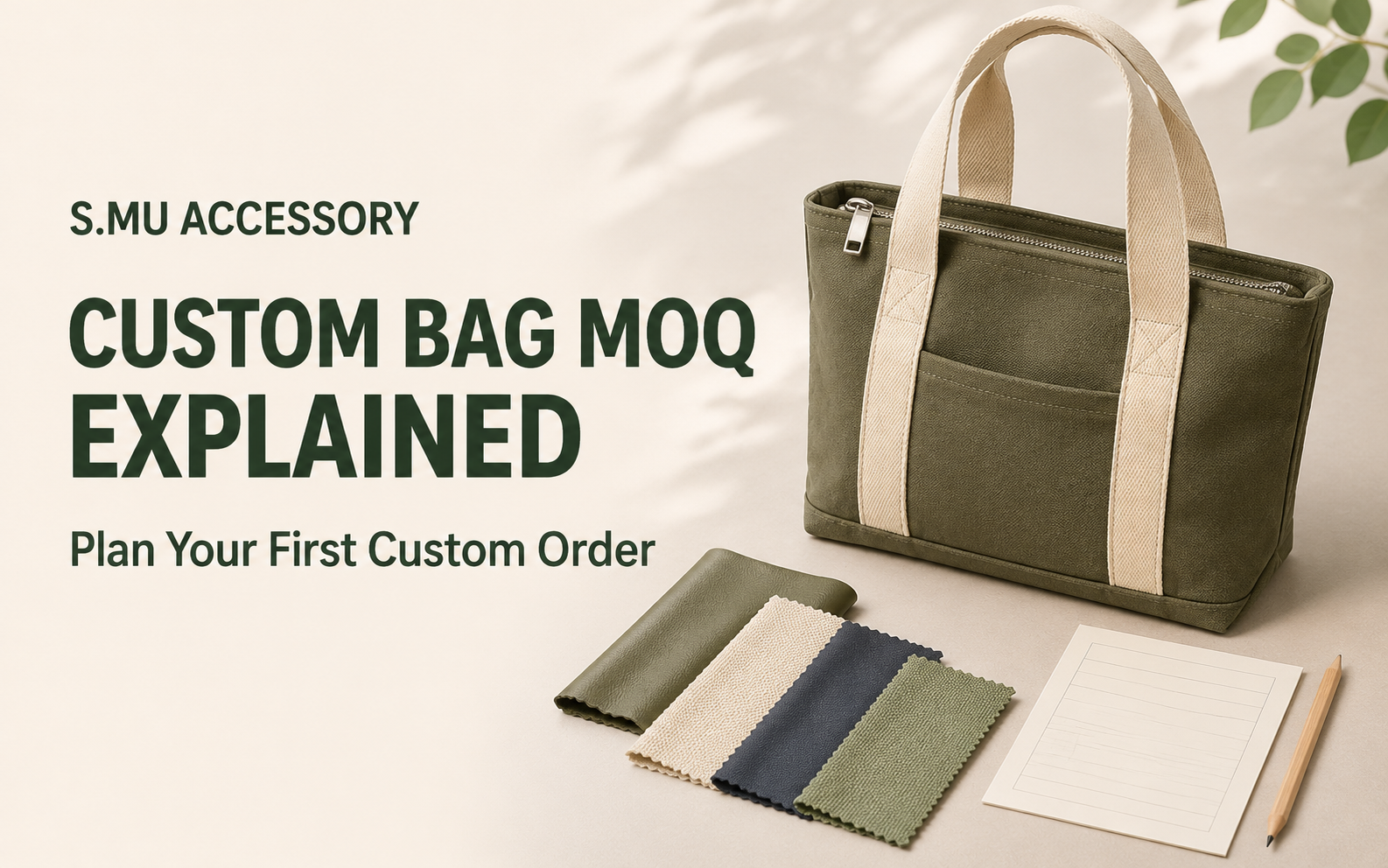
Custom Bag MOQ Explained: What Changes the Minimum Order Quantity?
Custom bag MOQ means the minimum finished-bag quantity a supplier accepts for a defined order. It can depend on style, color, materials, components and production setup. For a small brand, the useful starting point is the quantity it actually needs, followed by a review of customization, purchasing arrangements and total cost. Confirm the finished-goods quantity separately from material purchasing quantities and development charges.
Commercial policy checked November 9, 2026. For independent brands, boutiques and small businesses planning custom bags in PU, canvas, nylon or polyester.
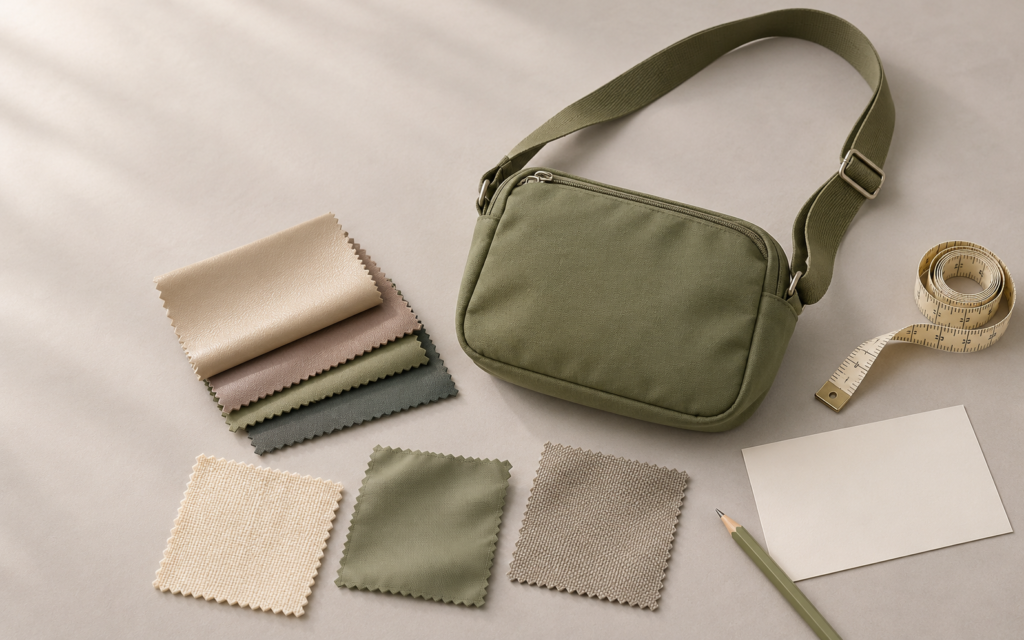
Caption:Illustrative planning layout: define the bag, material direction and first-order quantity together.
What Does Custom Bag MOQ Mean?
MOQ stands for minimum order quantity. A finished-bag MOQ should identify whether the minimum applies to one style, one color or an agreed combination. A headline number without that scope leaves an important commercial question unanswered.
Keep three quantities separate: the bags you will receive, the material or components purchased for them, and anything left over. If a zipper, printed label or custom color requires a larger purchase, ask how the balance will be priced, stored or allocated. That purchasing arrangement should be visible in the quotation.
What MOQ Does S.MU ACCESSORY Publish?
As of November 9, 2026, S.MU ACCESSORY has no minimum order quantity for custom bag projects. Independent brands and small businesses can submit their intended quantity for bags in PU, canvas, nylon, polyester and other suitable materials. The quotation confirms the design, sourcing arrangement, development charges, unit price and delivery plan for that project.
Use your planned sales quantity as the starting brief. Include whether you need one new product, a coordinated range or a repeat order. A clear commercial purpose helps the developer assess which decisions need attention first.
What Changes the Minimum Order Quantity for Custom Bags?
Across suppliers, six areas commonly shape order minimums and costs. At S.MU ACCESSORY, review these areas to understand sourcing and price implications while keeping your requested finished-bag quantity explicit.
| Factor | What to clarify before committing |
|---|---|
| Material | Available quality and color, purchase quantity, and treatment of unused material |
| Color split | Quantity of finished bags in each color and any separate sourcing charges |
| Construction | Existing pattern suitability, structural changes and development work |
| Hardware | Available fittings versus new tooling, finishes or branded components |
| Branding | Logo method, setup charge, placement and sample approval |
| Packaging | Protective packing, retail presentation, printing and any unused packaging |
Write the agreed quantities and charges into the same specification revision. A change of material or hardware after costing should trigger a revised quotation before approval.
Which Customization Route Fits Your First Order?
Choose a route based on how much of the product must change. The bag and accessory collections can help establish a category direction; a suitable base design and its availability still need confirmation.
| Route | Buyer input | Development work to discuss | Approval point |
|---|---|---|---|
| Brand an existing design | Selected design, logo and packaging direction | Logo placement, decoration setup, labels and packing | Branding sample and agreed product details |
| Adapt an existing design | Base design plus a marked list of changes | Material, dimensions, pockets or fittings; pattern changes where needed | Revised dimensions, materials and sample |
| Develop a new design | Reference images or sketch, intended use and target price | Pattern development, material selection, structure and sample revisions | Written specification and approved sample |
An existing design may reduce development work when it suits the brief. A new structure can be appropriate when function or brand identity requires it. Ask the developer to identify the work and charges for each relevant route before choosing.
Which route fits your first custom bag order?
Send a reference image, your intended quantity and the details you want to customize. S.MU ACCESSORY can review the development scope and quotation inputs with you.
Send Your First Custom Bag BriefHow Should You Choose PU, Canvas, Nylon or Polyester?
Specify the material quality as well as its name. A photo or a broad description such as “nylon” leaves the weight, backing, finish and appearance open to interpretation.
For PU, review the surface finish, backing, thickness and behavior at seams or folded edges. For canvas, confirm fiber composition, weight, weave and finish. For nylon and polyester, identify the fabric construction, coating or backing, handfeel and intended use. Request a swatch or sample to confirm the selected quality.
Ask whether the proposed color and quality are available or require a separate purchase. If alternatives are offered, compare them against the same visual and functional requirements. The bag design and development team can review material and construction choices together.
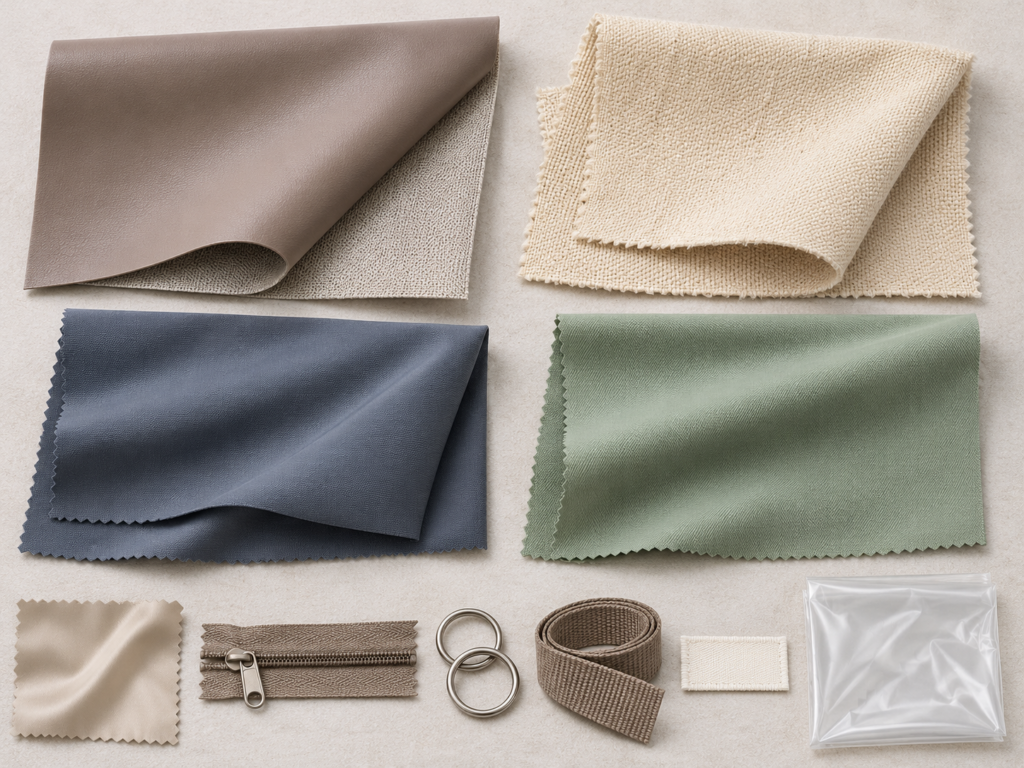
Caption:Illustrative component layout: review shell material, lining, hardware and branding as one specification.
Why Does a Lower MOQ Often Increase Unit Price?
Pattern work, logo setup, tooling and production preparation can involve work that is shared across an order. A smaller quantity can therefore carry a higher cost per bag. Separate those charges so you can see what would recur on a reorder.
Request a quotation showing one-time development or tooling, sample charges and revisions, finished-bag unit price, and any separately charged testing, packaging or transport. Mark each item as included or extra to prevent double counting. Confirm ownership and storage arrangements for paid tooling and surplus materials where relevant.
The quotation requirements and cost-scope guide explains how to define the specification behind the price.
What Should Buyers Send for an MOQ Review?
Send what you already know and mark unresolved decisions. A small business can begin the discussion with reference images and a clear use case; detailed sampling still requires agreed specifications. The bag tech pack guide helps organize those details as the project develops.
Use this first-order decision sheet in your message:
Business / brand and target market:
Bag type, intended user and reference images:
Preferred route: existing design / adaptation / new design
Material direction: PU / canvas / nylon / polyester / other
What must be customized:
Intended quantity per style and color:
Target price or budget, with currency:
Required delivery destination and date:
Open decisions / alternatives you would consider:
Buyer input: the brief, priorities and known requirements. Supplier output to request: a proposed specification, sourcing options, itemized quotation and sample approval steps. The buyer then chooses the route and authorizes the agreed development work.
Where this decision sits: the previous stage is Material Sourcing; the current stage is Sampling & Costing; the next stage is Production Management after approval. The main risk is changing materials or construction without updating the price and approval record.
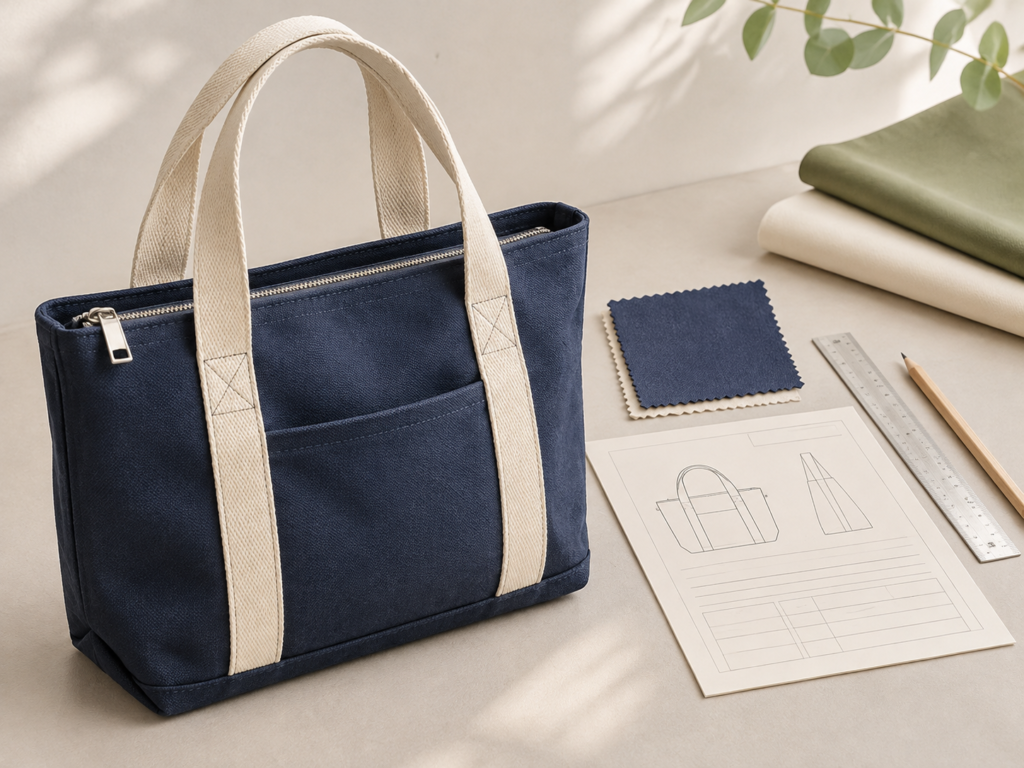
Caption:Illustrative approval setup: align the sample, specification and quoted scope before production.
What Should Stay Consistent When You Reorder?
Record the approved material, dimensions, construction, color reference, logo placement and packing. Ask the supplier to identify any sourcing changes before accepting a repeat-order price. The custom bag sampling process explains how approval moves from a reference direction to a confirmed sample.
S.MU ACCESSORY, Guangzhou S.Mu Accessory Co., Ltd., is a Guangzhou-based bags and fashion accessories development and supply partner. Its quality control workflow connects sample review with material, production and packing checks. Agree which records and checks your project requires.
FAQ
Can I discuss a project before deciding the final quantity?
Yes. Share an estimate, the sales purpose and any budget limit. Confirm the final quantity and color allocation in the written quotation before authorizing production.
Can I split a small order across several colors?
Include your preferred split in the brief. Review material availability, component purchases and any cost changes for each color before approving the allocation.
Are sample and development costs included in the unit price?
Ask for a written breakdown. Confirm what the sample fee covers, how revisions are charged and whether any credit applies to a later order. These terms are project-specific.
Can I order again using the same material and color?
Ask the supplier to confirm availability and the retained specification. If material or components have changed, review the proposed substitution and any required sample approval before reordering.
Turn your first-order plan into a defined custom bag project.
Share your reference images, material direction, intended quantity, budget and timing. S.MU ACCESSORY can use the brief to discuss customization, sampling and the scope of your quotation.
Send Your First Custom Bag BriefYou can also email your brief or discuss it on WhatsApp.